Germany Battles Poisonous Caterpillar Outbreak As Parks Close And Health Concerns Grow
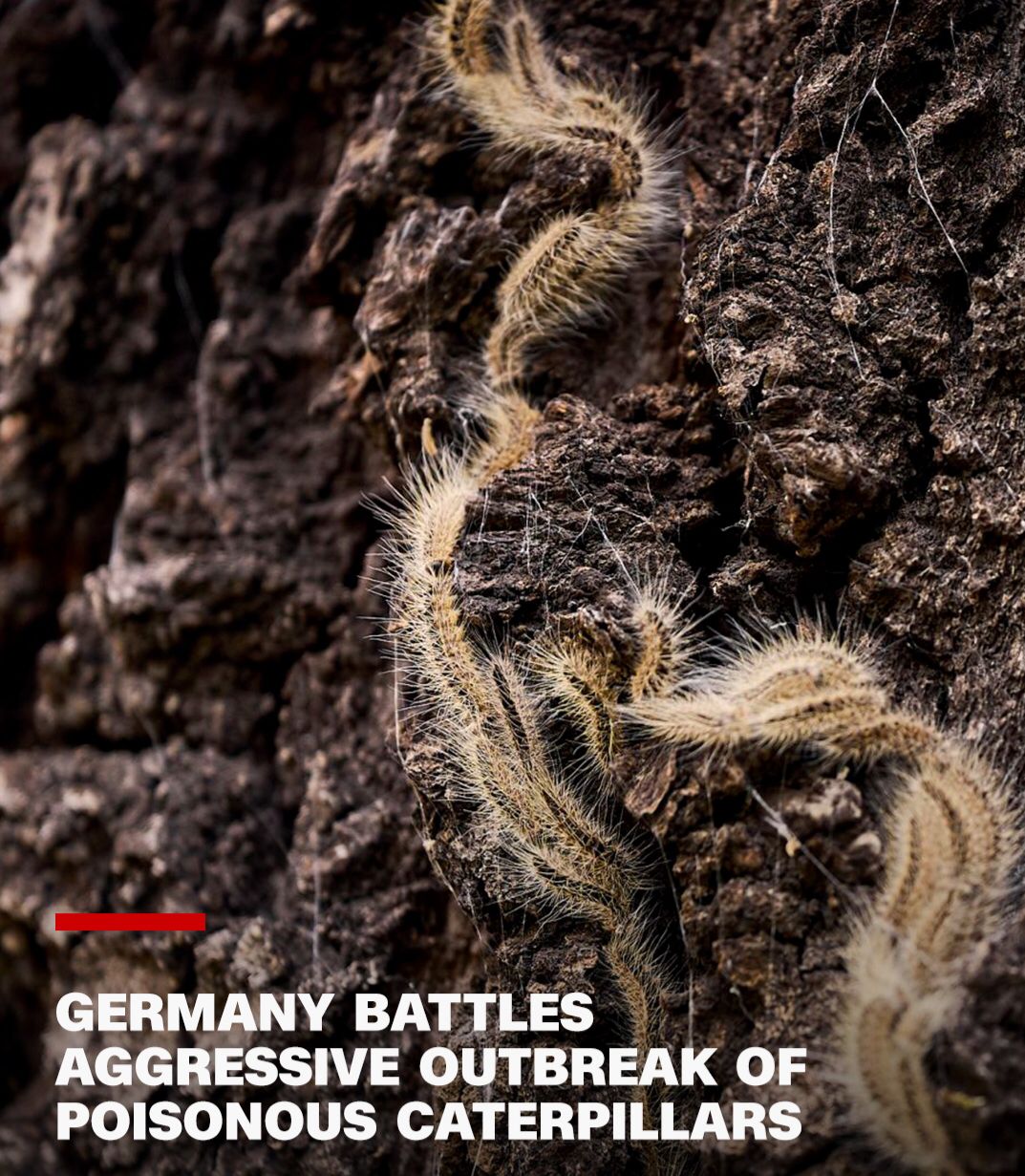
Germany battles poisonous caterpillar outbreak as parks close and health concerns grow Authorities across Germany are grappling with a widespread outbreak of poisonous oak processionary caterpillars, prompting the closure of parks, sports facilities, and other public outdoor spaces amid growing concerns over public health. The outbreak has been particularly severe in Berlin, where local authorities have restricted access to several parks and green areas after the insects spread across thousands of trees in residential neighbourhoods and recreational spaces. The caterpillars pose a serious health risk because of their microscopic toxic hairs, which can become airborne and come into contact with human skin, eyes, and respiratory systems. Medical experts warn that exposure can trigger severe itching, skin rashes, eye irritation, breathing difficulties, and, in some cases, serious allergic reactions. In response, workers wearing protective suits have been deployed to affected areas to remove nests using specialised vacuum equipment designed to safely collect the insects and their hazardous hairs. Authorities say the clean-up operation is necessary to reduce the risk to residents and visitors. Some of the hardest-hit districts in Berlin include Charlottenburg-Wilmersdorf, Spandau, and Friedrichshain-Kreuzberg, where officials have urged the public to avoid affected parks and surrounding areas until remediation work is completed. Residents have expressed frustration over the scale of the infestation, with some reporting concerns about safely using outdoor spaces during the summer months. The outbreak has also affected schools, playgrounds, and residential neighbourhoods located near infested trees. Environmental experts say warmer and drier conditions have contributed to the spread of the caterpillars, with some linking the increasing frequency and severity of infestations to broader climate change trends. The species, traditionally more common in southern Europe, has gradually expanded northward in recent years. Officials have advised residents to avoid direct contact with the insects or their nests, wash clothing after visiting affected areas, and follow public health guidance while control measures remain in place.