Defection I Wish Obi Waited To Test His Popularity In ADC Momodu
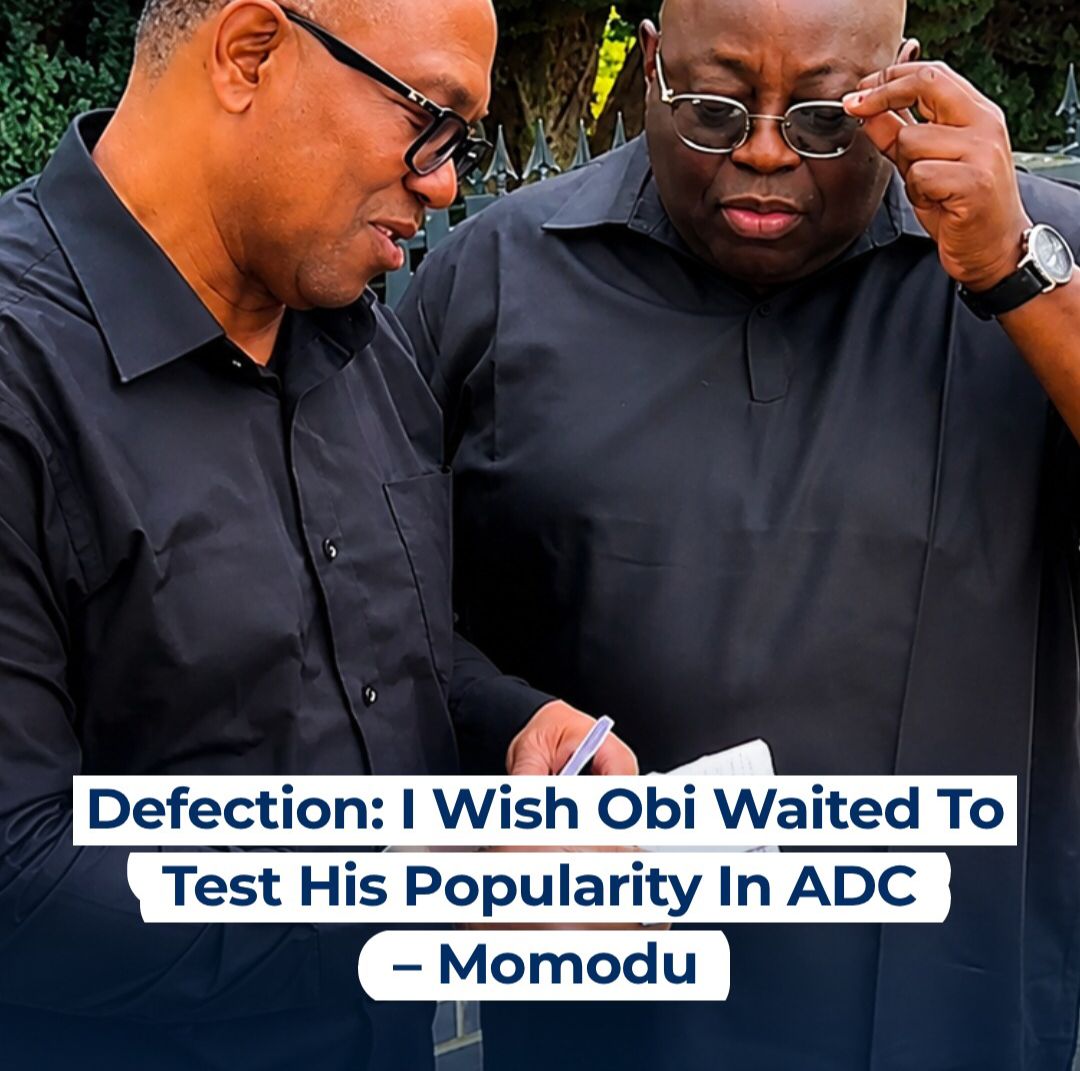
Defection I Wish Obi Waited To Test His Popularity In ADC Momodu
A chieftain of the African Democratic Congress (ADC), Dele Momodu, has criticised the recent exit of former presidential candidate Peter Obi from the party, saying the ex-governor should have remained to test his political strength within the coalition. Momodu made the remark while reacting to the defection of Obi and former Kano State governor Rabiu Kwankwaso, who recently left the ADC to join the Nigeria Democratic Congress NDC. According to Momodu, Obi’s departure came too early and denied him the opportunity to measure his true popularity within the ADC-led opposition coalition. He said Obi could have stayed longer in the party structure to test his acceptance among party members and Nigerians ahead of future electoral contests. The ADC chieftain maintained that internal political contests are necessary for democratic growth, adding that remaining in the party would have helped determine Obi’s actual political influence within the coalition.
Momodu expressed disappointment over the development, noting that the move may weaken ongoing efforts to build a united opposition capable of challenging the ruling establishment. Obi, who was the Labour Party’s presidential candidate in the 2023 election, had earlier joined the ADC as part of a broader opposition alliance aimed at presenting a formidable front ahead of the 2027 general elections. However, the alliance suffered a major setback after Obi and Kwankwaso exited the party following disagreements and internal disputes within the coalition. Political observers say the defections have raised fresh concerns about unity among opposition leaders seeking to challenge President Bola Tinubu in the next election cycle. Kwankwaso was the presidential flag bearer of the New Nigeria Peoples Party NNPP in the 2023 polls before aligning with the coalition movement. Analysts warn that continued defections and party realignments could complicate attempts by opposition figures to present a single presidential candidate in 2027.
Momodu previously emphasised that cooperation among opposition leaders remains essential if they hope to mount a serious electoral challenge, stressing that frequent party switches may undermine public confidence. The latest political realignment highlights persistent divisions within Nigeria’s opposition space, where ideological differences, leadership ambitions, and regional considerations continue to influence alliances.
With the emergence of the NDC as a new political platform attracting prominent figures, attention is now turning to how the shifting loyalties will reshape preparations for the next general elections.