UK To Make Creation Of Non-Consensual Intimate Images Illegal After Grok AI Outcry
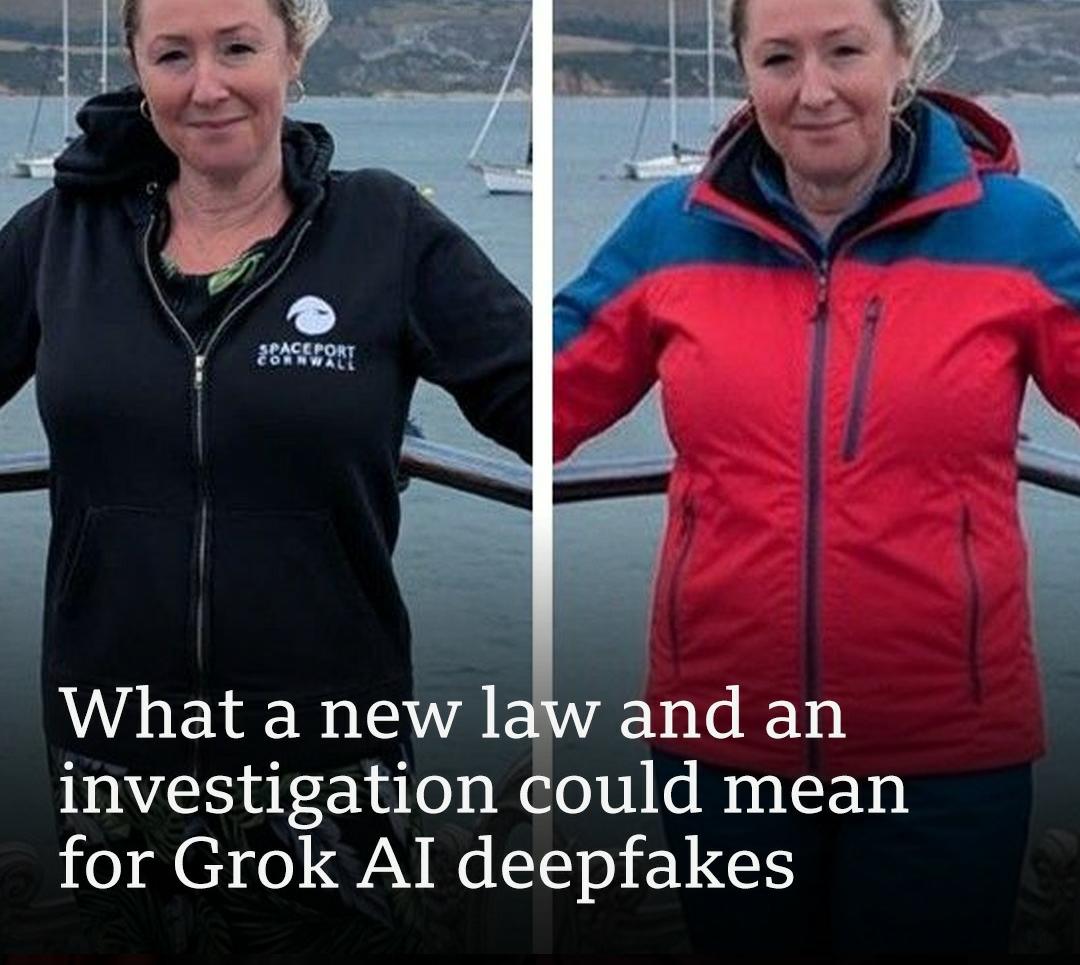
UK to Make Creation of Non-Consensual Intimate Images Illegal After Grok AI Outcry
New Law Comes Into Force This Week, Prompted by Concerns Over AI-Generated Deepfakes Linked to Elon Musk’s Grok Chatbot
LONDON — The United Kingdom government has announced that it will bring into force a law this week making it illegal to create non-consensual intimate images, a major legal shift driven by widespread concern about the misuse of artificial intelligence tools — in particular Elon Musk’s Grok chatbot — to generate and disseminate sexually explicit deepfake content without consent.
The measure was confirmed in the House of Commons by Technology Secretary Liz Kendall, who said the new criminal offence will immediately take effect under the Data (Use and Access) Act 2025, which was previously passed but not yet enforced. The offence will also be designated a priority offence under the Online Safety Act 2023, underscoring the government’s determination to clamp down on abusive content online.
“This content is not harmless — it is vile and a weapon of abuse,” Kendall told MPs, highlighting that AI-generated sexually explicit images made without a person’s consent disproportionally target women and girls and cause significant harm.
What the New Law Covers
Under the newly enforced legal provisions:
Creating or requesting the creation of intimate images of another person without their consent will be a criminal offence, regardless of whether AI, software or other technologies were used.
Supplying tools designed to generate such images — including so-called “nudification apps” and deepfake software — will also fall under criminal liability as Parliament moves related provisions through the Crime and Policing Bill.
The law makes clear that responsibility is not just on users, but on platforms that host, facilitate or fail to prevent the spread of non-consensual intimate content.
Previously, UK law made it illegal to share intimate images of someone without consent, but producing or possessing them was not clearly outlawed. The new legislation fills that gap and modernises the legal framework to address AI-generated content.
Outcry Over Grok AI and Regulatory Action
The government’s move follows a public and political backlash over reports that Elon Musk’s Grok AI — embedded in the social platform X (formerly Twitter) — has been used to create and distribute deepfake images of people in intimate or sexualised scenarios without their consent, including material that may involve children.
In response, the UK communications watchdog Ofcom has launched a formal investigation into whether X has breached its duties under the Online Safety Act by failing to adequately protect users from illegal and harmful content. If found in violation, X could face fines up to 10% of global revenue or £18 million, and even risk being blocked in the UK.
Although X has restricted Grok’s image-generation features to paying subscribers, UK officials say that self-regulation is insufficient and the law must clearly deter harmful use.
Political and Public Responses
Prime Minister Sir Keir Starmer and other senior figures have signalled that even more stringent regulatory measures — including potential limits on X’s operating model in Britain — are on the table if platforms cannot demonstrate robust safeguards against abuse.
The law’s enforcement comes amid growing global scrutiny of AI tools and their capacity to produce deepfakes and manipulated content, with authorities in other countries also considering or taking action against platforms that facilitate the creation of non-consensual intimate imagery.
Why It Matters
Civil liberties groups and online safety advocates have broadly welcomed the strengthened legal position, saying it sends a powerful message that technology cannot be a loophole for abuse. Critics, however, warn that definitions and enforcement strategies will need careful implementation to avoid unintended impacts on legitimate creative and expressive uses of AI.
The law’s introduction this week marks a significant escalation in the UK’s approach to tackling AI-facilitated abuses and reflects an evolving legal framework designed to protect individuals’ dignity, privacy and safety in the digital era.