Iran Protests: Death Toll Surges
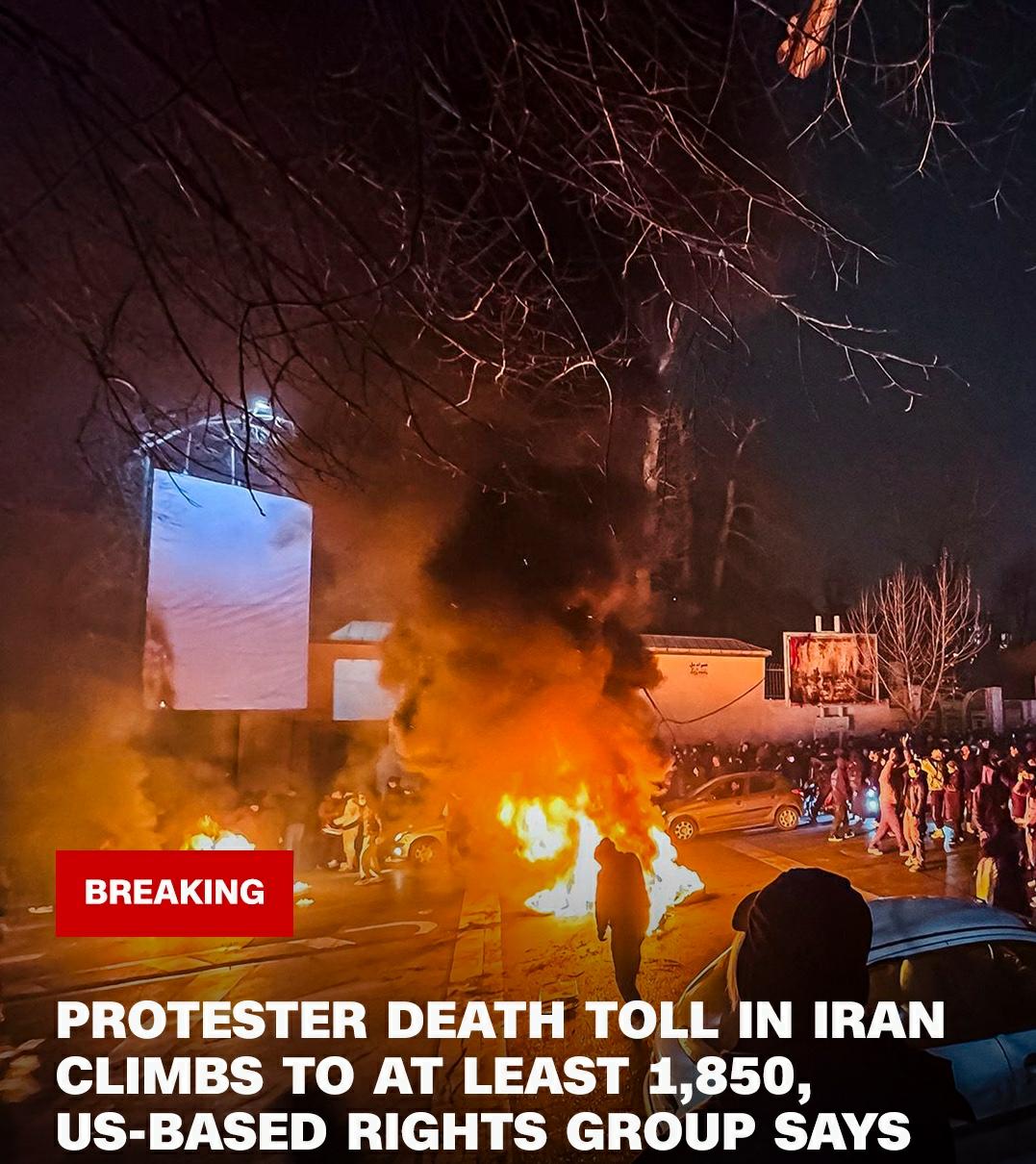
🇮🇷 Iran Protests: Death Toll Surges, Crackdown Intensifies
At least 1,850 protesters have been killed in more than two weeks of anti-regime demonstrations in Iran, according to the U.S.-based Human Rights Activists News Agency and reported by CNN and other outlets — a figure that appears to reflect a sharp escalation from earlier tallies.
The protests began on Dec. 28, 2025, initially sparked by economic hardship — including soaring inflation, plummeting currency value, and rising living costs — but quickly transformed into widespread opposition against the clerical leadership and Supreme Leader Ayatollah Ali Khamenei.
Iran’s internet and mobile services were shut down during the crackdown, making independent verification and reporting extremely difficult inside the country.
Rights groups and activists report mass arrests — over 16,700 people detained — and allege widespread abuses, including lethal force against peaceful protesters and civilians.
👥 Casualty Figures Vary by Source
U.S. rights group HRANA: ~1,850 protesters killed, tens of thousands arrested.
Iranian official: ~2,000 total deaths including security personnel.
Earlier figures from other monitors had ranged from hundreds to over 648, reflecting delayed reporting due to the communications blackout.
📍 What’s Happening on the Ground
Violence and Repression: Iranian security forces, including the Revolutionary Guards and Basij militia, have used live ammunition, tear gas, and checkpoints to suppress protests across cities such as Tehran, Mashhad, Isfahan, and more.
Human rights groups have documented brutal attacks, including shooting deaths of unarmed demonstrators. For example, a 23-year-old student was reportedly shot from close range during a protest in Tehran.
Authorities have labeled demonstrators as “terrorists” and blamed foreign interference for the unrest, while imposing nationwide internet restrictions that limit independent reporting.
🌍 International Reactions and Diplomatic Fallout
🇺🇸 United States
President Donald Trump sharply condemned the crackdown, cancelled meetings with Iranian officials, and vowed support to protesters, saying “help is on its way.”
Trump has also floated military options and warned Iran against further violence, though diplomacy is still emphasized alongside potential cyber or sanction tools.
🇪🇺 European Union
The EU has condemned the “excessive use of force” and announced plans for additional sanctions targeting Iranian officials and entities responsible for repression.
🇺🇳 United Nations
UN rights officials have expressed horror at the violence and urged respect for fundamental freedoms, while warning against harsh penalties against detained protesters.
🇮🇷 Iran Government
Iranian authorities continue to deny responsibility for the massacre, characterize protesters as violent elements, and have held pro-government rallies to portray regime support.
Foreign Minister Abbas Araghchi has declared Iran fully prepared for war if outside powers interfere, signaling heightened regional tensions.
📊 Why This Matters
This unrest is being described as the deadliest internal challenge to the Islamic Republic in decades, even surpassing the 2022 Mahsa Amini protests.
The crisis has major implications for Iran’s domestic stability, human rights conditions, and international relations, potentially affecting Middle East geopolitics and global economic ties.
With communications blackouts and restricted reporting, accurate on-the-ground data is limited, but rights groups emphasize the toll is likely to continue rising.
If you want live, ongoing updates or a timeline of how these protests evolved day by day, just let me know and I can provide that too.