UK, Europe Set For Best Solar Eclipse In 27 Years
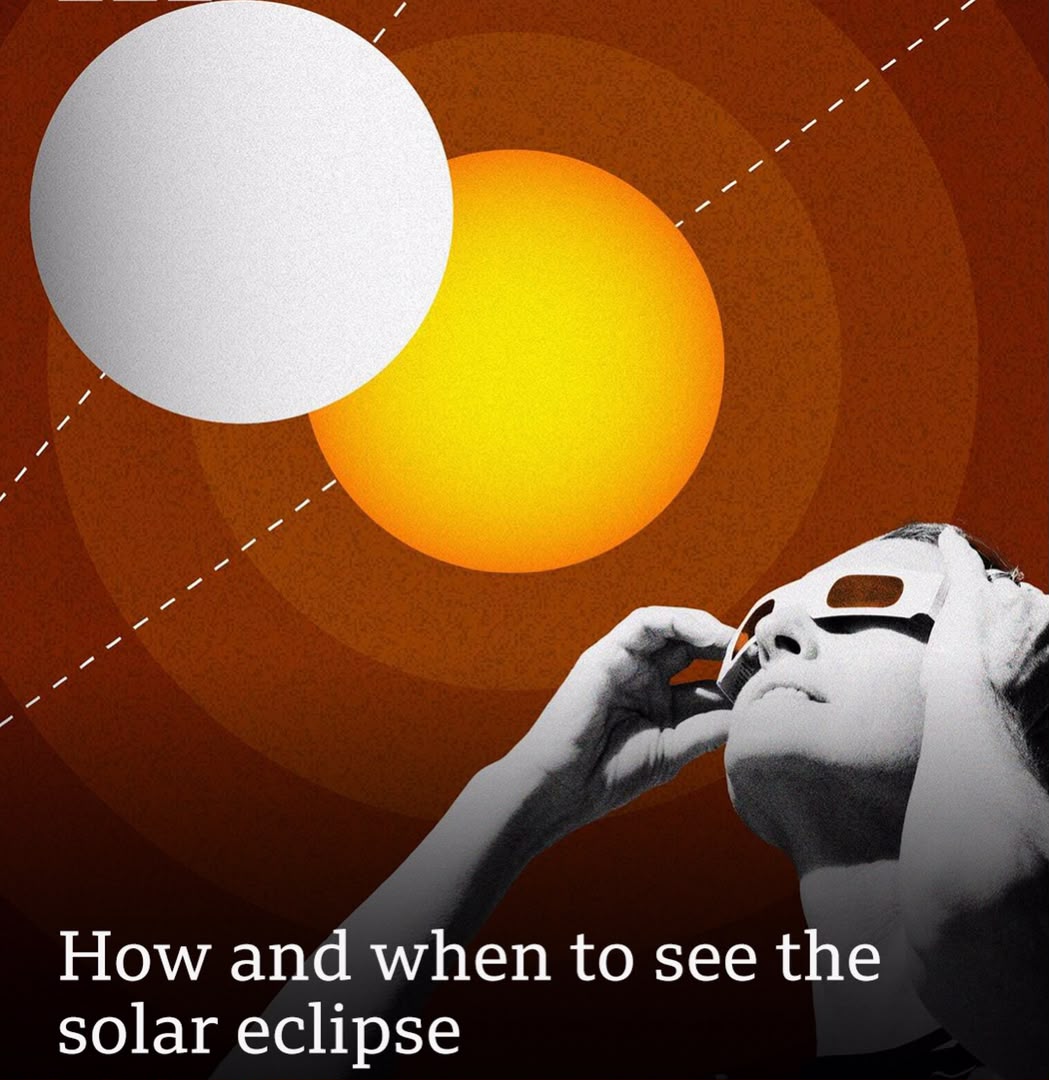
UK, Europe Set for Best Solar Eclipse in 27 Years
Britain and parts of Europe are preparing for a spectacular solar eclipse on Wednesday, August 12, with skywatchers set to witness the most significant eclipse visible from the UK in almost three decades. The rare celestial event will see the Moon pass directly between the Earth and the Sun, blocking sunlight and creating a dramatic spectacle across large parts of Europe. While the eclipse will be total in parts of Spain, Iceland and Greenland, people across the UK will experience a particularly deep partial eclipse, with the Moon covering more than 90% of the Sun in many locations.
The eclipse will take place on Wednesday, August 12, 2026, with the event occurring during the evening in the UK. The exact timing will vary depending on location. In London, for example, the eclipse is expected to begin shortly after 6pm, reach its maximum at around 7:12pm and end shortly after 8pm. The best views in Britain are expected in western areas, particularly Cornwall, where as much as 96% of the Sun could be covered. For parts of mainland Europe, the event is especially significant because it will be the first total solar eclipse visible there in 27 years. The path of totality will cross northern Spain, while Iceland will also experience totality. In those locations, the Moon will completely cover the Sun for a short period, turning day into a twilight-like darkness. The maximum duration of totality will be just over two minutes, according to NASA.
Cities and regions in Spain within or near the path include areas around A Coruña, Bilbao, Zaragoza, Valencia and the Balearic Islands.
Britain will not experience totality, but the eclipse will still be highly dramatic. The Moon will cover the vast majority of the Sun, leaving only a thin crescent of sunlight visible in some locations.
The Royal Astronomical Society has described it as the most impressive solar eclipse visible from the UK in almost 30 years.
The further west observers are, the greater the percentage of the Sun that will be obscured. Experts are warning people not to look directly at the Sun, even when most of it is covered. Ordinary sunglasses are not sufficient protection. Special-purpose solar viewing glasses that meet the appropriate safety standards should be used when looking directly at the eclipse. Those photographing the event should also use suitable solar filters for cameras, telescopes or binoculars. Solar eclipses occur when the Moon moves between the Earth and the Sun, temporarily blocking some or all of the Sun’s light. Total solar eclipses are relatively rare from any particular location, making Wednesday’s event a major attraction for astronomers, photographers and members of the public across Europe. For Britain, the August 12 eclipse represents an unusually deep partial eclipse and one of the most striking opportunities to watch the Moon pass across the Sun in decades. With clear skies and proper eye protection, millions of people could witness one of the most remarkable celestial events of 2026.