Nigeria, Russia Deepen Strategic Bilateral Cooperation
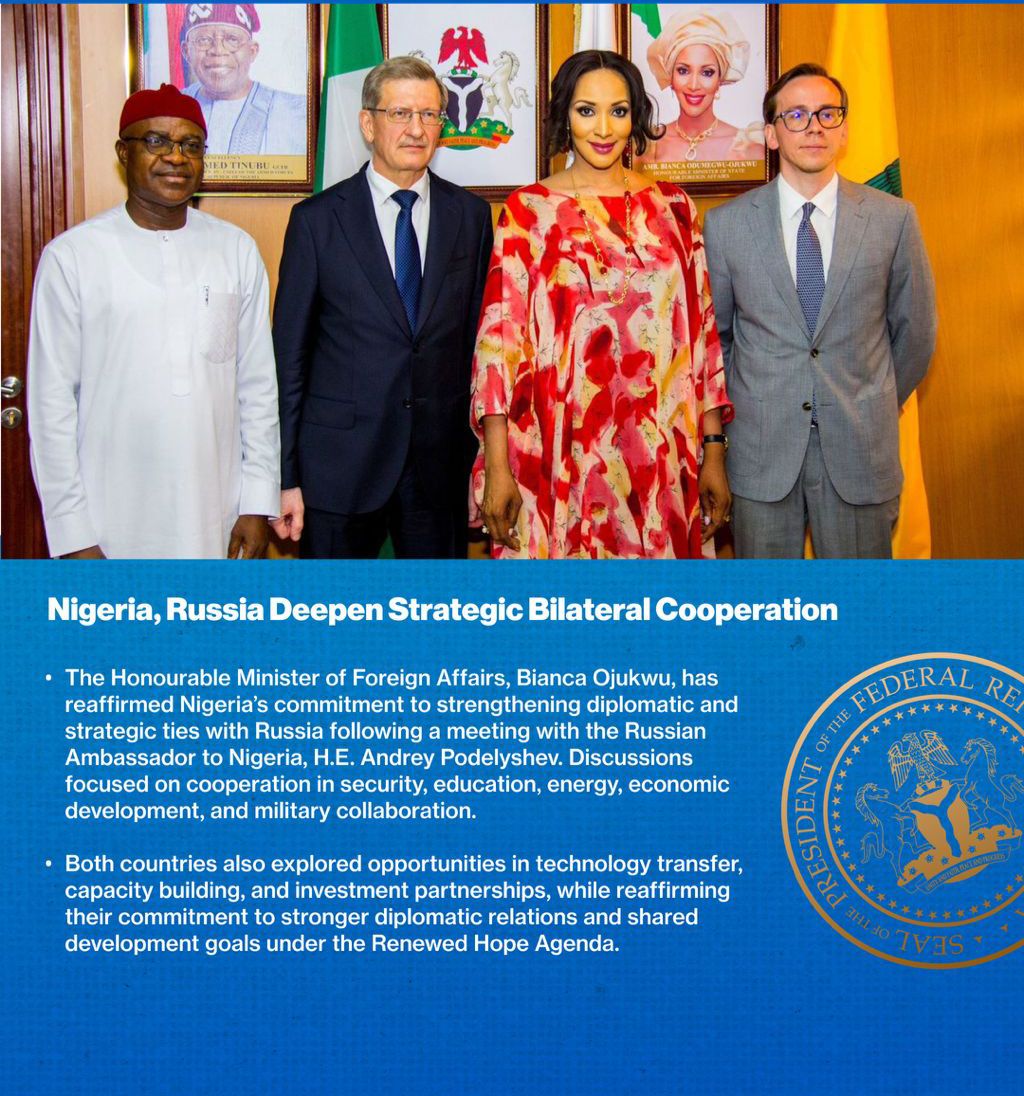
Nigeria, Russia Deepen Strategic Bilateral Cooperation
The Federal Republic of Nigeria and the Russian Federation have agreed to deepen strategic bilateral cooperation aimed at strengthening diplomatic relations, expanding economic partnerships, and enhancing collaboration in key sectors of mutual interest. The agreement was reached during high-level diplomatic engagements as part of ongoing efforts by the administration of Bola Ahmed Tinubu to broaden Nigeria’s international alliances under the Renewed Hope Agenda. Both countries reaffirmed their commitment to improving cooperation in areas such as trade, energy, defence, agriculture, and education. Officials noted that the renewed partnership is designed to promote mutual benefit, encourage investment flows, and support long-term development goals in both nations. Discussions focused on expanding collaboration in
- Energy development and oil and gas technology
- Agricultural mechanisation and food production
- Military-technical cooperation and security training
- Scientific research and educational exchange programmes
- Infrastructure development and industrial capacity building
- Authorities emphasised that stronger Nigeria Russia relations will contribute to economic diversification and help Nigeria leverage global partnerships to accelerate growth.
The two sides also explored opportunities for increased trade volume and private sector participation in joint ventures across priority sectors. The Nigerian government stated that the engagement aligns with its Renewed Hope Agenda, which prioritises economic reform, infrastructure development, job creation, and stronger international cooperation. Officials added that strategic partnerships with global powers remain essential to achieving sustainable national development objectives.
Both nations expressed optimism that the renewed cooperation framework will lead to more structured agreements, increased investment opportunities, and deeper diplomatic engagement in the coming years. Further technical consultations are expected to define implementation mechanisms and priority projects.