China Emerges As Dominant Foreign Player On Russia’s Northern Sea Route
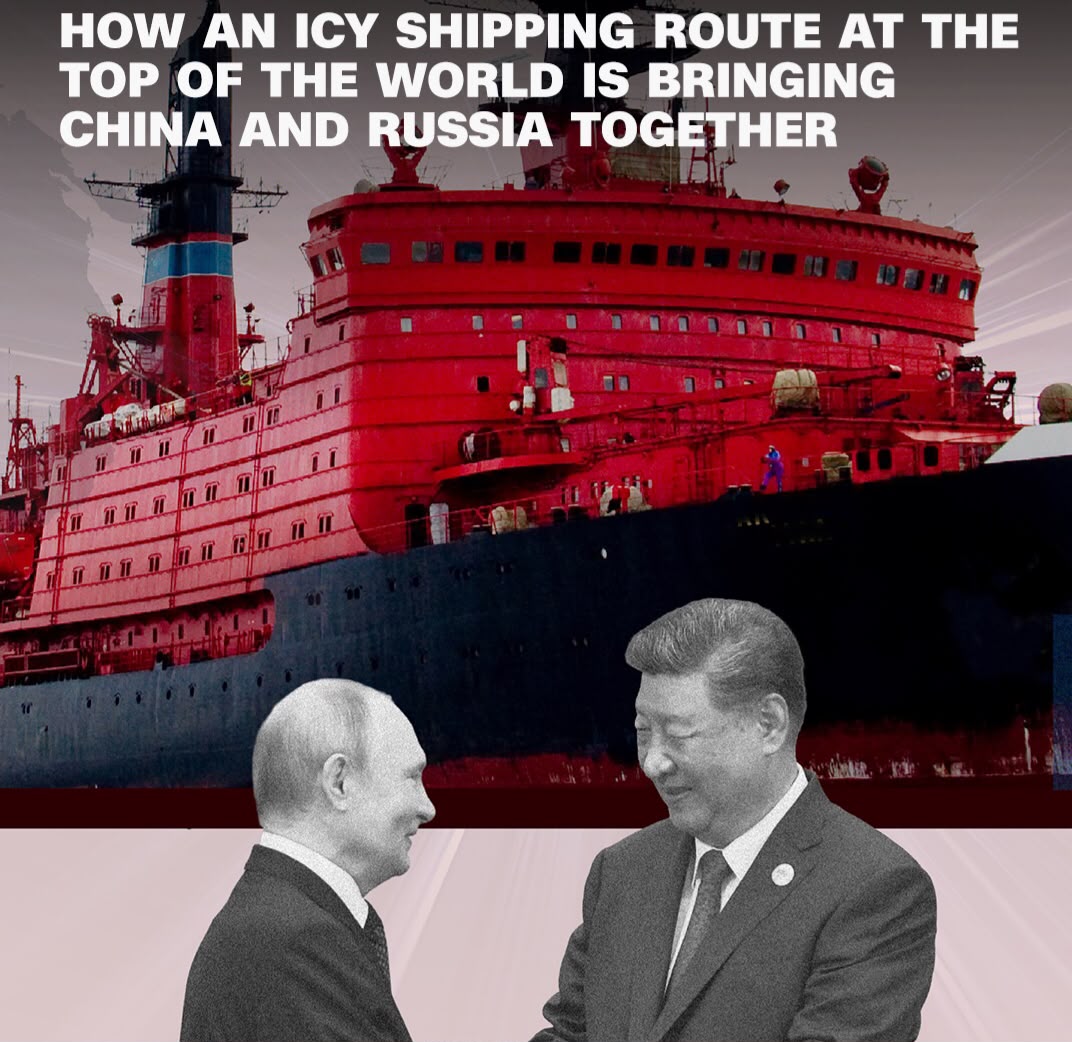
China Emerges as Dominant Foreign Player on Russia’s Northern Sea Route China has emerged as the dominant foreign trading partner along Russia’s Northern Sea Route NSR since Moscow launched its full scale invasion of Ukraine, according to analysis of shipping data compiled by the Norway-based Centre for High North Logistics.
The findings highlight how Russia’s confrontation with the West has accelerated its economic and strategic pivot towards China, while Beijing has increasingly used the Arctic corridor to access Russian commodities and develop an alternative route between Asia and Europe. The Northern Sea Route runs along Russia’s Arctic coastline, providing a potentially shorter maritime connection between Asia and Europe than traditional routes through the Suez Canal.
Since 2022, international transit traffic along the route has increasingly been dominated by Chinese companies and China linked trade. The shift reflects Moscow’s growing dependence on Asian markets after Western sanctions and restrictions disrupted many of its traditional trading relationships. China has become particularly important for Russian exports of energy and raw materials, including oil and liquefied natural gas. Recent shipping data also show Russia increasing crude oil shipments to Asia through the Arctic route. Reuters reported that seven such shipments, totalling roughly 6 million barrels, were already under way in 2026 nearly half the volume transported via the route during all of 2025. China is the main buyer because of its proximity to Russia’s eastern ports. The growing traffic reflects a relationship in which both countries have strategic interests. For Russia, the Northern Sea Route offers another way to reach Asian markets while reducing dependence on European buyers and shipping routes vulnerable to sanctions and geopolitical disruption. For China, the Arctic provides a potential alternative to conventional maritime chokepoints and supports Beijing’s long-term ambitions for what it has called the “Polar Silk Road. Chinese shipping companies have already conducted regular voyages along the route, while new services are being developed to connect Chinese ports with northern European destinations through Russian Arctic waters. Despite its strategic importance, the Northern Sea Route is still far from becoming a replacement for established global shipping lanes. The route remains heavily dependent on seasonal ice conditions, specialised ice-class vessels and Russia’s icebreaker fleet. Search-and-rescue infrastructure is also limited, while accidents in the environmentally sensitive Arctic could have serious consequences.
The majority of cargo moving along the route remains connected to Russian Arctic resource projects, rather than conventional international container trade. The Centre for High North Logistics has nevertheless documented a growing transit component, particularly involving Russia and China. The increasing Chinese presence illustrates how the war in Ukraine has reshaped trade far beyond Europe. As Western sanctions pushed Russia towards Asian markets, China has become increasingly important not only as a buyer of Russian commodities but also as a shipping and logistics partner in the Arctic.That relationship is likely to become even more significant as both countries invest in vessels, ports and infrastructure designed to make the Northern Sea Route more commercially viable.