Busan’s Dangerous Delicacy How Pufferfish Became A Culinary Specialty
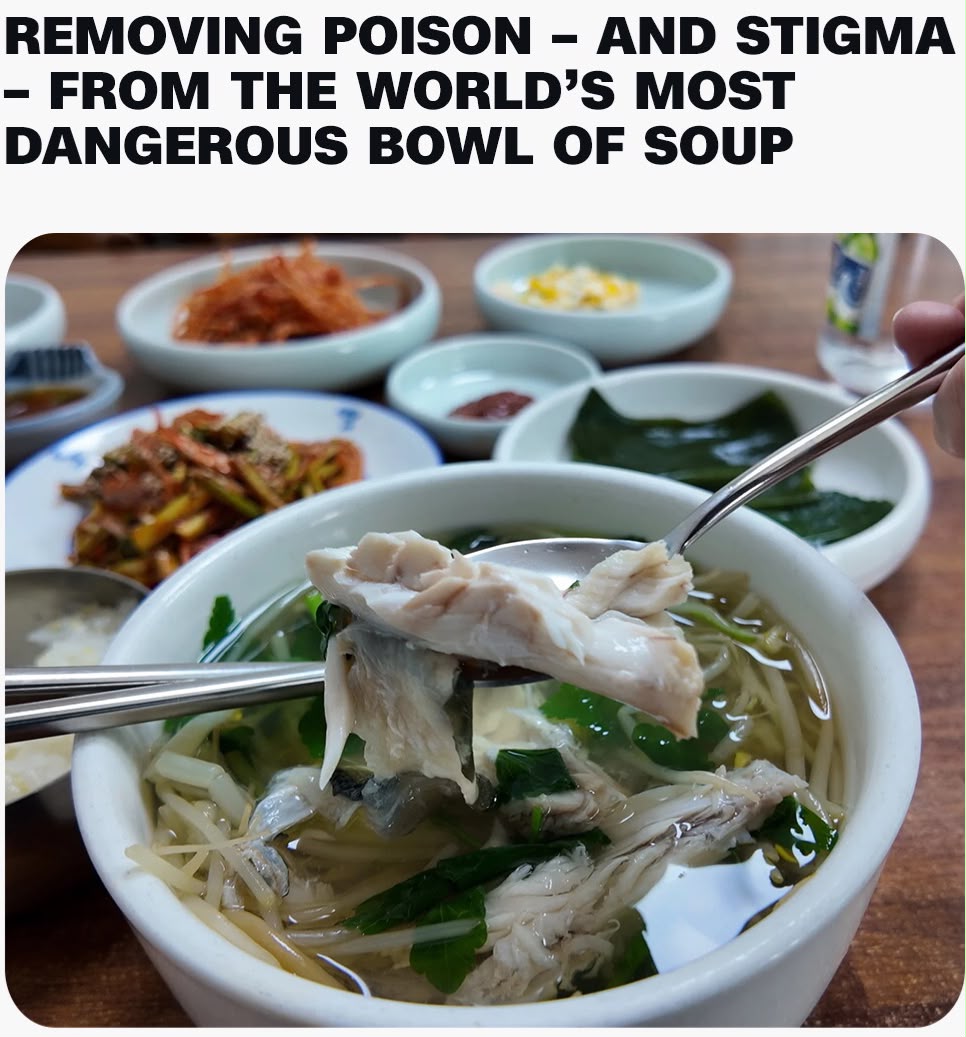
Busan’s Dangerous Delicacy How Pufferfish Became a Culinary Specialty Pufferfish is one of the world’s most notorious delicacies because it can contain tetrodotoxin, a powerful poison capable of causing fatal paralysis. Yet in Busan, South Korea’s second-largest city, the potentially deadly fish has become a celebrated part of the local food culture. Known locally as bok-eo, pufferfish is prepared in several ways, including soups, grilled dishes and raw preparations. Busan’s coastal Mipo neighbourhood is even known as “Pufferfish Village” because of its concentration of specialist restaurants
The danger comes from the fish’s toxin, which is particularly concentrated in certain organs. Cooking does not simply destroy tetrodotoxin, so safe preparation depends on carefully removing the poisonous parts and preventing contamination of the edible flesh.
South Korea therefore requires pufferfish chefs to undergo specialised training and pass an examination before receiving a licence to prepare the fish. Diners can also ask to see a chef’s certification at restaurants. One of the city’s best-known establishments is Chowon Bokguk, where pufferfish soup, or bokguk, is served with ingredients including bean sprouts, white radish and water parsley. Pufferfish fritters may also accompany the meal.
The restaurant also has an unusual place in Korean political history. It became associated with the 1992 “Chowon Bokguk incident,” a political wiretapping scandal that erupted shortly before South Korea’s presidential election. Despite its poisonous reputation, pufferfish has become an important part of Busan’s seafood identity. The city’s restaurants attract both locals and visitors looking to experience a traditional dish that combines culinary skill with an element of danger. Several Busan pufferfish restaurants have also received recognition from the Michelin Guide, which launched its Busan guide in 2024. Pufferfish demonstrates how a potentially lethal ingredient can become a culinary tradition when preparation is tightly controlled and carried out by trained specialists.