MORE THAN 2,000 PEOPLE KILLED DURING IRAN PROTEST CRACKDOWN AS TRUMP PROMISES HELP IS “ON ITS WAY”
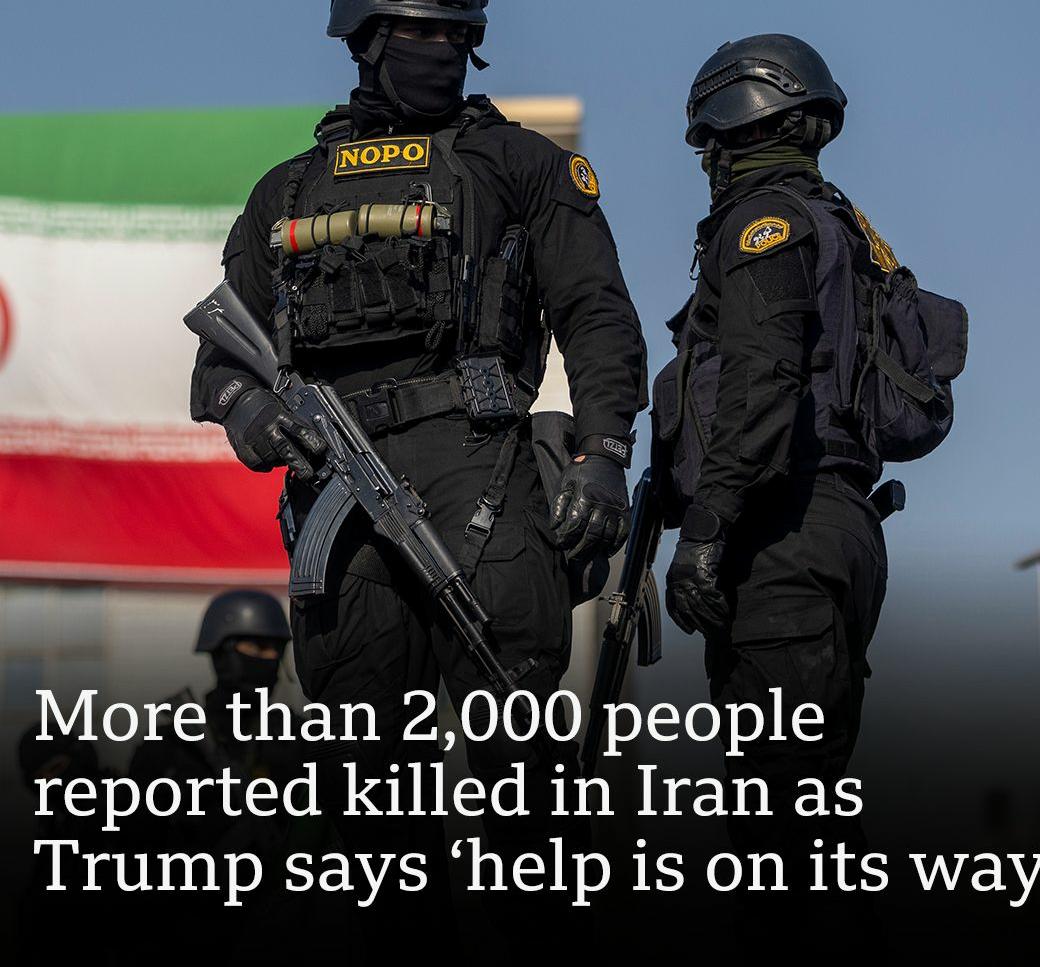
World / Tehran — More than 2,000 people have reportedly been killed in Iran during a violent crackdown by security forces on widespread protests, according to data from a human rights group, as **U.S. President Donald Trump vowed that help was “on its way” to Iranian demonstrators.
Death Toll & Human Rights Concerns
The U.S.-based Human Rights Activists News Agency (HRANA) has verified at least 2,003 deaths, including 1,850 protesters, 135 people affiliated with the government, nine civilians not involved in protests, and nine children, during more than two weeks of unrest despite an internet blackout.
An Iranian official told Reuters that about 2,000 people have been killed, though he claimed “terrorists” — not security forces — bear responsibility for the violence.
Other independent rights monitors say the real toll could be even higher, reflecting one of the deadliest protest crackdowns in Iran in decades.
Trump’s Response
President Donald Trump sharply criticised the Iranian government’s actions and posted on his Truth Social platform urging Iranians to “keep protesting — take over your institutions!” and promising that “help is on its way.”
Trump said he had cancelled all meetings with Iranian officials until the violence ceases and warned that those responsible for the killings will “pay a very big price.”
When pressed about what form the assistance would take, Trump did not specify but indicated that a range of options, including military action, remained under consideration.
Context & Causes of Protests
The demonstrations began in late December 2025 amid economic hardship, including soaring inflation and a collapsing currency, and quickly widened into broader anti-government demands challenging Iran’s clerical leadership.
The unrest has spread to cities and towns across all 31 provinces, with security forces using tear gas, batons and firearms to suppress demonstrators, according to eyewitness and activist accounts.
Communications have been heavily restricted by authorities, with internet blackouts making independent verification of events difficult.
International Reaction
European nations, including France and others, have condemned Iran’s crackdown and are preparing new sanctions against Iranian officials in response to the violence.
Iran has accused the U.S. and Israel of instigating unrest, with its UN ambassador claiming that Washington bears “direct and undeniable legal responsibility” for resulting civilian deaths.
Why It Matters
The situation in Iran represents a major escalation of internal dissent and state repression, with mounting international pressure and the potential for foreign intervention looming. Trump’s public backing of protesters and threat of punitive measures mark a sharp turn in U.S. policy and heighten geopolitical tensions in the Middle East.
World / Tehran — More than 2,000 people have reportedly been killed in Iran during a violent crackdown by security forces on widespread protests, according to data from a human rights group, as **U.S. President Donald Trump vowed that help was “on its way” to Iranian demonstrators.
Death Toll & Human Rights Concerns
The U.S.-based Human Rights Activists News Agency (HRANA) has verified at least 2,003 deaths, including 1,850 protesters, 135 people affiliated with the government, nine civilians not involved in protests, and nine children, during more than two weeks of unrest despite an internet blackout.
An Iranian official told Reuters that about 2,000 people have been killed, though he claimed “terrorists” — not security forces — bear responsibility for the violence.
Other independent rights monitors say the real toll could be even higher, reflecting one of the deadliest protest crackdowns in Iran in decades.
Trump’s Response
President Donald Trump sharply criticised the Iranian government’s actions and posted on his Truth Social platform urging Iranians to “keep protesting — take over your institutions!” and promising that “help is on its way.”
Trump said he had cancelled all meetings with Iranian officials until the violence ceases and warned that those responsible for the killings will “pay a very big price.”
When pressed about what form the assistance would take, Trump did not specify but indicated that a range of options, including military action, remained under consideration.
Context & Causes of Protests
The demonstrations began in late December 2025 amid economic hardship, including soaring inflation and a collapsing currency, and quickly widened into broader anti-government demands challenging Iran’s clerical leadership.
The unrest has spread to cities and towns across all 31 provinces, with security forces using tear gas, batons and firearms to suppress demonstrators, according to eyewitness and activist accounts.
Communications have been heavily restricted by authorities, with internet blackouts making independent verification of events difficult.
International Reaction
European nations, including France and others, have condemned Iran’s crackdown and are preparing new sanctions against Iranian officials in response to the violence.
Iran has accused the U.S. and Israel of instigating unrest, with its UN ambassador claiming that Washington bears “direct and undeniable legal responsibility” for resulting civilian deaths.
Why It Matters
The situation in Iran represents a major escalation of internal dissent and state repression, with mounting international pressure and the potential for foreign intervention looming. Trump’s public backing of protesters and threat of punitive measures mark a sharp turn in U.S. policy and heighten geopolitical tensions in the Middle East.