Unstable Mountain Formation Threatens Swiss Village With Major Landslide
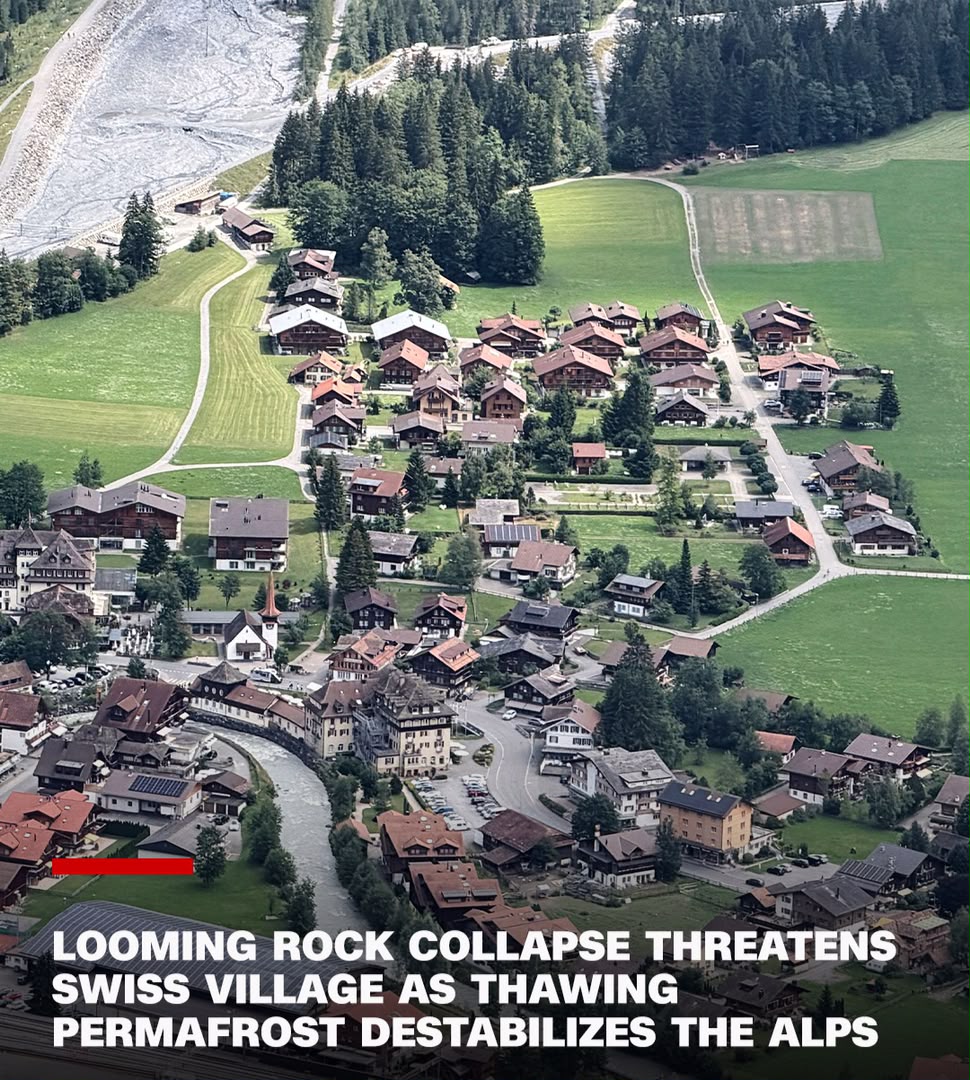
Unstable Mountain Formation Threatens Swiss Village With Major Landslide An unstable mountain rock formation looming above the Swiss Alpine village of Kandersteg is raising fears of a potentially massive landslide, as scientists warn that thawing permafrost and melting glaciers are increasing instability across the Alps. The formation, known as Spitze Stei, contains an estimated 15 million to 20 million cubic metres of unstable rock. If the entire mass were to collapse, it could trigger a major disaster in the valley below. About 1,300 people live in Kandersteg, where authorities are closely monitoring movements in the mountain and have prepared evacuation plans. Despite the danger, residents say they remain relatively calm because the formation has been monitored for years and precautionary measures are already in place. Experts also stress that a complete collapse in one event is not considered the most likely scenario. The unstable rock is more likely to break away progressively, although authorities continue to prepare for a larger failure. Scientists say rising temperatures are contributing to the destabilisation of Alpine slopes. Permafrost permanently frozen ground and rock that effectively acts as a natural binding agent becomes weaker as temperatures rise. At the same time, retreating glaciers can alter the pressure and support structures within mountain landscapes. Climate scientist Markus Stoffel of the University of Geneva said the melting of ice within mountains removes the “cement” that helps hold slopes together, making landslides increasingly likely. The situation has drawn comparisons with the May 2025 disaster in nearby Blatten, where a massive rock-and-ice collapse devastated much of the village after residents had been evacuated. The Blatten event was linked to the interaction of unstable rock, glacier dynamics and a warming Alpine environment. Kandersteg’s situation is different, however, and local residents and authorities emphasise that monitoring and preparations have been in place for years. The threat nevertheless highlights a growing concern across the Swiss Alps: as glaciers retreat and permafrost thaws, some mountain communities could face increasingly difficult and expensive efforts to remain safe.