WHO Reports ‘Encouraging Signs’ In DR Congo Ebola Fight, But Warns Outbreak Continues
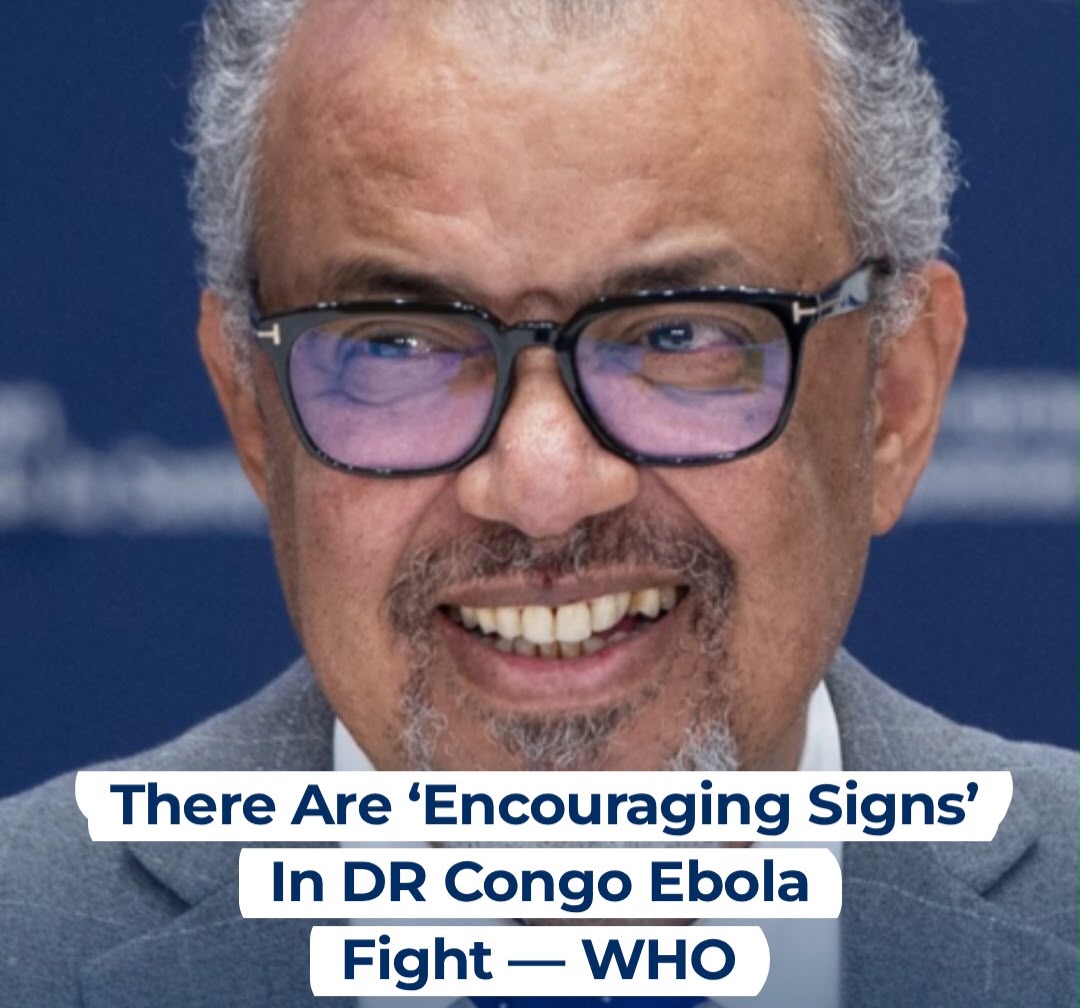
WHO Reports ‘Encouraging Signs’ in DR Congo Ebola Fight, But Warns Outbreak Continues The World Health Organization WHO says it is seeing “encouraging signs” in efforts to contain the Ebola outbreak in the Democratic Republic of Congo DRC, although the epidemic continues to spread and claim lives. WHO Director-General Tedros Adhanom Ghebreyesus said on Wednesday that transmission was declining in parts of Ituri province, the epicentre of the outbreak, while no new cases have been reported in South Kivu since May.
“We are starting to see encouraging signs that we’re gaining ground,” Tedros said during a news conference in Geneva. Despite the signs of progress, WHO cautioned that the situation remains serious. More than 7,200 cases and over 3,500 deaths have been recorded across seven provinces since the DRC declared its latest Ebola outbreak in May, according to figures cited by WHO officials. The WHO’s latest disease outbreak report had previously recorded 6,757 confirmed cases and 3,267 deaths as of September 7, with Ituri accounting for the largest share of cases. The outbreak is being driven by the Bundibugyo virus, a relatively rare Ebola species. While transmission is declining in parts of Ituri, the situation is worsening in North Kivu. Tedros said weekly cases in North Kivu had nearly doubled over the previous two weeks, rising from about 100 to more than 200. He described the situation as involving “many outbreaks in many places,” rather than a single, uniformly spreading epidemic. The spread has been complicated by insecurity, population movement and difficulties accessing affected communities. Tedros said clinical trials of treatments and post-exposure prophylaxis are gaining momentum as community engagement improves. He also said vaccine trials targeting the outbreak could begin in the coming weeks. More than 3,000 frontline workers have already received Merck’s Ervebo vaccine, although WHO has noted that its effectiveness against the Bundibugyo virus responsible for the current outbreak remains uncertain. Researchers are also working on candidate vaccines specifically designed to target the Bundibugyo virus. Despite the progress in some areas, Tedros warned that the outbreak remains far from over. “Make no mistake: the epidemic continues to grow and continues to kill,” he said. Maria Van Kerkhove, WHO’s director of epidemic and pandemic management, also cautioned that the response would require sustained efforts, saying there were still “many, many months” ahead. The WHO has continued to stress surveillance, contact tracing, vaccination and cross-border coordination as key measures for preventing further spread. The latest developments present a mixed picture: transmission appears to be slowing in parts of the hardest-hit areas, while new infections are increasing rapidly elsewhere. WHO officials therefore continue to urge caution, warning that early improvements should not be interpreted as the end of the epidemic. The DRC’s current outbreak remains one of the country’s most significant Ebola emergencies, with health authorities and international partners continuing efforts to bring transmission under control.