FG SAYS IT IS MONITORING MIDDLE EAST TENSIONS, MOVES TO PROTECT NIGERIA’S ECONOMY
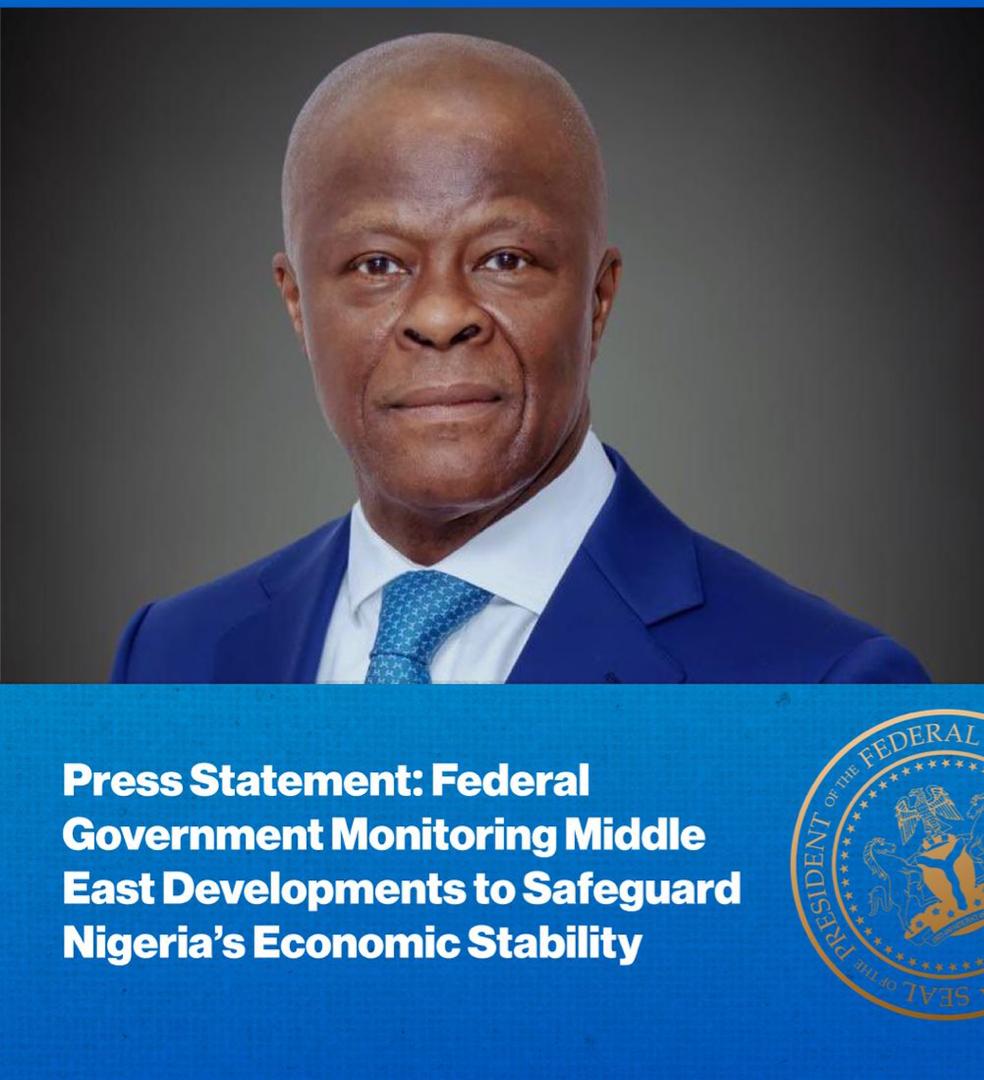
FG SAYS IT IS MONITORING MIDDLE EAST TENSIONS, MOVES TO PROTECT NIGERIA’S ECONOMY The Federal Government of Nigeria says it is actively monitoring the ongoing geopolitical tensions in the Middle East and taking measures to protect the country’s economic stability in the face of potential global market shocks. In a statement issued through the Federal Ministry of Information and National Orientation, officials emphasised that the government is closely tracking developments involving the United States, Israel and Iran, and is coordinating policy responses with relevant institutions to reduce the risk of economic disruption for Nigerian The government said the Economic Management Team (EMT), chaired by the Honourable Minister of Finance and Coordinating Minister of the Economy, Wale Edun, has convened high‑level meetings to assess the possible effects of the Middle East crisis on key domestic economic indicators including price movements, capital flows and financial markets. According to the ministry, the EMT is coordinating closely across fiscal, monetary and energy policy institutions to ensure that any policy adjustments are proactive and timely. The team is keeping strategic review of potential risks and options aimed at reducing volatility in crude oil prices, exchange rates and other macroeconomic variables. “The Federal Government of Nigeria is closely monitoring escalating geopolitical tensions in the Middle East involving the United States, Israel and Iran, and remains committed to safeguarding Nigeria’s economic stability,” the statement noted. Officials identified several channel s through which the conflict could affect the Nigerian economy, including:
- Crude oil and gas price volatility, which could influence domestic fuel and energy costs.
- Capital flows and financial market conditions, with risk‑averse investors potentially reallocating funds away from emerging markets.
- Global logistics and supply chain disruptions, which could inflate freight and shipping costs. To manage these risks, the government said it is reviewing policy measures that could involve fiscal, monetary and energy frameworks while protecting households, businesses and investors from external shocks Despite global uncertainty, the government noted that Nigeria is entering this period with strengthening macroeconomic fundamentals. Recent data show real GDP growth of 4.07 per cent in the fourth quarter of 2025, reflecting positive outcomes from ongoing economic reforms and strengthened coordination across policy institutions.
“The Federal Government emphasises that Nigeria remains vigilant and proactive, committed to maintaining macroeconomic stability and supporting sustained economic growth amid global volatility,” the ministry said. The statement highlighted that the minister also chaired a naira‑for‑crude policy coordination meeting to review developments in the global energy market and their domestic implications, further signalling the government’s efforts to anticipate market dynamics and adjust policy responses where necessary. The Federal Government reiterated its assurance that it would continue to monitor these international developments, adjust policy frameworks where necessary, and protect Nigeria’s economic trajectory from potential fallout due to geopolitical shocks.