CONTROVERSIAL INDIAN GURU GURMEET RAM RAHIM SINGH’S MULTIPLE PAROLES TRIGGER OUTCRY
CONTROVERSIAL INDIAN GURU GURMEET RAM RAHIM SINGH’S MULTIPLE PAROLES TRIGGER OUTCRY
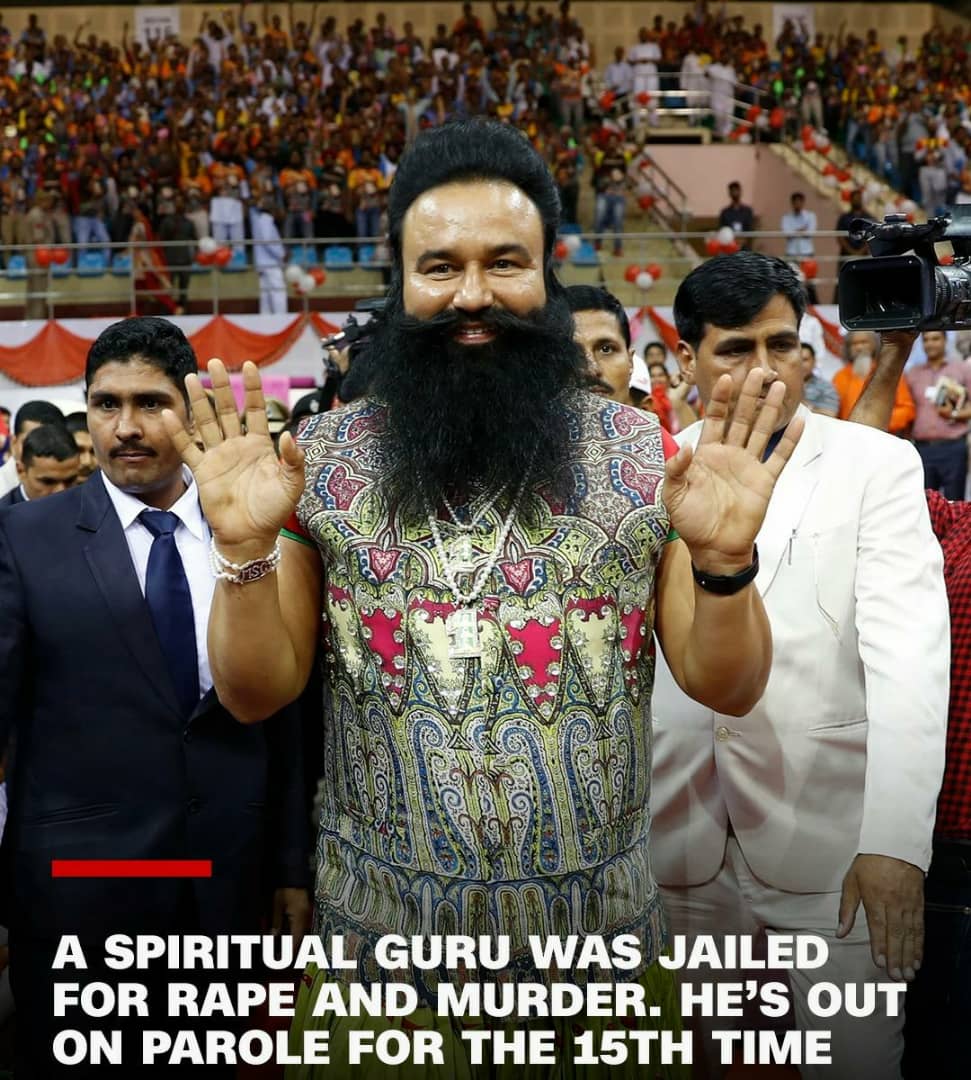
Flashy preacher with rock-star taste, jailed on rape and murder convictions, repeatedly released on parole has spent over 400 days outside prison amid public debate over justice and influence.
By international news agencies reporting on developments
Gurmeet Ram Rahim Singh the flamboyant leader of the Dera Sacha Sauda sect, known for his charismatic following, self-produced films and musical persona has once again drawn global attention as he continues to be released on parole from his life sentence, despite convictions for rape and murder. His frequent temporary releases have sparked controversy across India and beyond.
Singh was first convicted in August 2017 for raping two of his female disciples and was sentenced to 20 years in prison. In 2019 he received an additional life sentence in the murder of journalist Ram Chander Chhatarpati, though parts of that conviction were later overturned on appeal. Despite his life sentence, authorities in Haryana have repeatedly granted Singh temporary release on parole or furlough, with his most recent 40-day parole marking the 15th such release since 2017. Over the course of roughly eight years behind bars, Singh has accumulated more than 400 days outside prison under temporary release schemes, according to multiple media reports. Singh’s paroles and furloughs have varied in length and timing, but notable patterns include:
40-day parole granted most recently in January 2026, his 15th release. Earlier releases for 30 days, 21 days and other durations throughout 2025 and prior years.
Several releases coinciding with election periods and public religious festivals, drawing scrutiny from critics.
During these paroles, Singh typically resides at his Dera Sacha Sauda headquarters in Sirsa, Haryana, or at the sect’s ashram in Baghpat, Uttar Pradesh, and remains a vocal presence on social media even while serving a sentence. Under Indian law, parole and furlough provisions are intended as temporary humanitarian measures for urgent personal or family needs or as rewards for good conduct. These releases do not reduce the sentence served, and furlough days may count toward overall term, while parole days do not.
However, Singh’s unusually frequent use of these provisions granted under the Haryana Good Conduct Prisoners Temporary Release Act and other state policies has ignited a heated debate about justice, equality before the law and political influence. Critics argue that:
The frequency and timing of releases appear to align with major political and social events, raising questions about impartiality and favour. Singh’s large following and perceived political connections could factor into decisions to allow his temporary freedom.
In some cases, courts have been asked to intervene; a public interest litigation (PIL) challenging the legality of repeated paroles was rejected by the Supreme Court of India, which questioned the basis for the petition. The paroles and furloughs have outraged victims’ families and sections of the public who argue that such privileges undermine justice and erode trust in the legal system. Many point to the extended periods Singh spends outside prison as inconsistent with the gravity of his convictions. Supporters of the pardons counter that parole and furlough are legal rights available to inmates who meet statutory criteria and that Singh is entitled to these temporary releases like any other convict.
Singh remains a polarising figure in India, blending spiritual leadership with media visibility as the head of a sect that garners millions of followers nationwide. His past self-produced films and music projects, along with his self-styled “rock star” image, have contributed to his enduring popularity among adherents even as he serves prison time. His continued temporary releases epitomise broader tensions in Indian society over the intersection of religious leadership, political influence and the rule of law a debate that shows no sign of abating as legal and social institutions grapple with balancing rehabilitation, public safety and equal justice.