Colombia Requests International Rescue Teams As Search For Earthquake Survivors Enters Critical Phase
Colombia Requests International Rescue Teams as Search for Earthquake Survivors Enters Critical Phase Colombia has begun receiving international aid and specialized rescue personnel after initially declining some offers of foreign assistance in the crucial hours following a devastating 7.4-magnitude earthquake that struck the country on Monday. The change in approach comes as Colombian authorities race against time to locate people who may still be trapped beneath collapsed buildings and other structures.
The country’s newly appointed disaster-management chief, David Tamayo, said the government has formally requested search-and-rescue teams from just four countries: the United States, El Salvador, Ecuador and Israel In the immediate aftermath of the earthquake, Colombia relied heavily on its own emergency personnel and initially did not accept some international offers to send specialized rescue teams. That position has since changed as the scale of the destruction has become clearer and the search for survivors has entered a critical period. International personnel and humanitarian assistance are now arriving to work alongside Colombian emergency crews. The foreign teams are expected to provide specialized expertise and equipment for operations in collapsed structures.
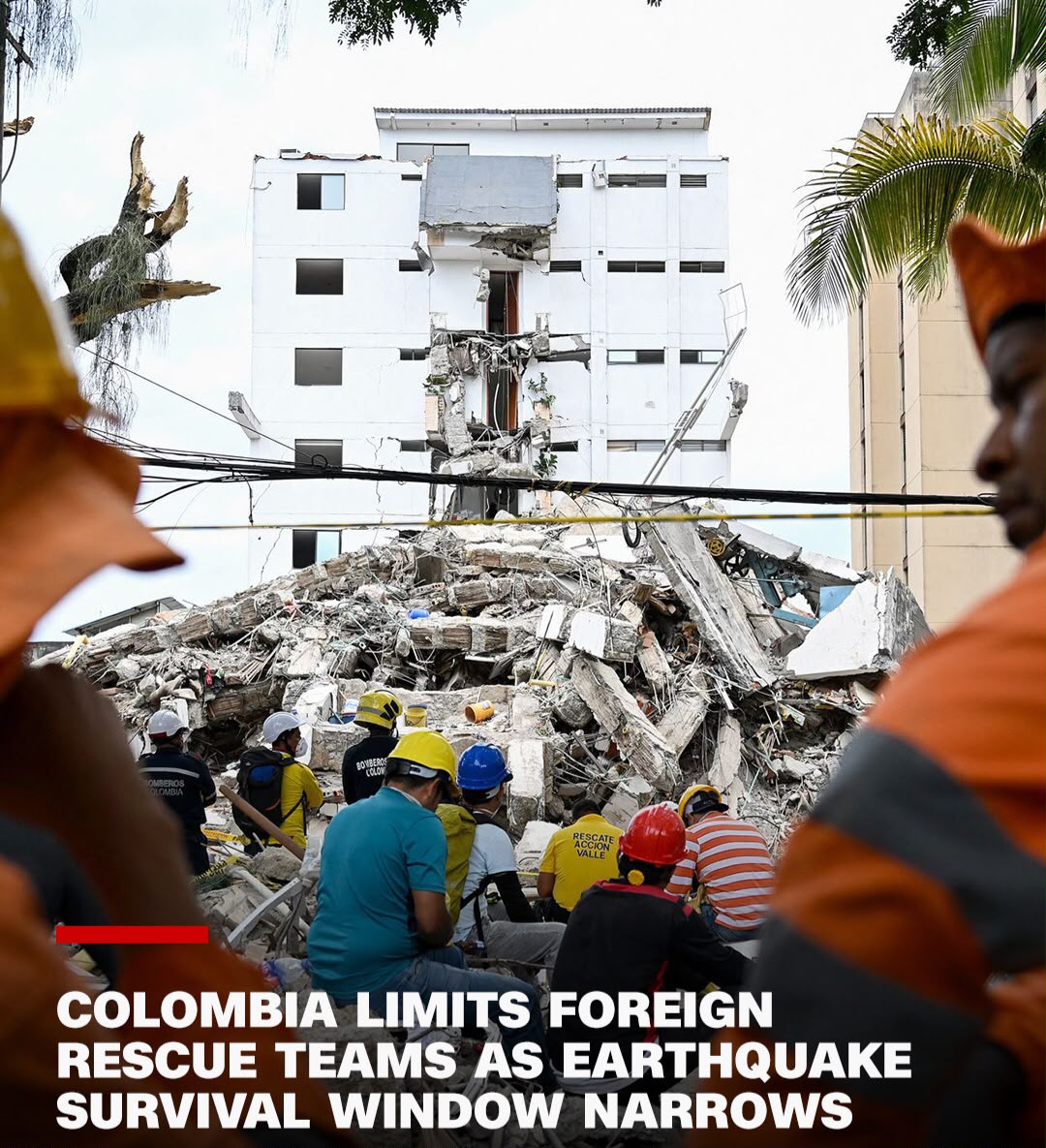
The decision comes as rescuers continue working around the clock in some of the country’s hardest-hit areas. The magnitude-7.4 earthquake struck western Colombia on August 10, with its epicenter near San José del Palmar in the Chocó region. The tremor caused extensive damage across several parts of the country, including Cali, Pereira, Quibdó and Manizales. According to the latest figures reported by Colombian authorities, 265 people have died and thousands have been injured, while hundreds remain missing. More than 9,500 homes have reportedly been destroyed or damaged.
The destruction has been particularly severe in areas where buildings collapsed, leaving rescue teams searching through concrete and debris for signs of life The timing of the international response is critical. Search-and-rescue specialists typically face their greatest challenges during the first several days after a major earthquake, when the chances of finding survivors trapped beneath rubble are highest. Colombian rescuers have continued searching collapsed structures despite dangerous conditions, including the risk of aftershocks and unstable debris. One of the most dramatic rescues came in Cali, where rescuers and local residents pulled a baby alive from the rubble of a collapsed residential complex. The rescue offered a rare moment of hope amid the devastation.
The United States has pledged $15.5 million in emergency assistance and deployed a Disaster Assistance Response Team to support the Colombian response. Other countries and international organizations have also offered assistance. Reuters reported that international teams, including personnel from Mexico and Peru, had also arrived as Colombia expanded its relief effort. The government’s decision to request specific foreign rescue teams reflects a more targeted approach: international specialists will supplement Colombia’s domestic response rather than replace it. The earthquake has become an early and significant test for newly inaugurated President Abelardo de la Espriella, who took office only days before the disaster. His government has declared an emergency, established response operations and pledged to create a reconstruction fund for damaged homes, hospitals, schools and infrastructure. But the initial hesitation over accepting foreign rescue assistance has generated scrutiny, particularly because the first days after an earthquake can be decisive for people trapped under rubble. For families still waiting for news of missing relatives, the arrival of international rescue specialists represents a renewed effort to find survivors before time runs out. Colombia now faces a dual challenge: continue the search for survivors while beginning the enormous task of providing shelter, medical care and reconstruction assistance to communities devastated by the earthquake.
As foreign rescuers join Colombian teams, authorities are hoping that additional expertise and equipment can increase the chances of finding people still alive beneath the rubble.