CIVIL SOCIETY ESCALATES PRESSURE ON SENATE OVER ‘CONDITIONAL’ ELECTRONIC TRANSMISSION CLAUSE
CIVIL SOCIETY ESCALATES PRESSURE ON SENATE OVER ‘CONDITIONAL’ ELECTRONIC TRANSMISSION CLAUSE
A coalition of civil society organisations (CSOs) has intensified pressure on the Nigerian Senate, demanding that the real-time electronic transmission of election results be made mandatory and unconditional in the ongoing amendment of the Electoral Act warning that a Senate-approved “conditional” clause could weaken the credibility of the 2027 general elections.
The controversy centres on Clause 60(3) of the Electoral Act (Amendment) Bill, 2026, which the Senate amended to allow conditional electronic transmission of results meaning results could be digitally sent only if network and technical conditions are met with offline manual results as a fallback.
Civil society advocates insist this version dilutes reforms, contrasting it with the House of Representatives’ draft, which calls for compulsory real-time electronic transmission of Results from polling units to the INEC Result Viewing Portal without exception.
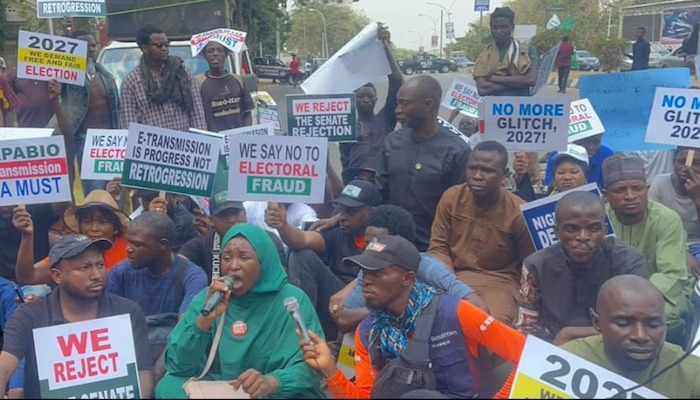
Protesters argue that discretionary clauses and language ambiguity could be exploited in future elections, undermining transparency and public trust. At protests held outside the National Assembly in Abuja, representatives of the Nigeria Civil Society Situation Room and allied groups stressed that mandatory and immediate e-transmission is essential for credible elections.
Coalition Co-Convener Andrew Mamedu told demonstrators that “electronic transmission of results must be mandatory and without conditions” and warned that the Senate’s current approach risks reviving controversies seen in past polls.
They delivered petitions and letters to lawmakers and called on the joint conference committee reconciling the Senate and House versions of the bill to adopt the House’s real-time transmission position. The group also urged retention of a 360-day election notice timeline to ensure adequate planning, voter education, logistics, and legal clarity. Civil society bodies argue that real-time digital transmission, by immediately uploading polling unit results, enhances transparency, reduces opportunities for manipulation, and increases voter confidence in electoral outcomes.
They cite examples from off-cycle governorship elections in states like Imo, Kogi and Bayelsa, where high e-transmission rates were achieved, countering claims that network limitations make real-time transmission impractical. Youths, labour unions, and other pro-democracy organisations have also taken to the streets around the National Assembly, staging demonstrations demanding full electronic transmission without manual backups.
Some prominent public figures, including former political candidates and advocacy groups, have joined calls for the amendment to enshrine unconditional e-transmission to safeguard the legitimacy of the 2027 elections.
Critics argue the Senate’s conditional clause could create legal ambiguity and become a trap for electoral disputes, weakening election integrity if adopted by the President.
Lawmakers have acknowledged the debate: the Senate claims its amended version still mandates electronic transmission but includes provisions for offline fallback when connectivity fails.
A joint conference committee of the National Assembly has been tasked with harmonising House and Senate versions of the bill before final passage and submission to the President for assent.
The row reflects broader tension over Nigeria’s electoral reform balancing technological capability and infrastructure realities with the imperative for credible, transparent, and dispute-free elections. Civil society insists mandatory real-time e-transmission is vital to prevent manipulation and restore public trust in the democratic process ahead of the 2027 polls, while some lawmakers cite implementation challenges as justification for flexibility.