Bangladesh Nationalist Party Claims Landslide Victory In Pivotal Parliamentary
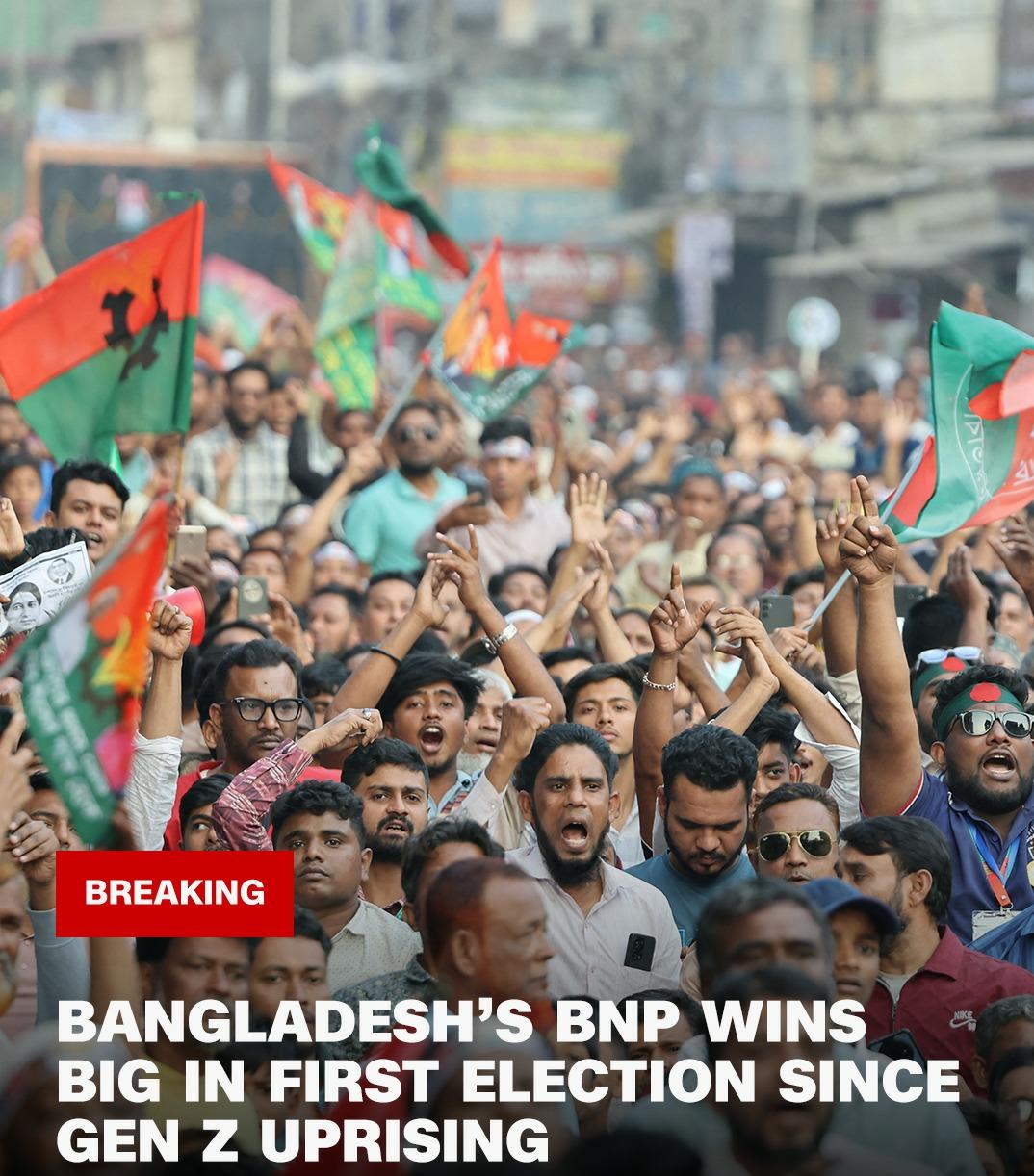
Bangladesh Nationalist Party Claims Landslide Victory in Pivotal Parliamentary Election The Bangladesh Nationalist Party (BNP) has won a landslide victory in Bangladesh’s parliamentary election, with local television stations showing the party securing a commanding majority in the 300-seat Jatiya Sangsad (national parliament), in what is being seen as a landmark political moment for the South Asian nation of 175 million.The election was held on Thursday, February 12, and was the first national vote since a 2024 student-led uprising that toppled long-time leader Sheikh Hasina and sent her into exile in India. Local broadcasters showed the BNP comfortably surpassing the threshold needed for a majority, with projections of around 209 seats, giving it a two-thirds parliamentary majority a margin widely interpreted as a clear public mandate. Some early projections put the party’s tally above 185 seats, crossing both simple and supermajority benchmarks.
Analysts say the decisive outcome is expected to restore political stability after months of unrest that had disrupted daily life and key industries, including the garment sector Bangladesh’s economic backbone. The BNP’s win marks a major shift in Bangladeshi politics, ending a long period of domination by Hasina’s Awami League and signalling a new chapter in governance following widespread public frustration and protest movements.
Tarique Rahman, who returned from 17 years in exile, is widely expected to become Bangladesh’s next prime minister after leading the BNP to this victory. Rahman, son of former prime minister Khaleda Zia and influential independence era figure Ziaur Rahman, campaigned on promises of economic reform, job creation, anti-corruption measures, and strengthening democratic governance. Alongside the parliamentary vote, preliminary results from a referendum on constitutional reforms showed strong support for measures aimed at:
Limiting the prime minister’s term in office,
Strengthening judicial independence,
Increasing gender representation,
Establishing provisions for neutral interim governments during elections. These changes, crafted in the wake of the 2024 uprising, are seen as a bid to curtail entrenched political influence and prevent future democratic backsliding.
Voter turnout appeared robust, with reports indicating participation above 60 percent, a significant increase from the previous election, which saw just 42 percent turnout in 2024.
More than 127 million voters were registered, making this one of the most widely participated elections in Bangladesh in recent decades. The Bangladesh Jamaat‑e‑Islami and its allied coalition took a smaller share of seats projected around 68 and has pledged to serve as a responsible opposition, stating it would pursue “positive politics.” Meanwhile, critics of the election including supporters of the banned Awami League have decried the process as flawed, citing their exclusion from the ballot and warning that long-term stability depends on broader political inclusion. This election follows the 2024 Gen Z-driven uprising that ended Sheikh Hasina’s 15-year rule and highlighted generational frustration with entrenched politics and limited democratic freedoms. Observers say the peaceful conduct of these polls, coupled with the BNP’s landslide, represents a break from past cycles of disputed elections and political violence, offering hope for a more stable and representative governance model.