Trump Says Countries Doing Business With Iran Will Face 25% U.S. Tariff
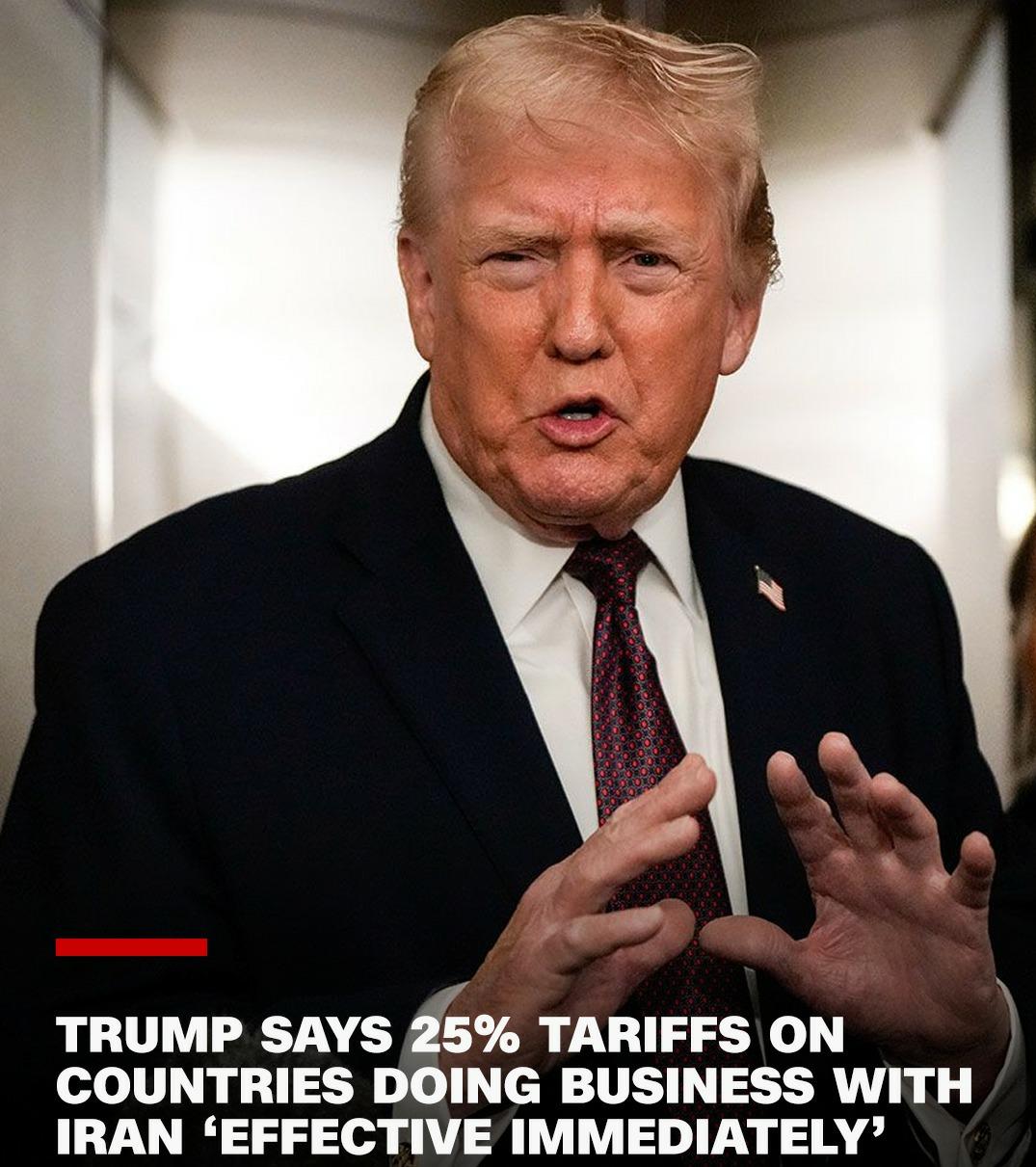
Trump Says Countries Doing Business With Iran Will Face 25% U.S. Tariff
Move Escalates Economic Pressure as Washington Seeks Response to Iran Unrest and Global Trade Risks Rise
WASHINGTON — U.S. President Donald J. Trump announced on Monday that any country doing business with the Islamic Republic of Iran will face a 25% tariff on all trade with the United States, in a stark escalation of economic and geopolitical pressure tied to the ongoing crisis in Tehran.
In a message posted on his social media platform Truth Social, Trump declared the tariff measure “effective immediately” and described the order as “final and conclusive.”
“Effective immediately, any Country doing business with the Islamic Republic of Iran will pay a Tariff of 25% on any and all business being done with the United States of America,” Trump wrote, warning that the new levies will apply across the board.
Wide Economic Implications and Global Reaction
The unprecedented policy could affect major global trading partners that maintain commercial ties with Tehran. China, India, the United Arab Emirates, Turkey, Brazil, Russia and other nations that import or export goods to and from Iran are seen as potential targets of the U.S. tariff regime — a development that risks upsetting fragile global trade arrangements.
China, Iran’s largest trading partner, could face particularly steep costs, since billions of dollars’ worth of oil and other goods trade flows link Beijing and Tehran.
Economists warn the tariff could disrupt supply chains, raise consumer prices, and undercut diplomatic rapprochements reached in recent trade negotiations between the United States and nations such as China and India.
No Clear Legal Framework or Implementation Details
The White House has not yet published formal documentation outlining the legal authority for the tariff action, nor clarified how “doing business with Iran” will be defined for enforcement purposes. Government officials have also not specified whether critical humanitarian goods such as medical supplies would be exempt.
Trade experts note that similar tariff efforts in the past faced legal challenges in U.S. courts, and questions remain whether this latest action will withstand judicial scrutiny.
Link to Broader Iran Policy
Trump’s tariff announcement comes amid continued debate in Washington over how to respond to Iran’s harsh crackdown on anti-government protests, a crisis that has drawn international condemnation and theories of escalating U.S. leverage. The tariffs are part of a broader strategy — alongside possible diplomatic initiatives and warnings of military options — designed to pressure Tehran’s leadership.
White House Press Secretary Karoline Leavitt has said the administration is weighing “all options on the table,” including diplomatic engagement, while also keeping longstanding pressure on the Iranian regime.
Potential Global and Domestic Impact
International policymakers have reacted cautiously. Some governments are reviewing their legal and economic exposure under the new tariff scheme, while analysts warn that U.S. consumers may ultimately bear the cost through higher import prices.
The measure also arrives as Trump’s broader tariff policies — including previous levies on other nations — remain under review by the U.S. Supreme Court, which is assessing challenges to presidential authority under emergency economic powers.