Israel And Hezbollah Exchange Fire As Middle East Conflict Widened After Iran Attack
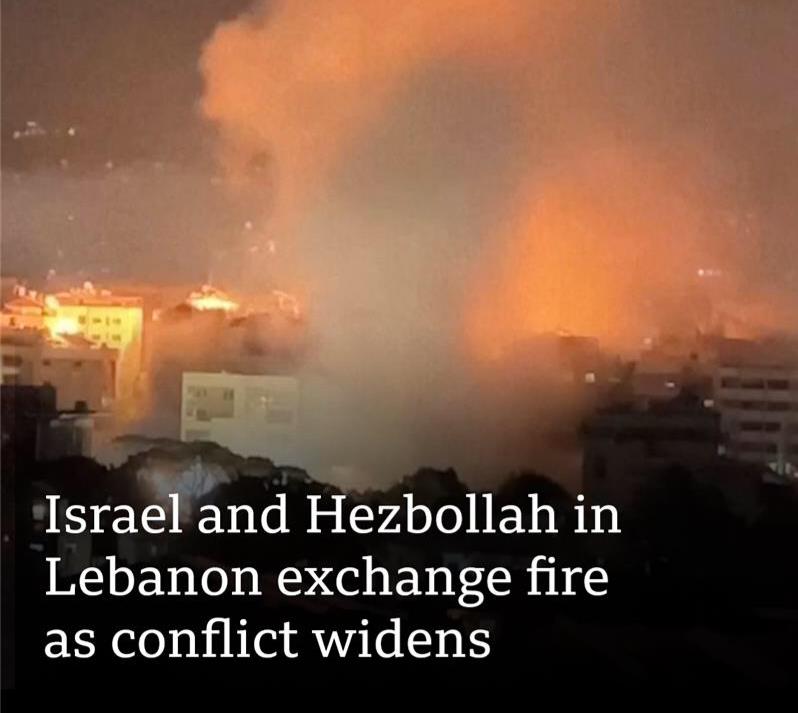
Israel and Hezbollah Exchange Fire as Middle East Conflict Widened After Iran Attack Israel and the Iran-backed militant group Hezbollah have traded fire across the Israel–Lebanon border in a major escalation of the broader Middle East conflict, marking a significant widening of hostilities that followed an international strike on Iran. The exchange represents the most intense confrontation between Israel and Hezbollah since the 2024 ceasefire, and comes amid a region-wide crisis triggered by U.S. and Israeli military action against Iranian targets Hezbollah confirmed it launched missiles and drones toward northern Israel in what the group described as retaliation for the killing of Iran’s Supreme Leader, Ayatollah Ali Khamenei, in weekend strikes on Tehran. The group said the launch was justified as “self-defence” and in response to ongoing Israeli actions.
Israeli Airstrikes on Hezbollah Positions
In response, the State of Israel military carried out heavy airstrikes on Hezbollah controlled areas in Lebanon, including Beirut’s southern suburbs and other strategic locations. Explosions were reported across the Lebanese capital early Monday, with residents fleeing toward safer areas as strikes continued.
The Israeli Defense Forces (IDF) said it was acting against Hezbollah’s decision to enter the wider conflict and vowed to prevent any threats to Israeli territory. The military also warned that additional action would follow if hostile activities persisted.
Authorities in Lebanon have reported displacement of civilians from Beirut’s southern suburbs and southern regions, as residents attempted to escape the intense bombardment. Lebanese Prime Minister Nawaf Salam condemned Hezbollah’s rocket fire as “irresponsible” and warned against actions that endanger national security and stability.
The clashes between Israel and Hezbollah have expanded a conflict that had already swept across the Middle East following U.S. and Israeli strikes on Iranian territory. Analysts warn that the involvement of Hezbollah one of Tehran’s closest allies could draw Lebanon further into the broader crisis, raising fears of a wider regional war. Hezbollah’s engagement breaks a fragile status quo that had limited direct confrontation with Israel since late 2024. Israel’s retaliatory strikes signify its intent to respond aggressively to any threats from Lebanese territory.
Lebanese authorities are struggling to contain spill-over violence and protect civilians amid rising tensions.