Nigeria Pushes Digital Infrastructure Agenda To Harness Youth
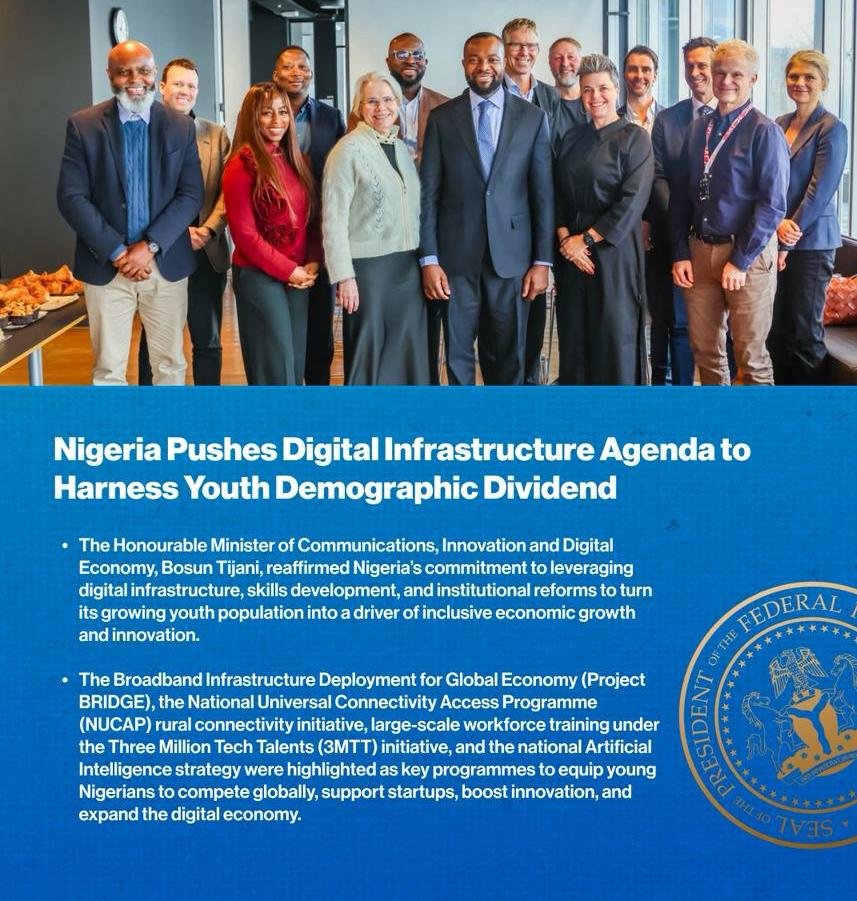
Nigeria pushes digital infrastructure agenda to harness youth demographic dividend under Renewed Hope Agenda
Abuja The Federal Government of Nigeria, under President Bola Ahmed Tinubu’s has stepped up efforts to build robust digital infrastructure and empower its youthful population, aiming to transform the country’s demographic advantage into economic growth, jobs and global competitiveness. youth and national transformation Nigeria has one of the youngest populations in the world, with youths forming a majority of its more than 220 million citizens a demographic profile that presents both an opportunity and a risk if not properly harnessed. Analysts say equipping young Nigerians with digital skills and building the right infrastructure is crucial to converting this demographic reality into a demographic dividend rather than a socio-economic challenge.
President Tinubu has repeatedly underscored that digital skills and infrastructure are foundational for Nigeria’s economic transformation, linking digital empowerment to job creation, innovation and competitiveness in the global economy.
Key initiatives and policy priorities under this agenda include:
The 3 Million Technical Talent (3MTT) is a national plan to train three million Nigerians in digital and technical skills by 2027, equipping youth with capabilities in areas like artificial intelligence, cybersecurity, software engineering and cloud computing. It forms a core part of the administration’s strategy to build a competitive digital workforce for the future. The government has flagged off comprehensive training programmes prioritising financial inclusion, digital literacy, and enterprise skills for millions of Nigerians, targeting 10 million citizens particularly youth and women to enhance their participation in the digital economy.
Programs such as the Nigeria Youth Academy (NiYA), new digital-gig platforms and startup support initiatives are being scaled to link youth with digital opportunities, mentorship, funding and market access, reflecting a pivot towards innovation-led growth.
Nigeria’s push goes beyond training it prioritises digital infrastructure deployment to support connectivity and access:
The National Digital Economy and e-Governance Bill, once implemented, is expected to solidify the legal and regulatory foundation for digital growth and governance.
Partnerships with the private sector and technology firms shape skills programmes and digital transformation pathways for youth.
State-federal cooperation on policies such as cutting Right of Way (RoW) fees for broadband infrastructure aims to accelerate network build-out and expand digital reach nationwide.
Taken together, these efforts reflect a government commitment to ensuring that Nigeria’s digital ecosystem enables job creation, economic diversification, and inclusive development.
President Tinubu’s leadership has stressed that Nigeria’s youth population is its greatest asset provided that digital literacy, infrastructure and opportunities are expanded at scale. In his words, building a future-ready workforce through digital skills is central to achieving long-term growth and sustainable economic transformation. Digital training programmes and hackathons equip youth with globally in-demand competencies.
Broader digital economy initiatives link training to employment pathways in tech, fintech, e-commerce, AI and creative industries
Youth empowered with digital skills position Nigeria to compete internationally, expand service exports and attract tech investment. Nigeria’s digital infrastructure agenda is being integrated with national economic goals, targeting a transition from a resource-dependent economy to a knowledge-driven, digital powerhouse. With strategic partnerships, policy reforms, and massive youth engagement, the government aims to ensure that its digital transformation journey is inclusive and growthoriented unlocking the full potential of Nigeria’s demographic dividend for decades to come.