Erin Patterson Loses Appeal As Australian Court Orders Life Imprisonment Without Parole
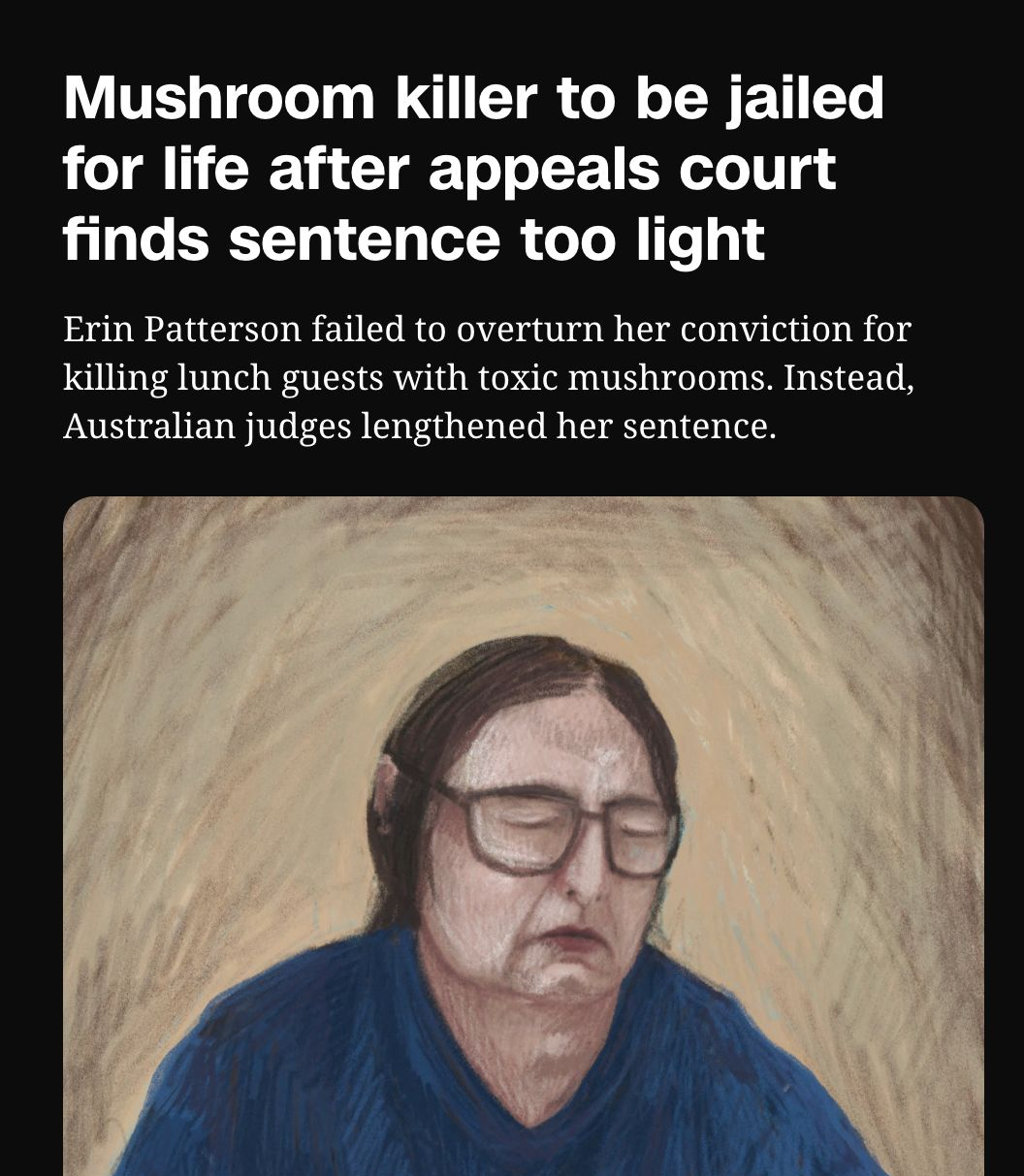
Erin Patterson Loses Appeal as Australian Court Orders Life Imprisonment Without Parole An Australian appeals court has dismissed murderer Erin Patterson’s attempt to overturn her convictions for killing three people with a meal containing poisonous mushrooms, ruling that her original sentence was too lenient for the severity of her crimes. The Victoria Court of Appeal also upheld a prosecution appeal seeking a tougher sentence, meaning Patterson will spend the rest of her life in prison without the possibility of parole. The 52-year-old was previously sentenced to three life terms with a minimum non-parole period of 33 years after being convicted of murdering three relatives and attempting to murder a fourth person. Patterson was convicted in July 2025 of poisoning her estranged husband’s parents, Don and Gail Patterson, and Gail’s sister, Heather Wilkinson, during a family lunch at her home in Leongatha, Victoria, in July 2023. She served the guests beef Wellington containing death cap mushrooms, one of the world’s most poisonous mushroom varieties. The victims became seriously ill after the meal and subsequently died in hospital. Heather’s husband, Ian Wilkinson, who also attended the lunch, survived after spending several weeks in hospital. Patterson maintained that the poisoning was accidental, claiming she had unknowingly included the poisonous mushrooms in the meal. Patterson’s lawyers had challenged her convictions on seven grounds, arguing that problems involving jury accommodation and the handling of evidence compromised the fairness of her trial. They particularly questioned arrangements that allowed jurors to stay at the same hotel as members of the prosecution team and a key police witness while deliberations were taking place. However, the three-judge appeal panel rejected the arguments, finding no objective evidence that the jury had been improperly influenced. The court also dismissed challenges relating to evidence presented by prosecutors during the original trial. In delivering the judgment, Justice Stephen McLeish said the crimes were extraordinarily cold and calculated and deserved the strongest condemnation. The judges found that Patterson had maintained an intention to kill all four guests for approximately three weeks, involving careful planning and an elaborate series of deceptions. The court concluded that the original 33-year non-parole period did not adequately reflect the seriousness of the murders and attempted murder. It therefore ruled that fixing any period after which Patterson could become eligible for parole would be inappropriate. The latest ruling means Patterson will remain imprisoned for life without the possibility of parole. She can still seek permission to appeal to Australia’s High Court, the country’s highest judicial authority. The case attracted international attention because of the unusual method of poisoning and the deaths of three members of the same extended family.