Colombia Launches Immigration Crackdown, Orders Deportation Of Undocumented Migrants
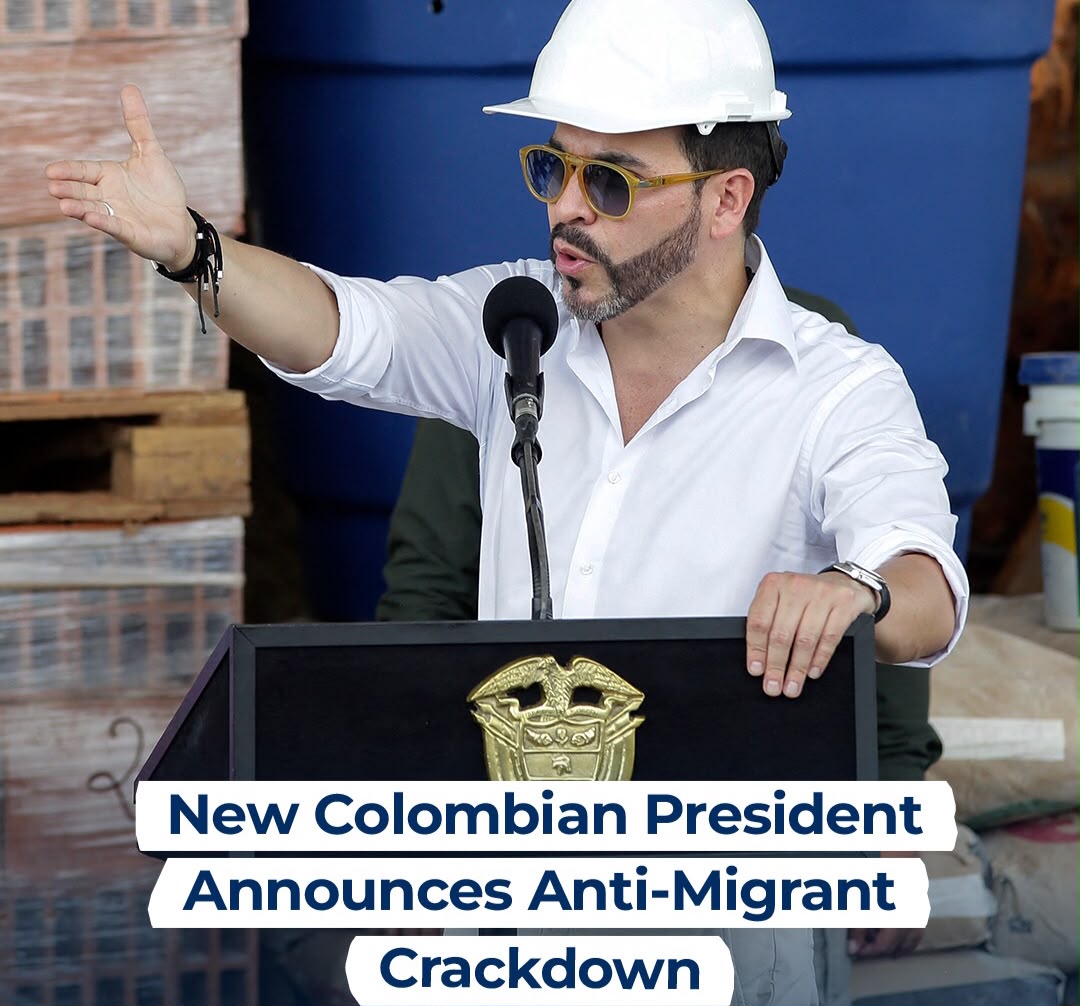
Colombia Launches Immigration Crackdown, Orders Deportation of Undocumented Migrants Colombia’s newly inaugurated right-wing President Abelardo de la Espriella has ordered an immigration crackdown, directing authorities to begin detaining undocumented foreigners convicted of crimes and start deportation procedures. De la Espriella, who took office on August 7, 2026, announced the measures during a security meeting in Barranquilla, where he said his administration would take a tougher approach to irregular migration as part of its broader campaign against crime and drug-trafficking groups.The president said immigration authorities should first target foreigners involved in criminal activity, followed by those who have failed to regularise their immigration status. He ordered deportation procedures to begin this week. De la Espriella’s rhetoric echoes the “America First” approach of US President Donald Trump, whom he has openly admired and with whom he is politically aligned. The policy could have a major impact on Colombia’s large Venezuelan migrant population. According to Colombia’s immigration authorities, about 2.8 million Venezuelans were living in the country as of June 2026, with more than 527,000 lacking regular immigration status. Colombia has traditionally maintained a relatively welcoming approach towards Venezuelans fleeing the economic and political crisis in their country. Previous conservative governments also largely viewed Venezuelan migrants as victims of the policies of former Venezuelan presidents Hugo Chávez and Nicolás Maduro. De la Espriella’s policy represents a significant shift from that approach. The president’s announcement has drawn criticism from opposition politicians and migrant-rights advocates. Left-wing senator María José Pizarro accused the government of attempting to create a Colombian equivalent of the US Immigration and Customs Enforcement agency, describing the policy as discriminatory. Supporters of the crackdown, meanwhile, argue that tougher immigration enforcement is necessary to combat rising crime and the activities of Venezuelan-linked criminal groups. Others have defended Venezuelan migrants, pointing to their contribution to Colombia’s economy. De la Espriella campaigned heavily on security, fighting organised crime and confronting drug-trafficking guerrillas, making the immigration crackdown part of his broader law-and-order agenda. The measures could mark a major change in Colombia’s migration policy and place the country’s large Venezuelan migrant community under increased scrutiny.