American Haenyeo Finds A Home In South Korea’s Jeju Island
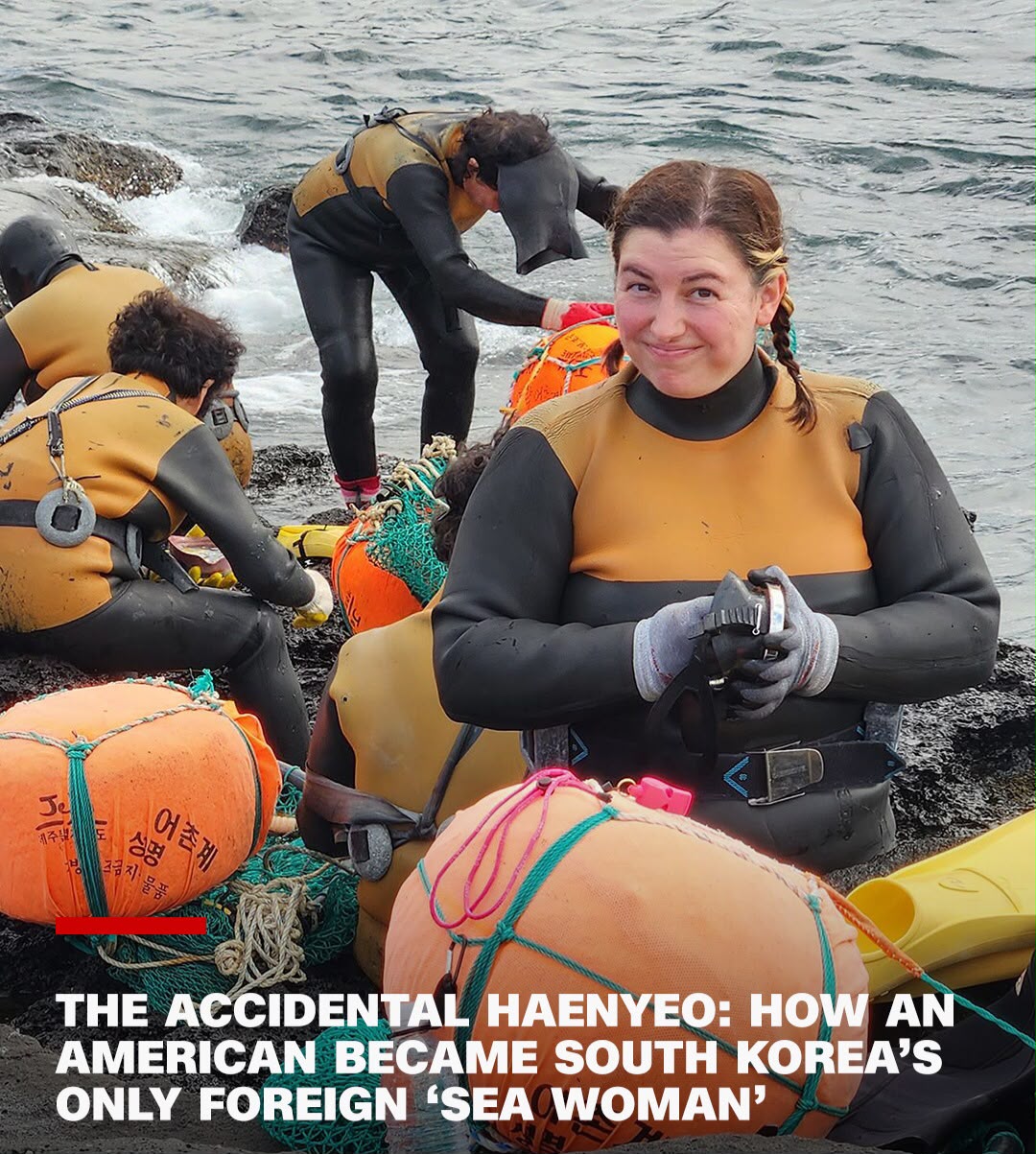
American Haenyeo Finds a Home in South Korea’s Jeju Island
A small coastal village on the western side of South Korea’s Jeju Island has become an unlikely home for a rare figure in the country an American woman who has embraced the centuries-old tradition of the haenyeo, or female free divers. Youngrak-ri was once best known for its fertile farmland and occasional sightings of dolphins. In recent years, however, the village has gained attention because an American haenyeo has become part of its close-knit coastal community. Haenyeo are women who dive into the sea without oxygen tanks to collect seafood such as abalone, sea urchins and shellfish. The tradition is deeply associated with Jeju and has been passed down through generations of women. The divers rely on their breath-holding skills to work underwater, often spending hours in the sea and using traditional equipment and techniques. For an American to become a haenyeo is particularly unusual, making the woman in Youngrak-ri a rarity in South Korea. Her experience reflects the enduring appeal of Jeju’s diving culture beyond the island’s traditional communities, while also highlighting the dedication required to learn a demanding way of life that has been shaped by generations of Jeju women. The haenyeo tradition is widely regarded as an important part of Jeju’s cultural heritage. Its survival has become increasingly significant as the number of traditional divers declines and younger generations pursue different occupations. The presence of an American haenyeo in Youngrak-ri therefore represents both a personal cultural journey and an unusual connection between Jeju’s traditional maritime culture and the wider world.