400-Year-Old Grave Reveals Fear Of The Dead Returning
400-Year-Old Grave Reveals Fear of the Dead Returning
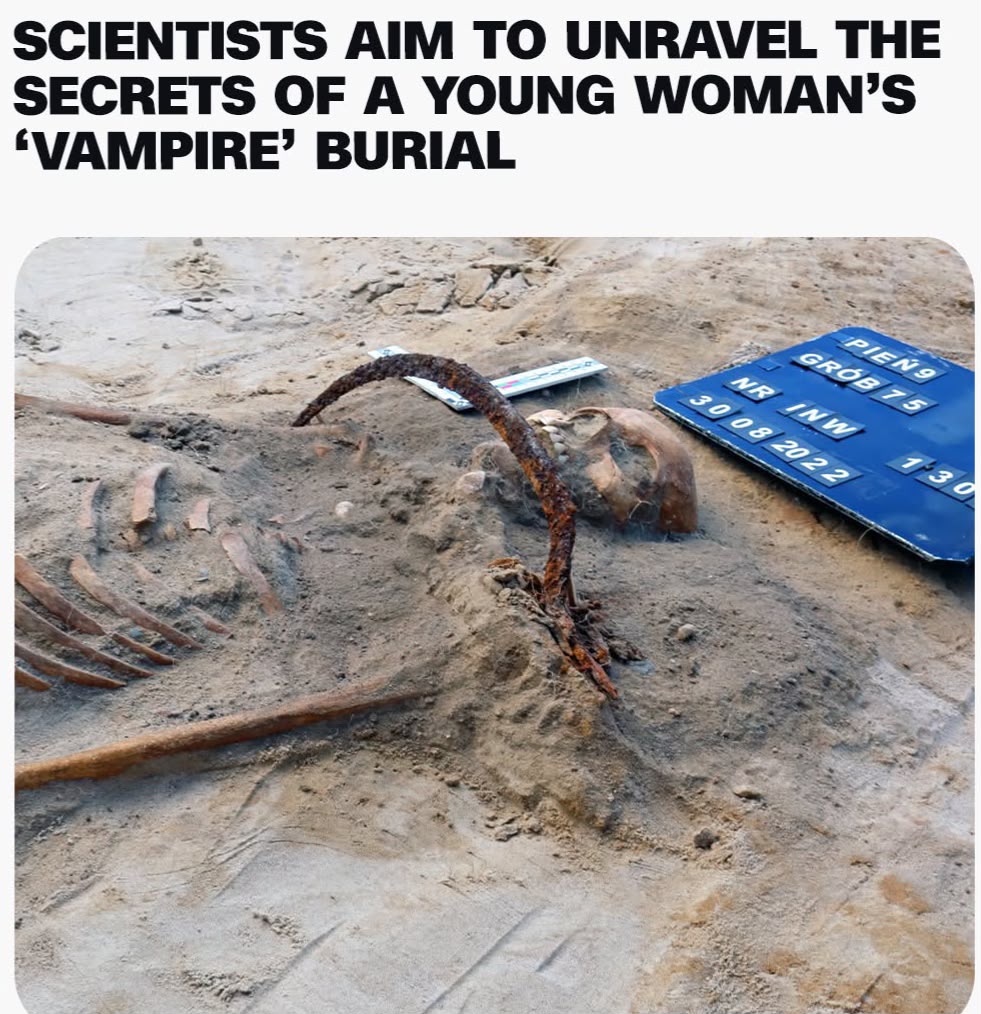
A 400-year-old grave containing the remains of a young woman has offered archaeologists a chilling glimpse into the fears and beliefs of a community that once worried the dead could return to the world of the living. The woman was buried with a rusted sickle positioned across her throat and a padlock attached to one of her feet unusual measures believed to have been intended to prevent her from rising from the grave. The discovery reflects centuries-old European beliefs surrounding people suspected of being capable of returning from the dead. Such individuals were sometimes treated as potential “revenants corpses believed to return and threaten the living. Archaeologists say the positioning of the sickle was particularly significant. If the body had attempted to rise, the blade could have prevented it, while the locked foot appears to have been another attempt to physically restrain the deceased. The burial provides evidence of how deeply supernatural beliefs could influence funeral practices, particularly during periods when communities had limited understanding of disease, unexplained deaths and the natural processes that occur after death. Similar “anti-vampire” burials have previously been discovered in parts of Central and Eastern Europe, where bodies were sometimes restrained with stones, pierced or buried with objects intended to prevent them from returning. For archaeologists, however, such graves are about more than folklore. They can reveal how ordinary people understood death, disease, religion and fear hundreds of years ago. The woman’s unusual burial therefore offers a rare physical record of a community attempting to protect itself from someone it apparently believed might not remain safely in the grave.