FG EXPANDS ECONOMIC EMPOWERMENT TO BENEFIT 25 MILLION NIGERIAN WOMEN
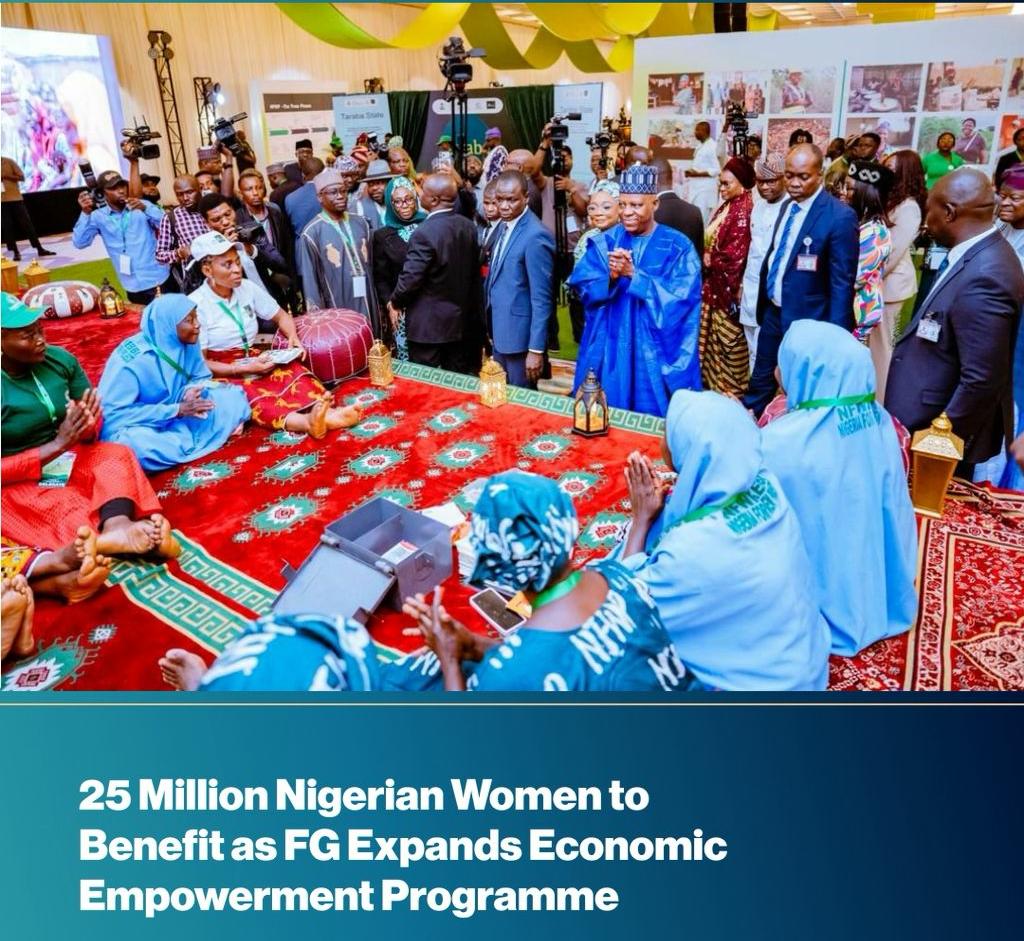
FG EXPANDS ECONOMIC EMPOWERMENT TO BENEFIT 25 MILLION NIGERIAN WOMEN Federal Government launches expanded Nigeria for Women Programme Scale-Up to reach 25 million beneficiaries nationwide Abuja, Federal Republic of Nigeria Friday, 6 February 2026
The Federal Government has formally expanded its flagship women’s economic empowerment initiative, unveiling a massive scale-up of the Nigeria for Women Programme that now targets 25 million women across Nigeria as part of the government’s broader Renewed Hope Agenda under President Bola Ahmed Tinubu
President Tinubu, represented at the launch by Vice President Kashim Shettima, declared the expansion a “strategic national investment” designed to place women at the centre of inclusive economic growth, family stability, and nation-building. The programme was launched at the State House, Abuja, in an event attended by senior government officials, development partners, and civil society representatives.
- National Ambition 25 Million Women
The expanded programme, now known as the Nigeria for Women Programme Scale-Up (NFWP-SU), aims to empower 25 million Nigerian women nationwide, far surpassing the reach of earlier phases and pilot schemes. - Digital Platform: Happy Woman App
A new digital interface, the Happy Woman App, was unveiled to connect women to finance, business markets, skills training, essential services, and government supports a major innovation to boost accessibility, transparency, and delivery. - Central to National Growth Strategy
President Tinubu stressed that Nigeria’s ambition for sustainable progress requires the full inclusion of women in economic activities, declaring that “a nation that relegates its women is a nation bound for implosion”. He positioned the programme as a pillar of social inclusion and economic productivity under the Renewed Hope Agenda. - Evidence-Driven Scale-Up
The success of the initial pilot phase which reached over one million women in six states was cited by officials as evidence for the effectiveness of structured, data-driven empowerment models that strengthen community resilience and economic participation Government leaders noted the programme’s alignment with Nigeria’s broader development goals, emphasising women’s roles in job creation, financial inclusion, food security and enterprise growth.
Officials urged development partners, including the World Bank, to deepen financing, technical assistance, and innovation support to scale implementation nationwide and embed sustainable structures that connect local efforts to national markets. The Minister of Women Affairs and Social Development highlighted that the scale-up underscores a transformative shift where women are no longer viewed as passive beneficiaries but active contributors to Nigeria’s economic development and social cohesion. - Broader Economic Opportunities
The programme is expected to unlock access to finance, enterprise support, skills development and markets for millions of women particularly in rural and underserved communities — thereby expanding participation in formal and informal economic activities. - Social and Family Impact
Aligned with the Renewed Hope Agenda’s social inclusion goals, the initiative emphasises family stability, community resilience, and strengthened social networks through income generation and empowerment. - Digital Inclusion
By incorporating digital tools like the Happy Woman App, the government aims to modernise delivery, improve service access, and foster tech-driven economic engagement among women across all states. The Renewed Hope Agenda forms the core of President Tinubu’s socio-economic reform vision, prioritising job creation, fiscal resilience, social inclusion, and private-sector participation to boost Nigeria’s global competitiveness and domestic productivity. The expanded women’s programme is one of several strategic initiatives under this national policy framework. Nigeria’s women play a significant role in the economy but have historically faced structural constraints in access to credit, markets, formal jobs, and entrepreneurial resources. The scale-up initiative seeks to address these gaps by creating institutional support systems and digital pathways for greater inclusion. This government initiative signals a major step towards inclusive development and gender-responsive policy, emphasising the socio-economic empowerment of Nigerian women as both a moral imperative and a strategic driver of national growth.