US, South Korea Cut Military Drills By Half After Trump Order
US, South Korea Cut Military Drills by Half After Trump Order
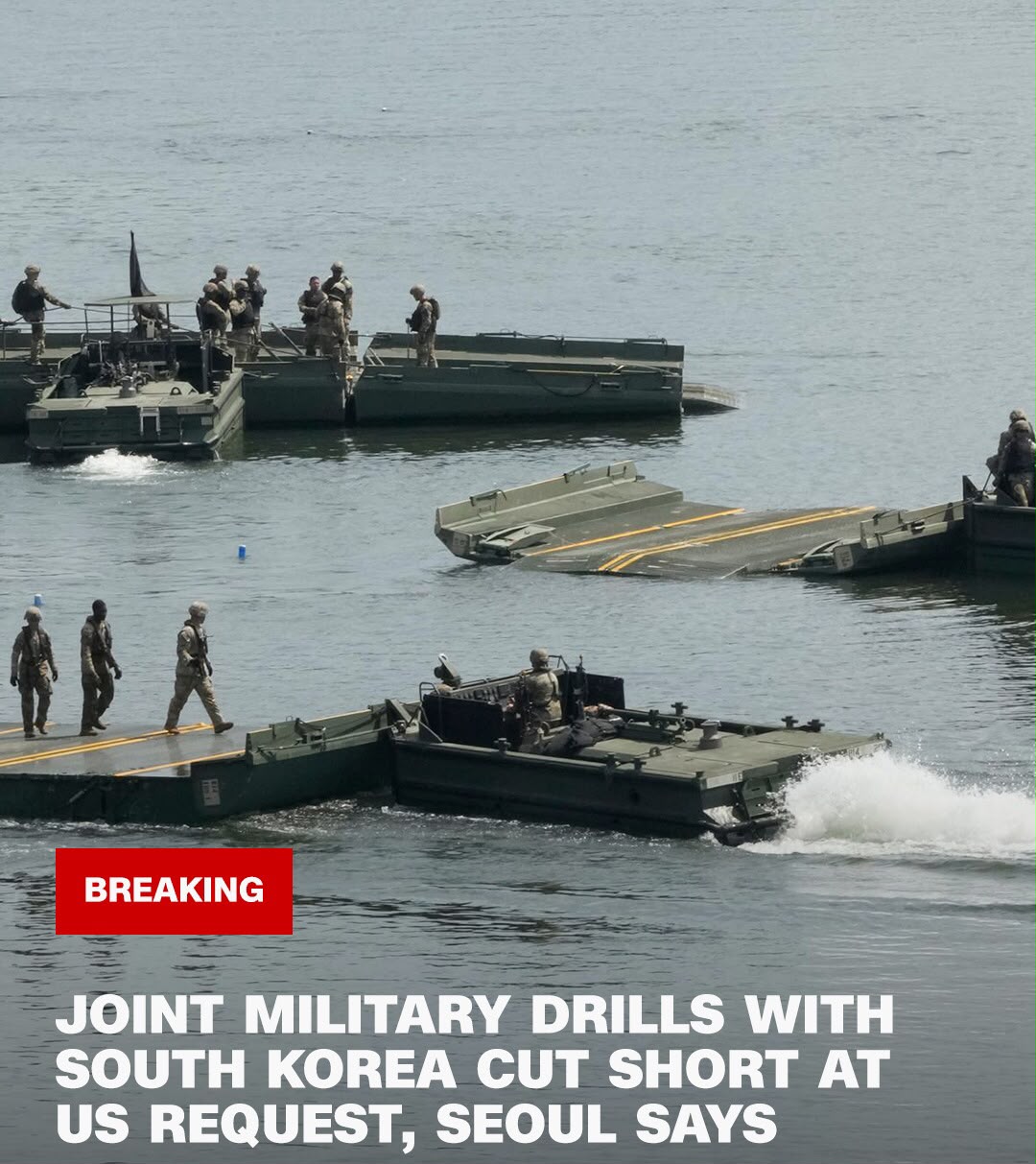
The United States and South Korea have significantly scaled back their annual Ulchi Freedom Shield military exercise at Washington’s request, shortening the drills by about half after President Donald Trump ordered the Pentagon to reduce them. The exercise, which began on August 17 and was originally scheduled to run until August 27, will now end on August 21. Some field-training activities have also been reduced or converted into separate training or simulated exercises. Trump had described the drills as costly and said they sent an “inappropriate and hostile” signal to North Korea. He also cited his “very good relationship” with North Korean leader Kim Jong Un as a reason for opposing the exercises. South Korea’s reluctance to participate in U.S. military operations against Iran was another factor Trump raised. The decision reportedly caught South Korean officials off guard, with Seoul saying the change was made at Washington’s request. The South Korean government has nevertheless expressed hope that improved relations between Trump and Kim could lead to renewed dialogue between Washington and Pyongyang. North Korea, meanwhile, has continued to condemn the exercises, calling them a serious threat to regional security. Pyongyang has long viewed U.S.-South Korean military drills as rehearsals for an invasion. The reduction has also raised concerns among defence experts about the potential impact on military readiness and deterrence. The exercises are intended to maintain the two allies’ ability to operate together in the event of a conflict with North Korea, including by giving commanders and troops experience working with one another.The move comes as Trump seeks to revive direct diplomacy with Kim Jong Un. While reducing the exercises could help lower tensions with Pyongyang, it also risks creating uncertainty in Seoul over the strength and reliability of the U.S.-South Korea military alliance. Washington’s decision to cut the drills marks a significant adjustment to one of the allies’ key military-readiness exercises, reflecting Trump’s renewed emphasis on engagement with Kim while raising questions about deterrence and alliance confidence.