WINTER OLYMPICS 2026: UNIQUE SPORTS
WINTER OLYMPICS 2026: UNIQUE SPORTS, NEW EVENTS —AND UNCOMMON TERMS FANS SHOULD KNOW
As the 2026 Winter Olympics kick off in Milan and Cortina d’Ampezzo, the Games have brought not just elite athletic competition but also a fascinating lexicon of sport‑specific jargon that can puzzle beginner fans. The mix of new sports, fresh events and classic winter disciplines means there’s plenty of unusual terminology thrown around by commentators and pundits alike from curling arenas to skeleton ice tracks. With new events and even an entirely new sport ski mountaineering this year’s programme has expanded both what you’ll see and what you’ll hear.
Making its Olympic debut, this sport blends uphill endurance with downhill speed. Athletes attach climbing skins to their skis during ascents and remove them to ski down.
Mixed team skeleton relay (pairs racing head‑first down ice).
Women’s doubles luge and expanded ski jumping events.
These additions bring not only new athletic challenges but also fresh jargon and nicknames into Olympic coverage.
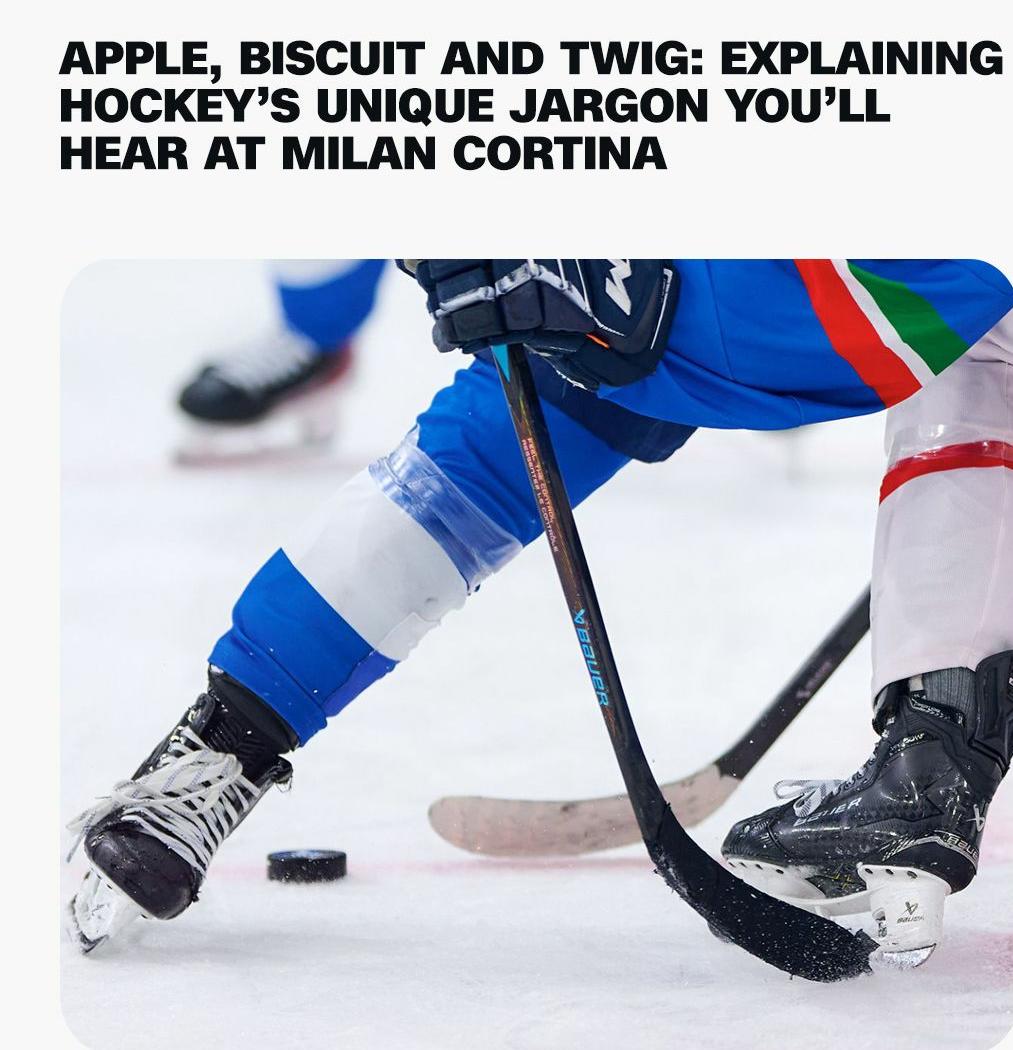
Even in familiar sports like ice hockey, commentators use language that may sound strange to casual viewers. Below are some key terms and what they mean:Apple – an assist (a pass leading to another player’s goal). Biscuit – the puck (the disc players shoot).
Bar down – when the puck hits the crossbar and goes in.
Celly – celebration after scoring.
Chirp – playful trash talk between players on ice.
Deke – a fake or feint that misleads a defender.
Roof – scoring by shooting the puck top shelf above the goalie’s reach.
Sieve – a goaltender who lets in many goals (seen as “full of holes”).
Twig – slang for a hockey stick.
These fun expressions add colour to broadcasts and help describe on‑ice action more vividly.
Beyond hockey, several sports have jargon tied to their unique mechanics:Sweeping players use brooms to warm the ice and influence stone direction and distance.
Skeleton athletes ride a sled head‑first and face down at high speeds on ice tracks.
Luge similar ice track racing but feet‑first.
Bobsleigh teams race gravity‑powered sleds down tracks.
Understanding these terms helps fans follow the high‑speed and technical side of ice track and sliding competitions.
Commentators and analysts often use shorthand to describe strategy, movement and tactics in real time. Learning the vernacular whether it’s “celly” after a big goal or what “between the pipes” refers to helps viewers feel more connected and knowledgeable about the Games. New entries like ski mountaineering and mixed team events also carry their own lexicons blending alpine strategy with endurance racing concepts unfamiliar to some viewers.