Weapons Stocks Won’t Alone Decide Outcome Of Iran Conflict But They Matter
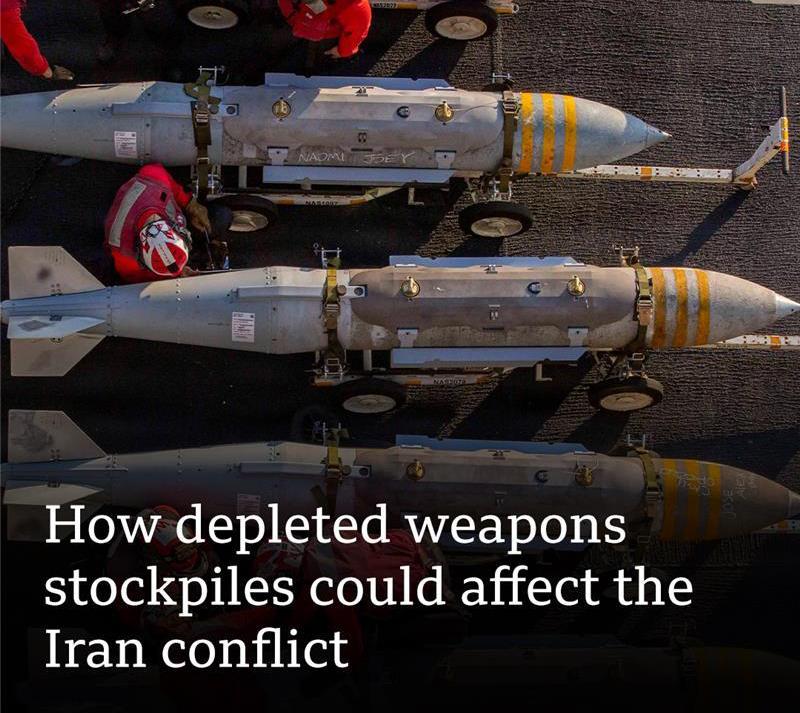
Weapons stocks won’t alone decide outcome of Iran conflict but they matter As the war between Iran and a U.S.–Israeli coalition presses into its second week, BBC defence correspondent Jonathan Beale says that the availability and depletion of weapons stockpiles will not by itself determine who wins the conflict but it is a significant factor shaping how it unfolds and how long it might last. In a detailed analysis of the war’s dynamics, Beale highlights that while raw firepower alone cannot decide the ultimate outcome of such a complex conflict, weapons stocks and production capacity influence who can sustain strikes, how often they can launch offensives, and how air defences hold up over time. Military analysts and intelligence estimates suggest both sides have already expended large quantities of missiles, drones and other ordnance since the conflict erupted. According to the Tel Aviv‑based Institute for National Security Studies, the U.S. and Israel have conducted over 2,000 strikes, each consuming multiple munitions, while Iran has launched hundreds of ballistic missiles and more than 1,300 drones into the region. This high tempo means that weapons are being used up more quickly than they can be built, forcing military planners on both sides to consider how to manage and potentially replenish their supplies. Western military officials say Iran’s rate of ballistic missile launches has dropped sharply since the early days of the conflict, with missile activity down by as much as 86 % from the first day of fighting and drone launches down around 73 %, according to data shared by U.S. Central Command. Some analysts say this could reflect efforts by Tehran to conserve remaining stockpiles for a longer war. Before hostilities began, Iran was believed to possess more than 2,000 short‑range ballistic missiles and tens of thousands of attack drones, but exact numbers remain classified by all militaries involved.
While the United States retains one of the world’s largest conventional stockpiles and air superiority over Iranian territory having largely neutralised Iran’s air defence systems even its arsenal is not unlimited. High‑end precision weapons such as Tomahawk cruise missiles are costly and produced in limited quantities, leading U.S. forces to shift toward less expensive guided bombs and other munitions for sustained operations. Experts say that although this gives U.S. and allied forces a significant advantage, sustained conflict will eventually test even the most powerful militaries’ logistical and industrial capacities particularly as targets diminish and operations extend. Another key consideration in the stockpile calculus is air defence systems such as Patriot interceptor missiles, which are expensive and limited in number. While they have been crucial in intercepting incoming Iranian strikes, their usage places strain on already stretched inventories, raising strategic questions about long‑term sustainability Beale notes that weapons stocks, while important, are only one factor in a much broader set of determinants including international diplomatic pressures, economic measures like sanctions, global energy markets and internal resilience. Historical conflicts often show that wars are shaped by strategy, logistics, morale and political will as much as by sheer munitions count. In summary, while the side with larger and more sustainable weapon stockpiles may enjoy tactical advantages in the short term, the ultimate outcome of the Iran conflict will depend on a complex interplay of military, economic and political forces that extend far beyond the number of missiles and drones each side can field.