US Vice-President JD Vance Backs Hungary’s Viktor Orbán Ahead Of Crucial Election
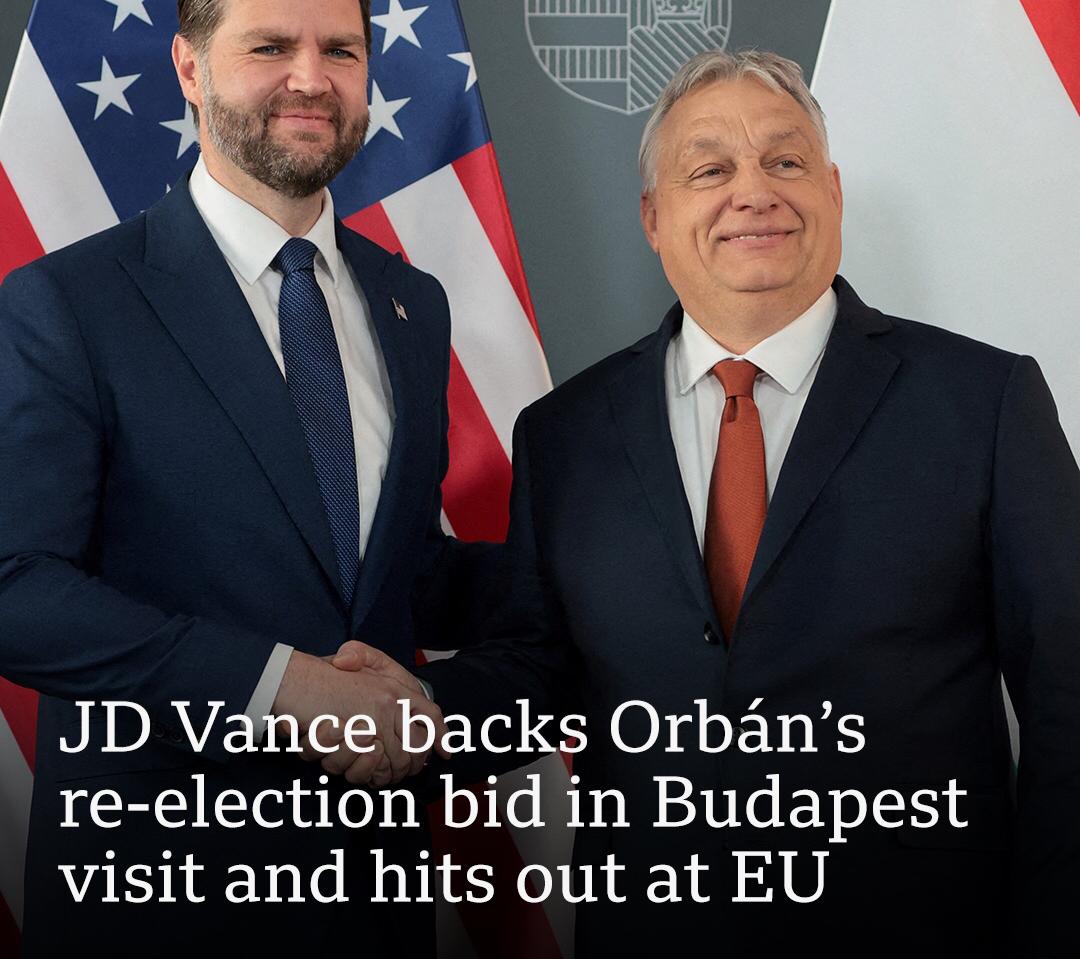
US Vice-President JD Vance Backs Hungary’s Viktor Orbán Ahead of Crucial Election United States Vice-President JD Vance has publicly backed Hungarian Prime Minister Viktor Orbán, just days before Hungary heads to the polls in a closely watched parliamentary election that could reshape the country’s political future. The endorsement comes less than a week before Hungary’s national vote, widely viewed as one of the most consequential elections in recent years for both European politics and transatlantic relations. Vance travelled to Budapest for bilateral meetings with Orbán ahead of the vote, signalling strong political alignment between Washington’s current administration and Hungary’s nationalist leadership. According to officials, the visit focused on security cooperation, economic relations, migration policy, and shared conservative political priorities. The show of support has been interpreted by analysts as an attempt to strengthen ties with one of Europe’s most influential right-leaning leaders. Hungary is scheduled to hold parliamentary elections on April 12, where voters will elect members of the National Assembly who will determine the country’s next government. The contest is expected to be highly competitive, with Orbán seeking another term after more than a decade in power.
Orbán’s leadership has long divided opinion internationally. Supporters credit him with defending national sovereignty, tightening migration controls, and promoting conservative social policies, while critics accuse his government of weakening democratic institutions and limiting press and academic freedoms.
The US vice-president’s backing highlights growing ideological cooperation among conservative political movements across Europe and the United States. Observers say such endorsements can influence voter perception, particularly in elections framed around sovereignty, security, and relations with the European Union. The election also unfolds amid heightened geopolitical tensions involving Ukraine, EU policy disputes, and accusations of foreign interference circulating within Hungary’s political debate. Opposition figures in Hungary criticised the endorsement, arguing that foreign political support risks politicising diplomatic relations. Some European leaders have also expressed concern over increasing international involvement in domestic electoral campaigns. However, Orbán’s allies welcomed Vance’s stance, describing it as recognition of Hungary’s political direction and strategic importance within Europe. Hungarian voters will cast ballots in what analysts describe as a defining moment for the country’s political trajectory and its future relationship with Western allies. The outcome could influence EU policy debates, regional security cooperation, and the broader ideological balance within European politics.