US President Delivers Patriotic Sales Pitch To Nation In Combative State Address
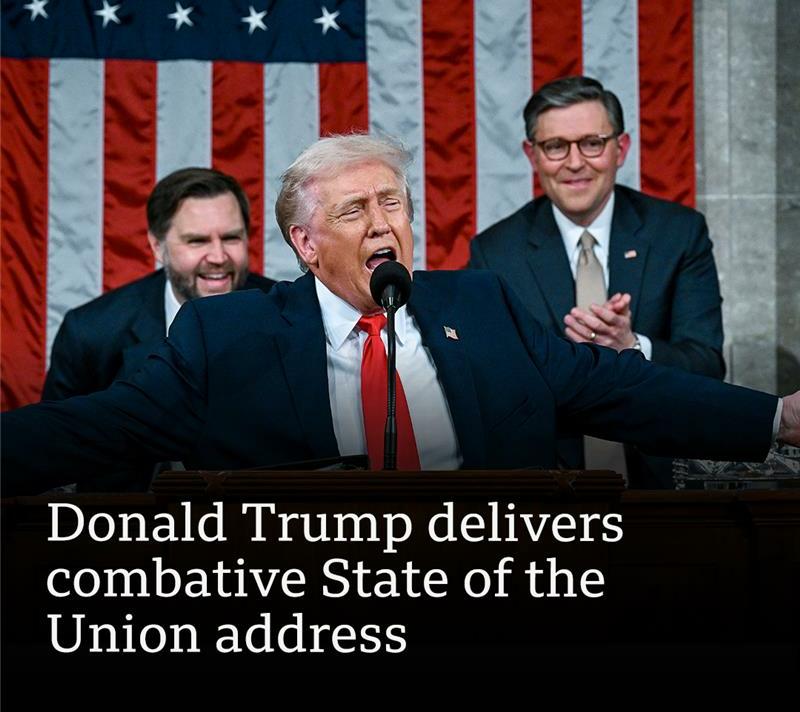
US President Delivers Patriotic Sales Pitch to Nation in Combative State Address In a sweeping State of the Union address that blended patriotic rhetoric, policy promotion and pointed partisan attacks, the US president used his national platform to make a lively sales pitch to the country, rally loyal supporters and taunt political opponents, writes the BBC’s Anthony Zurcher.
Delivered before a joint session of Congress at a time of political pressure and low approval ratings, the speech showcased an upbeat narrative about America’s future while also underlining deep divisions in the nation’s political landscape.
Opening with confident assertions that “our nation is back” and celebrating economic indicators such as lower fuel costs, rising stock markets, and gains in employment, the president framed the United States as stronger and more prosperous than ever.
He used the moment to project optimism about the economy and national renewal, casting the current moment as evidence of American resurgence and inviting listeners to embrace a vision of ongoing strength and opportunity. Much of the address carried a strong patriotic tone, celebrating American achievements and symbols of national pride. Among the highlights was a recognition of the U.S. Olympic men’s hockey team, which was present in the chamber following its recent gold-medal performance, drawing enthusiastic applause from members of the president’s party.
The speech invoked familiar themes of national identity and American exceptionalism, using imagery of unity and strength that resonated with his core supporters But beyond aspiration and patriotism, much of the address took on a partisan tone, with the president directly criticizing Democratic lawmakers and political opponents He blamed Democrats for economic concerns, including the cost of living and healthcare affordability.
He reiterated controversial proposals such as voter ID requirements and changes to immigration policy, drawing boos from opposing lawmakers. The address, which stretched into one of the longer speeches of its kind, was punctuated by bursts of applause from supporters and visible tensions with critics in attendance. With midterm elections approaching later in 2026 and approval ratings below 40 per cent in several polls, the president appeared to use the speech as a rallying tool reinforcing his message to loyal voters rather than reaching across the aisle.
Analysts suggest the address aimed less at unveiling new policy initiatives and more at shoring up political support, defining the contrast between the administration’s vision and that of its opponents. In the chamber, reactions reflected the nation’s partisan divides Supporters responded with cheers and chants during the president’s remarks. Opponents expressed frustration and disengagement at moments, with some choosing not to attend or visibly voicing dissent. The contrast underscored that while the address was broadcast as a message of optimism and national pride, it was also a reflection of sharp political divides within Congress and across the country. The president delivered a lengthy, patriotic State of the Union address framed as a sales pitch to the nation. He emphasised economic optimism and national strength but faced a climate of public discontent about living costs The speech included direct critiques of political opponents and policy disagreements With midterm elections approaching, analysts see the address as a strategy to mobilise supporters and define political