Unusual Lawsuit From A Sitting President
Unusual Lawsuit From a Sitting President
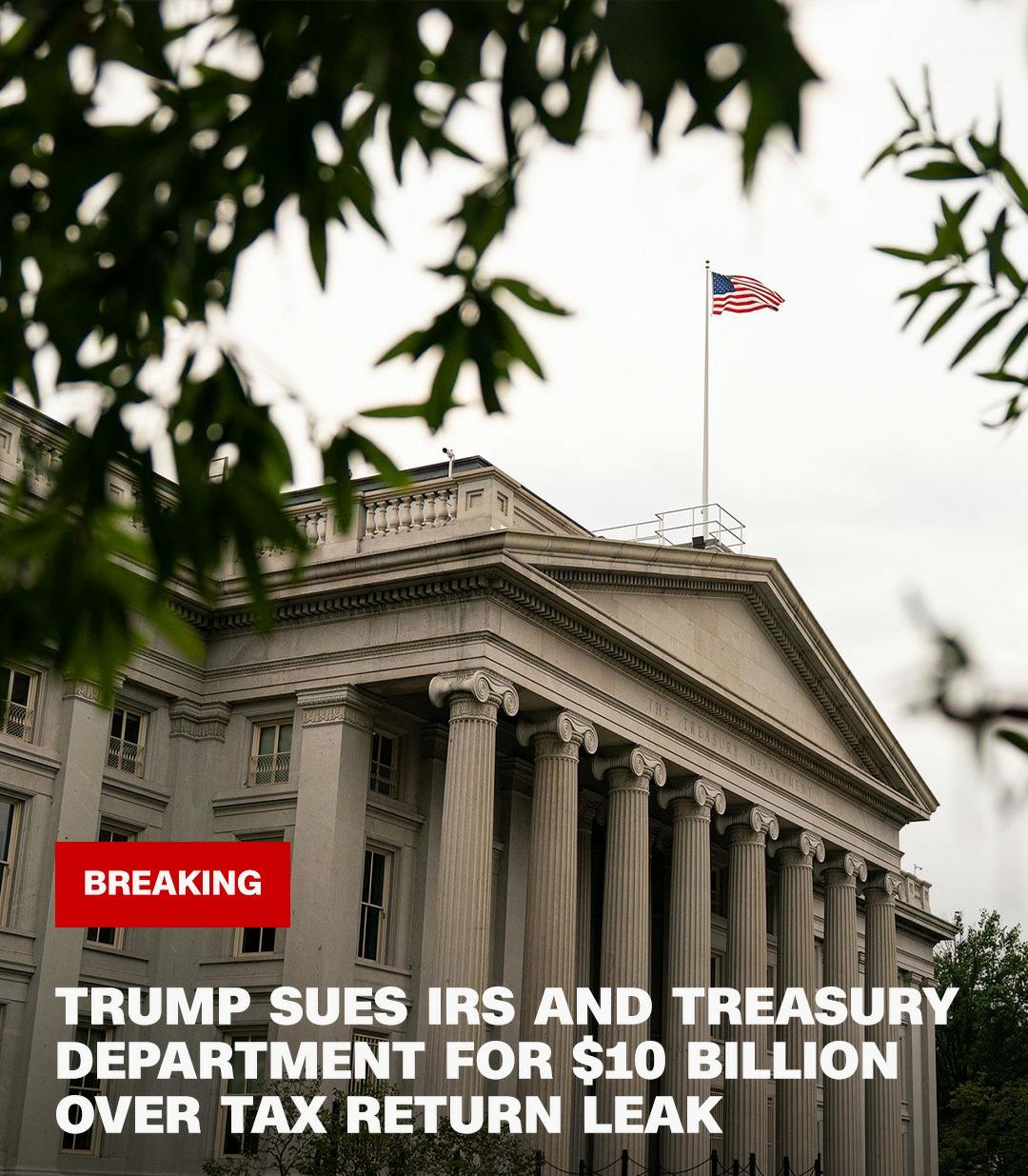
President Donald Trump filed a lawsuit against the Internal Revenue Service (IRS) and the U.S. Treasury Department, seeking at least $10 billion in damages, accusing the agencies of failing to protect his confidential tax returns and allowing them to be leaked to the media during his first presidential term.
The lawsuit centers on tax returns and related financial information that were illegally obtained and disclosed by a former IRS contractor, Charles Edward “Chaz” Littlejohn, to media outlets including The New York Times and ProPublica. Littlejohn pleaded guilty and was sentenced to five years in prison in 2024.
Trump’s legal team argues that the IRS and Treasury failed in their duty to safeguard confidential taxpayer information, citing systemic security weaknesses that allowed a contractor to access and download sensitive records without authorization. The complaint claims the leaks caused “reputational and financial harm, public embarrassment, unfairly tarnished” the plaintiffs’ business and personal standing. The lawsuit is asking for at least $10 billion in damages, asserting that losses include reputational harm, financial impacts, and broader personal and political damage resulting from the disclosures Experts and analysts note the unusual nature of a sitting U.S. president suing executive-branch agencies he oversees positioning Trump both as litigant and head of the institutions being sued. The lawsuit is part of a broader series of legal actions Trump has pursued in recent years, often involving claims of reputational harm tied to leaks, media reporting or perceived unfair treatment including multi-billion-dollar claims against news organisations and private firms.
In related developments, the Treasury Department has moved to cancel millions of dollars in contracts with Booz Allen Hamilton the firm that employed Littlejohn citing inadequate data security that failed to protect sensitive taxpayer information. As of the initial filing, neither the IRS nor Treasury had issued formal public statements responding to the lawsuit’s claims. The tax return leaks in 2019–2020 generated extensive public and media attention revealing aspects of Trump’s tax filings, including minimal federal income taxes paid in certain years and reported tax losses which Trump has long criticised.
Legal experts say the suit could raise novel constitutional and procedural questions about accountability, confidentiality protections in federal agencies, and whether senior officials can be held liable for data breaches under existing law.