UK Inflation Remains At 3% In February, Official Figures Show
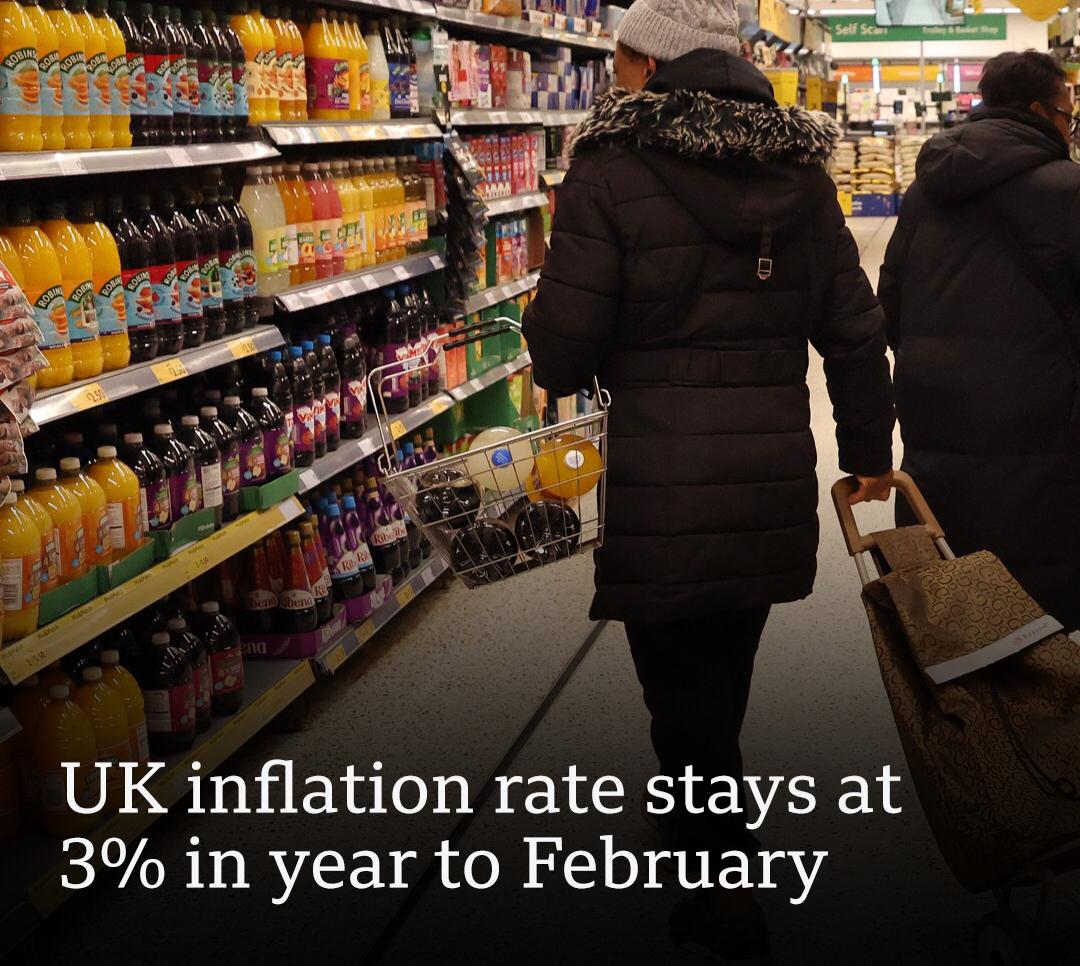
UK inflation remains at 3% in February, official figures show
The UK inflation rate remained unchanged at 3% in the year to February, according to the Office for National Statistics.
The figure means that, on average, prices are still rising at the same pace as the previous month, reflecting ongoing pressures in parts of the economy. Inflation measures how quickly the prices of goods and services increase over time. For example, if inflation is 3%, something that cost £100 a year ago would now cost about £103. It is typically tracked using the Consumer Prices Index (CPI), which monitors a “basket” of everyday items such as food, energy and transport. While the overall rate held steady, there were mixed trends across different sectors:
- Food prices continued to rise, keeping pressure on household budgets
- Energy costs showed signs of stabilising
- Clothing and recreation prices had smaller increases
Economists say these offsetting changes helped keep the overall rate unchanged.
- Higher inflation reduces people’s purchasing power
- It influences interest rates set by the Bank of England
- It affects wages, savings and borrowing costs
Although inflation has fallen significantly from the highs seen in recent years, it remains above the Bank of England’s target of 2%.
Analysts say the steady figure suggests inflationary pressures are easing but not disappearing. Some expect gradual declines in the coming months, while others warn that persistent rises in food prices could slow progress. The Office for National Statistics will continue to monitor price changes, with the next update due in the coming weeks. The data will also be closely watched by policymakers as they decide whether to adjust interest rates in response to economic conditions.
- Supply and demand for goods
- Production and transport costs
- Global events affecting energy and food prices
Understanding inflation helps explain why the cost of living changes over time and how governments and central banks respond.