UK Government Backtracks On Copyright And AI After Public Backlash From Major
by HEDNEWS on March 19, 2026
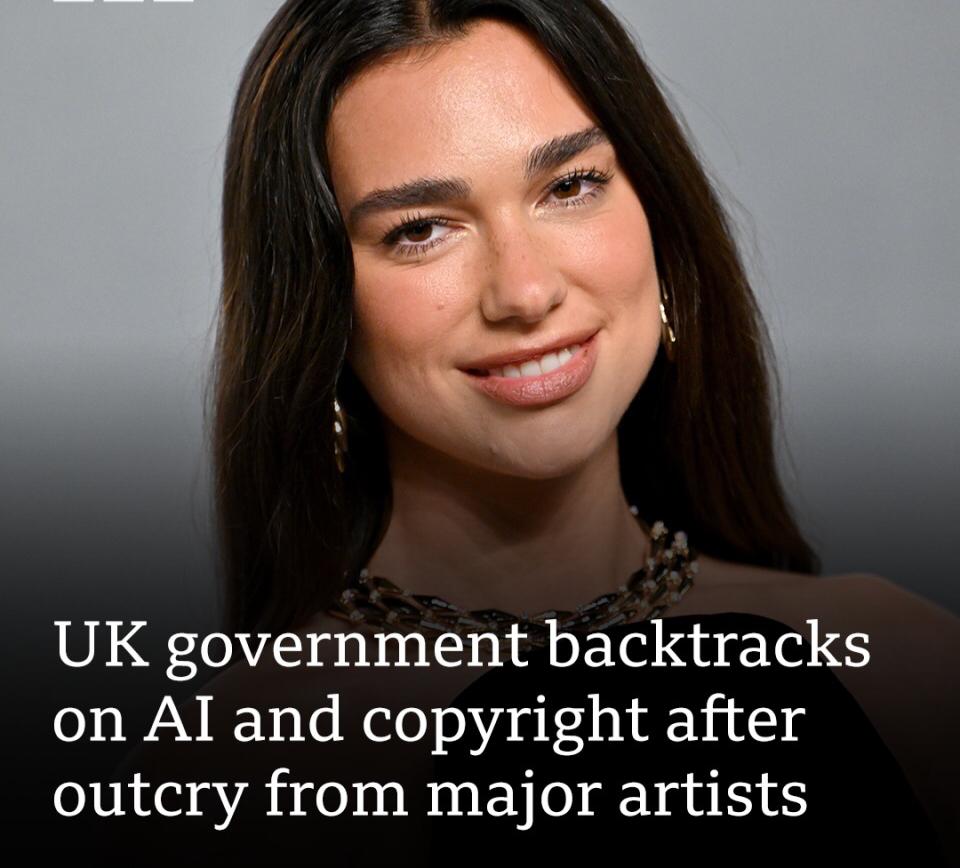
UK government backtracks on copyright and AI after public backlash from major artists The UK government has formally reversed its previous position on reforming copyright law to allow artificial intelligence (AI) companies to train their models on copyrighted works with an “opt‑out” mechanism, after strong opposition from artists and creators including Dua Lipa, Sir Elton John and other high‑profile industry figures.
- The government’s original proposal would have created a new legal framework permitting AI firms to use copyrighted material for training purposes unless rights holders explicitly opted out a shift critics described as undermining creators’ control over their work.
- Facing mounting pressure from artists, unions, and industry bodies, ministers said they will now abandon that position and take more time to consider how best to protect creators while enabling AI innovation.
- Technology Secretary Liz Kendall said the government no longer has a “preferred option” for reform and will work with stakeholders to find a balanced approach that addresses concerns from both the creative sector and tech industry.
- Creative unions and industry representatives welcomed the shift. Equity, the performing arts union, hailed the move as recognition of the importance of safeguarding the UK’s creative industries.
- Artists had warned that the original proposal could lead to the unrestricted use of their work by AI developers, potentially undermining artistic rights and economic interest
- Rather than moving ahead with the opt‑out model, the government now plans to explore alternatives, including stronger licensing schemes, mandatory labeling of AI‑generated content, and other measures to give creators more control over how their work is used online.
- No final legislative proposals have yet been tabled, and consultations with rights holders, AI developers, and legal experts are expected to continue.
- This reversal marks a significant shift from a policy environment in which the UK had appeared set to ease restrictions on AI training data part of a broader effort to adapt copyright laws for the AI era. The debate has highlighted tensions between fostering technological innovation and upholding the economic and moral rights of creators.