TRUMP DECLARES END OF GAZA WAR, UNVEILS $17BN RECONSTRUCTION AND SECURITY PLAN
TRUMP DECLARES END OF GAZA WAR, UNVEILS $17BN RECONSTRUCTION AND SECURITY PLAN
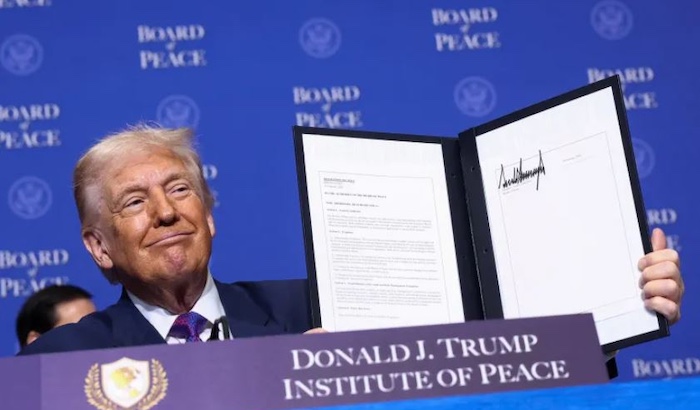
U.S. President Donald Trump has formally declared that the war in Gaza is over and announced an ambitious $17 billion multilateral rebuilding and security strategy aimed at stabilising the war-torn Palestinian territory after more than two years of conflict between Israel and Hamas. Speaking at the inaugural meeting of the “Board of Peace” in Washington, D.C., Trump framed the announcement not simply as a ceasefire extension but as a definitive end to hostilities and a start of a comprehensive reconstruction effort although analysts warn the declaration’s practical meaning remains uncertain given unresolved political and security issues.
Trump described the moment as the beginning of a “new chapter” for Gaza, with the Board of Peace the body he launched to oversee implementation tasked with transforming a ceasefire into lasting stability and rebuilding.
Multibillion-Dollar Reconstruction Package:
- The United States pledged $10 billion in funding for Gaza’s reconstruction.
- Nine countries including the UAE, Saudi Arabia, Qatar, Kazakhstan, Azerbaijan, Morocco, Bahrain, Kuwait and Uzbekistan together pledged more than $7 billion toward relief and rebuilding efforts.
- Combined, these commitments exceed $17 billion for post-war recovery. This financial package aims to support infrastructure repair, housing construction and economic revitalisation across Gaza. Trump and board members also proposed transforming southern Gaza’s Rafah area, with early plans to rebuild it and develop coastal regions. As part of the transition from conflict to reconstruction, several nations agreed to contribute to an International Stabilisation Force and police training initiatives:
- Troop pledges were made by countries including Indonesia, Morocco, Kazakhstan, Kosovo and Albania.
- Egypt and Jordan will assist in training new Gazan police forces.
- Over 2,000 applicants have already responded to recruitment for a new transitional Gaza police force.
The Board of Peace also outlined long-term plans for security, including demilitarisation and regional cooperation, though Hamas disarmament remains unresolved and critical to lasting peace. Israeli leaders expressed conditional support for the reconstruction framework, emphasising the need for guarantees against militant activity. Meanwhile, the Palestinian leadership’s direct political role in the new board remains limited, drawing criticism from some observers.
Trump’s initiative comes amid continued debate about the future political status of Gaza and broader Middle East peace efforts, including how the Board of Peace will interact with established international institutions like the United Nations.
Policy analysts have reacted cautiously, noting that declarations of war’s end do not automatically resolve deep rooted tensions or guarantee disarmament and political settlement. Success will depend heavily on implementation, international cooperation, and agreements among local and regional actors.