The United States State Department Has Ordered Non Essential Personnel And Family Members Of Staff
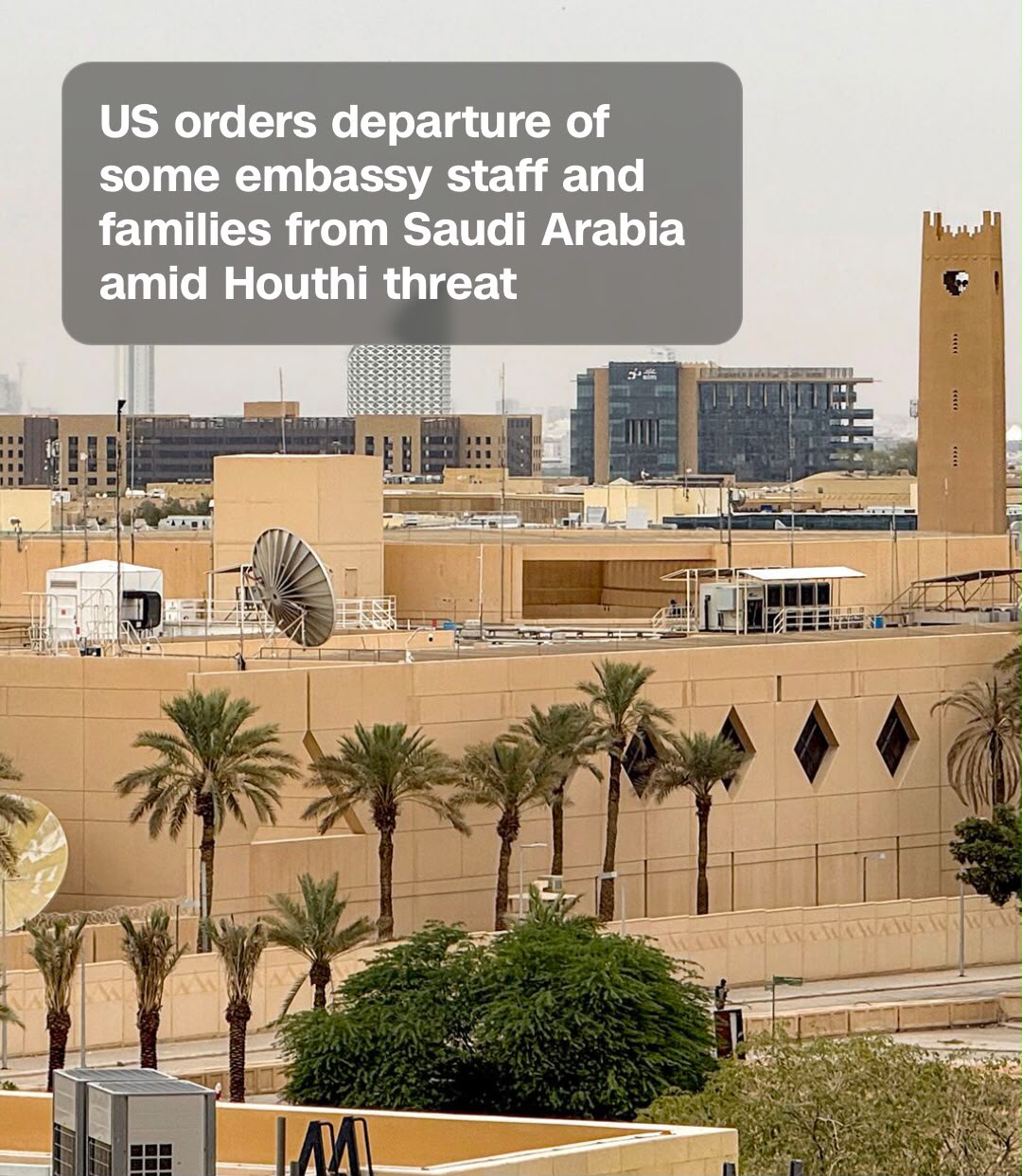
The United States State Department has ordered non-essential personnel and family members of staff at its embassy in Riyadh, Saudi Arabia, to leave amid intensifying attacks on the kingdom by Iran-aligned Houthi rebels in Yemen. The directive comes as Saudi Arabia faces mounting security threats from the Houthis, who have stepped up attacks on strategic locations and critical infrastructure, heightening concerns about the spread of the conflict across the Middle East. The development underscores growing concerns in Washington over the safety of American diplomatic personnel and their families as tensions involving Iran and its regional allies continue to threaten stability in the region. The Houthis, who control significant parts of Yemen, have developed the capacity to launch drones and missiles at targets beyond the country’s borders. Their attacks have previously threatened Saudi territory and disrupted regional security. Saudi Arabia has been a major target of Houthi attacks during its prolonged involvement in Yemen’s conflict, prompting concerns about the vulnerability of key infrastructure, including airports, energy facilities and other strategic installations. The latest US directive reflects the risks facing foreign diplomatic missions as the security situation deteriorates. The departure of non-essential personnel and family members is intended to reduce their exposure to potential attacks while allowing essential diplomatic operations to continue. The move also highlights the wider implications of the escalating confrontation, particularly for relations between Washington, Riyadh and Tehran, as well as efforts to prevent the conflict from spreading further across the region.
The United States has maintained close security ties with Saudi Arabia, a key regional partner and a major oil producer. Any further deterioration in the kingdom’s security situation could have implications for regional stability, energy markets and international shipping routes. The situation remains fluid, with further developments expected as Washington and its regional partners assess the evolving security threats.