Tesla Inc., The Electric Vehicle (EV) Maker Led By Billionaire CEO Elon Musk
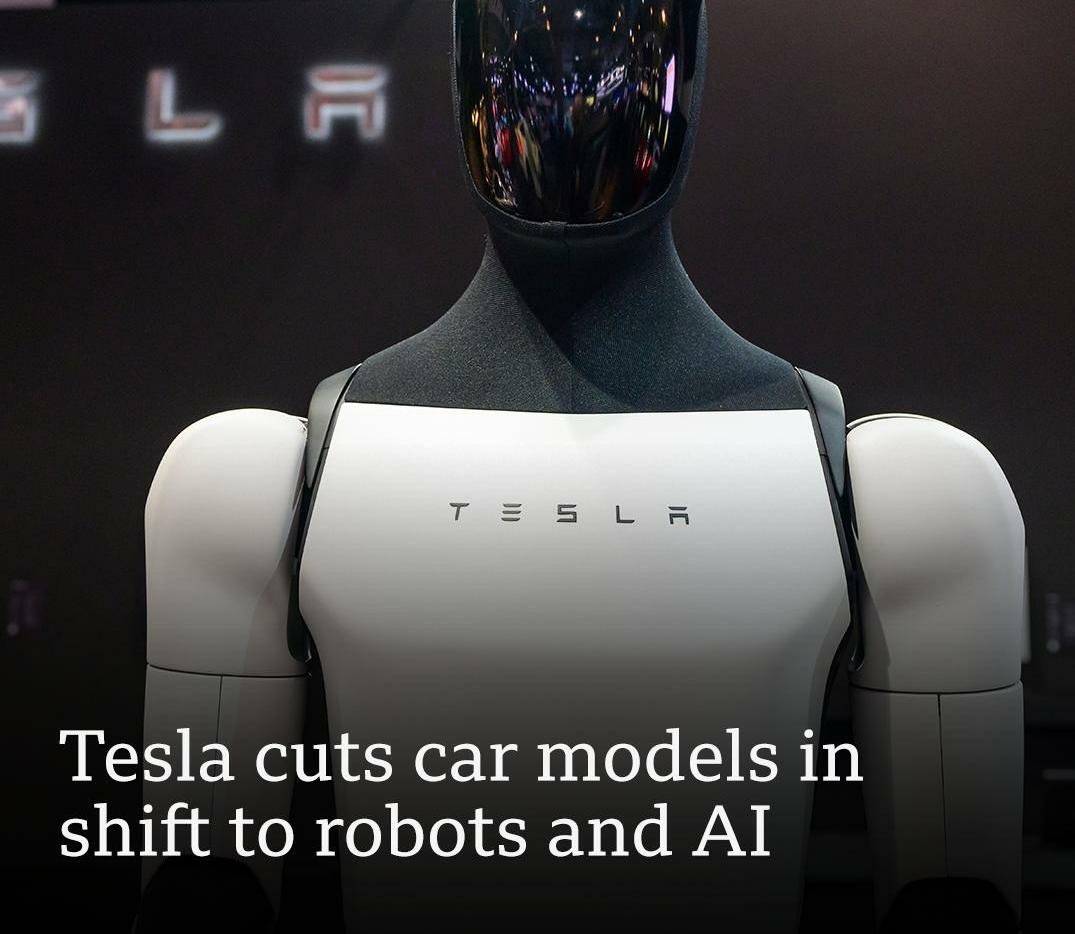
Tesla Inc., the electric vehicle (EV) maker led by billionaire CEO Elon Musk, has reported its first annual revenue decline in the company’s history, as it accelerates efforts to transition from primarily selling electric cars to becoming a broader artificial intelligence and robotics company. Tesla’s total revenue for 2025 fell by about 3 percent year-on-year to approximately $94.8 billion, down from about $97.7 billion in 2024 marking the company’s first recorded annual revenue drop.
Net profits also plunged sharply, with profit in the final quarter falling 61 percent, highlighting the financial pressure on the company’s traditional EV business. As part of its transformation strategy, Tesla revealed plans to end production of the Model S and Model X vehicles. The freed capacity from the California factory that built those models will be repurposed to produce Optimus humanoid robots, pushing the company deeper into robotics manufacturing.
Tesla also announced a $2 billion investment in Elon Musk’s artificial intelligence startup, xAI, reinforcing its shift toward AI-driven technologies. The revenue decline comes amid sluggish vehicle sales, heightened competition particularly from China’s BYD, which recently overtook Tesla as the world’s largest EV maker and the loss of EV tax incentives in key markets. Analysts say Tesla’s core EV lineup is aging, and sales have been particularly weak in regions like Europe and China, contributing to lower automotive revenue.
Despite the downturn in revenue, Tesla’s leadership continues to push the narrative that the future growth engine for the company lies in robotics, autonomous robotaxis, and other AI applications.
Tesla executives have outlined plans to convert its Fremont factory into a hub for robot and self-driving vehicle production, including expanded production of humanoid robots and next-generation autonomous technology. Following the earnings announcement, Tesla’s stock saw modest gains in after-hours trading, indicating some investor confidence in the company’s long-term pivot strategy.
While total revenue fell, some segments like energy generation and storage showed strong growth, offering a potential diversification path beyond vehicle sales. Historic Revenue Decline: Tesla reported its first annual drop in revenue ever, a notable milestone in the company’s financial history. The company is aggressively shifting its focus toward artificial intelligence and robotics, including investments in humanoid robots and autonomous services. Automotive Business Pressure: Slow EV sales, increasing competition, and reduced incentives weighed on Tesla’s traditional car business. Tesla aims to position itself as a “physical AI company,” betting on robotaxi services and robotics to drive future revenue.