Tax Reforms Will Improve Lives, Not Impoverish Nigerians, Says Vice President Shettima
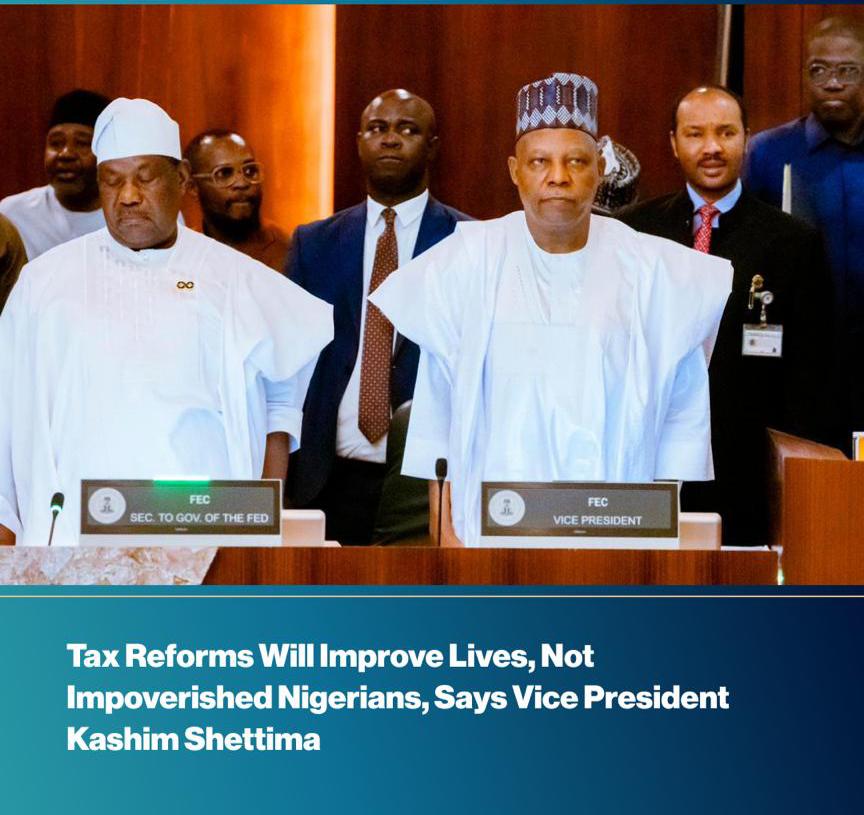
Tax reforms will improve lives, not impoverish Nigerians, says Vice President Shettima Vice President Kashim Shettima has reiterated the Federal Government’s commitment to tax reform, assuring Nigerians that the changes are designed to improve livelihoods and expand economic opportunity, not to saddle citizens with unbearable financial burdens. Shettima spoke on the reforms during a press briefing at the Aso Rock Presidential Villa, where he emphasised that the programme is a core part of the administration’s RenewedHopeAgenda under President Bola Ahmed Tinubu, aimed at broadening the tax base, promoting fairness and driving sustainable development without harming the vulnerable. Addressing concerns from some quarters that the ongoing tax reforms could impoverish ordinary Nigerians, the Vice President said the government’s priority remains inclusive growth and shared prosperity He reiterated that the reforms are not about imposing heavy levies on low‑income earners but about ensuring efficiency, transparency and equity in tax administration across the country. While providing few details, Shettima described the ongoing reforms as part of a larger strategy to modernise Nigeria’s fiscal framework, diversify revenue sources, and reduce dependency on oil a core goal of the government’s economic policy. Officials say the reform package includes measures to expand the tax base, simplify compliance for small and medium‑sized enterprises (SMEs), and introduce modern systems such as digital administration and presumptive tax frameworks for informal sector operators. The Vice President emphasised that presumptive tax, which applies a simplified tax regime for small businesses, is designed to make compliance easier and less burdensome, especially for informal sector players. Shettima said the government is also reviewing targeted incentives and relief measures to protect low‑income households and vulnerable groups as the new tax regime rolls out.
Economists and policy analysts have said that expanding the tax base could, over time, lead to improved public services, better infrastructure, and enhanced social welfare provided the additional revenue is managed transparently and strategically. The Vice President linked the tax reforms to Nigeria’s broader economic objectives, including job creation, improved healthcare and education funding, and expanded investment in critical infrastructure. He urged Nigerians to view the reforms as part of a long‑term plan to build a more resilient and competitive economy, one that can better withstand shocks from global market fluctuations and reduce reliance on volatile oil revenues.
Shettima said the Federal Government will continue to engage with stakeholders including labour groups, business associations and civil society to ensure that concerns are heard and addressed as the reform process advances.
The Vice President’s remarks come amid ongoing discussion nationwide about the tax changes, with both support and criticism emerging from different segments of society. In concluding, Shettima reiterated the administration’s message that tax reform is a tool for national development, not a mechanism for economic harm, and that the government will continue to prioritise the wellbeing of all Nigerians as reforms are implemented under the StatehouseDigital initiative.