Spain’s Government Has Unveiled A Landmark Immigration Policy
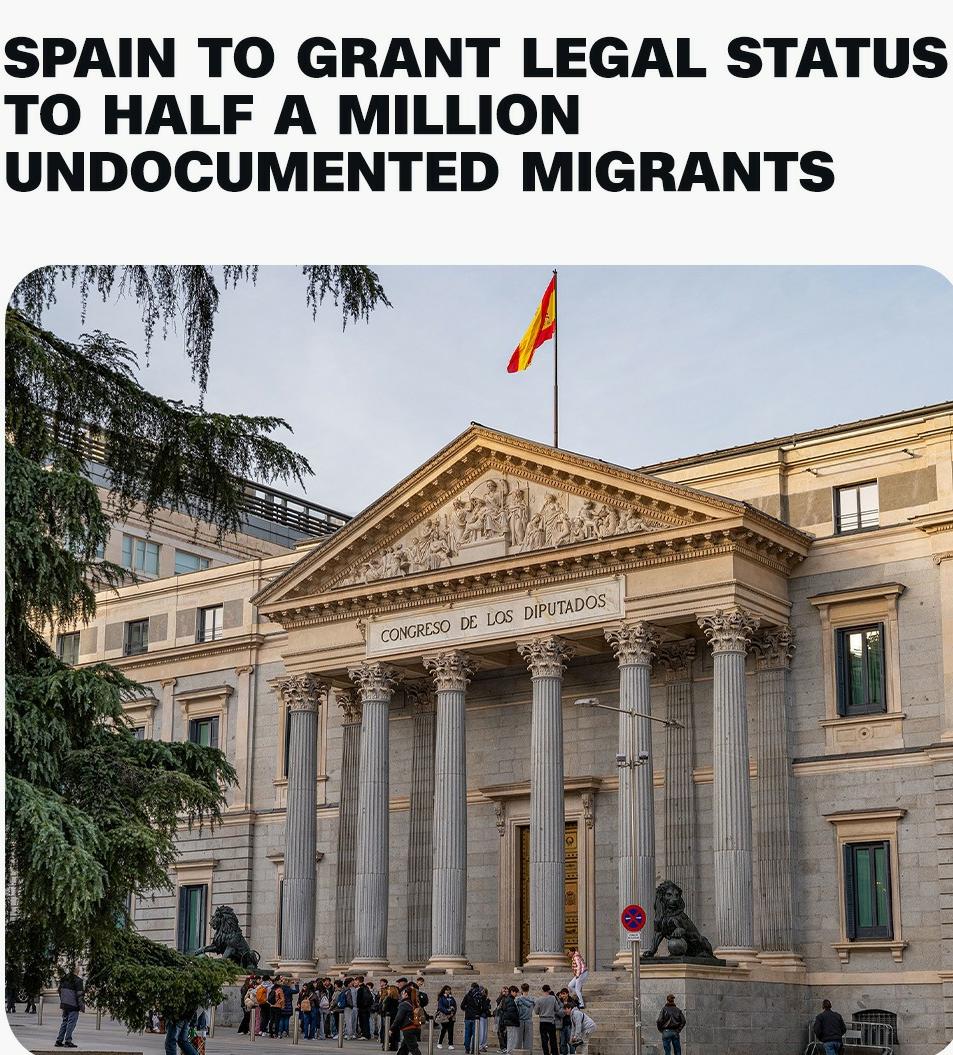
Spain’s government has unveiled a landmark immigration policy that will grant legal status to approximately 500,000 undocumented migrants living and working in the country a move many officials and advocates are calling historic and distinct from stricter immigration rhetoric in parts of the United States and much of Europe.
Under the reform, migrants currently without legal status in Spain will be eligible to obtain a one-year residence permit with work authorization if they meet the following conditions:
Physical presence in Spain prior to December 31, 2025;
Continuous residence for at least five months; and
No criminal record. Applications are expected to open in early April 2026 and remain available until June 30, 2026. The regularisation is being implemented via a royal decree, bypassing parliamentary approval due to the government’s lack of a majority. Spain’s Minister for Migration, Elma Saiz, described the plan as essential for building a migration model rooted in human rights, integration, coexistence and economic growth. She said the reform recognizes the reality of undocumented residents who are already part of Spanish society and economy and allows them to live and work with dignity and legal protections. Authorities also argue that legalising undocumented workers will help address labor shortages in sectors such as agriculture, tourism and services and support the country’s social welfare system, which relies on a strong workforce to sustain pensions and public services. Estimates suggest there were roughly 840,000 undocumented migrants in Spain as of early 2025, meaning the new policy could benefit around half of that population primarily from Latin America, though migrants from Africa and elsewhere also reside in the country irregularly. The permits will be valid throughout Spain and for any employment sector, making this one of the broadest regularisation programmes in recent Spanish history. The initiative was negotiated between Prime Minister Pedro Sánchez’s Socialist Party (PSOE) and its left-wing partner Podemos, especially after legislative avenues stalled due to opposition from conservative parties. Because PSOE does not hold a parliamentary majority, the government chose to enact the change via royal decree to expedite the process. Supporters and civil society groups including migrant rights organisations and sections of the Catholic Church welcomed the reform as a long-sought recognition of the contributions and dignity of those living without papers. They argue it will enhance legal equality and reduce exploitation in informal labour markets.
However, conservative and right-wing parties, such as Spain’s Popular Party (PP) and Vox, criticised the move. They argue it could encourage further illegal migration and strain public services views that reflect broader debates across Europe over immigration policy.
Human Rights & Integration: The measure aims to bring hundreds of thousands out of limbo, granting access to legal work, social services and protections previously unavailable.
Economic Impact: By legalising undocumented workers, Spain strengthens its formal labour market and expands contributions to social security and tax systems.
Political Signal: Spain’s approach contrasts sharply with tougher immigration climates in the U.S. and several European nations, positioning the country as a leader in progressive immigration policy within the EU. Spain is poised to grant legal status to around 500,000 undocumented migrants through a royal decree that begins applications in April 2026, requiring residency before the end of 2025, continuous presence and no criminal history. The reform is touted as a historic step for rights, integration, and economic wellbeing, though it has ignited debate between Spain’s progressive government and opposition parties highlighting broader tensions in immigration policy across the Western world.