Slovenia Introduces Fuel Rationing As Iran War Disrupts Global Supplies
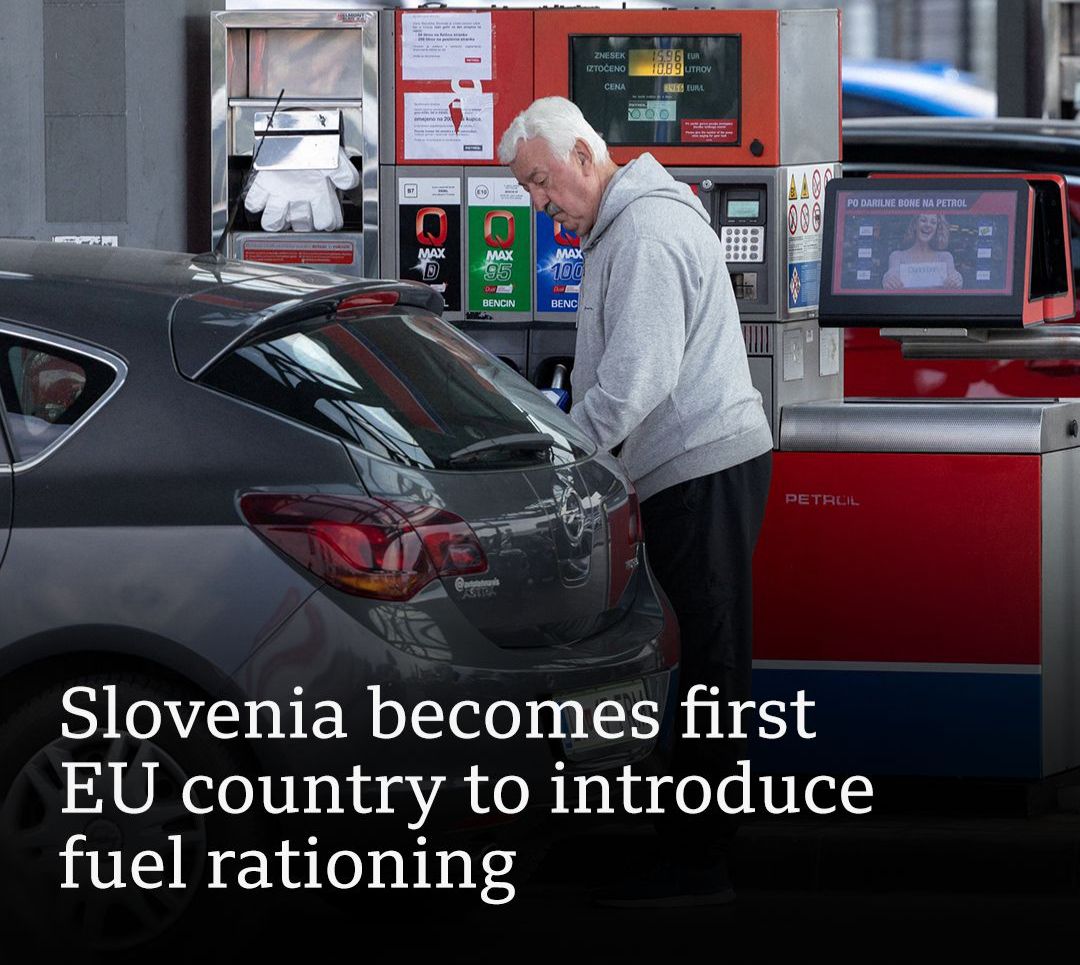
Slovenia introduces fuel rationing as Iran war disrupts global supplies
Slovenia has become the first European Union country to introduce fuel rationing, as disruptions linked to the ongoing US-Israeli war with Iran send shockwaves through global energy markets. The government announced emergency measures after surging demand and supply uncertainty led to shortages at petrol stations across the country.
The restrictions come amid a wider global energy crisis triggered by the conflict in the Middle East, which has severely disrupted oil flows—particularly through the strategically vital Strait of Hormuz. That route carries roughly a fifth of the world’s oil supply, and ongoing military tensions have sharply reduced tanker traffic, pushing prices higher and tightening availability worldwide. In Slovenia, panic buying and so-called “fuel tourism” — where drivers cross borders to seek cheaper petrol — worsened the strain on supply. Under the temporary rules, private drivers are limited to purchasing about 50 litres of fuel per day, while businesses and priority sectors such as agriculture are allowed higher caps. Authorities say the aim is to stabilise supply and prevent stockpiling, even as officials insist that national reserves remain sufficient.The government has also deployed additional measures, including logistical support to fuel distributors, as some filling stations were forced to close due to shortages. Slovenia’s move highlights the growing international impact of the conflict, with countries across Europe, Asia and beyond adopting emergency steps to manage fuel shortages. Oil prices have surged above $100 per barrel, while several nations have begun releasing strategic reserves or introducing energy-saving policies. Experts warn the crisis could deepen if the conflict continues, with some describing it as the most severe disruption to global energy supply since the 1970s.
The European Union has already urged member states to adjust energy strategies to cope with the situation, amid fears of prolonged shortages and rising costs. For many households and businesses, the effects are already being felt through higher fuel prices, increased transport costs and broader inflation pressures. The crisis stems from escalating hostilities between the United States, Israel and Iran, which began earlier in 2026 and have since expanded into a wider regional conflict affecting energy infrastructure and shipping routes.
As tensions continue, governments worldwide are bracing for further economic fallout, with Slovenia’s rationing seen as an early sign of how deeply the الأزمة could reshape daily life.