Skyrocketing Fuel Prices Spark Protests Around The World
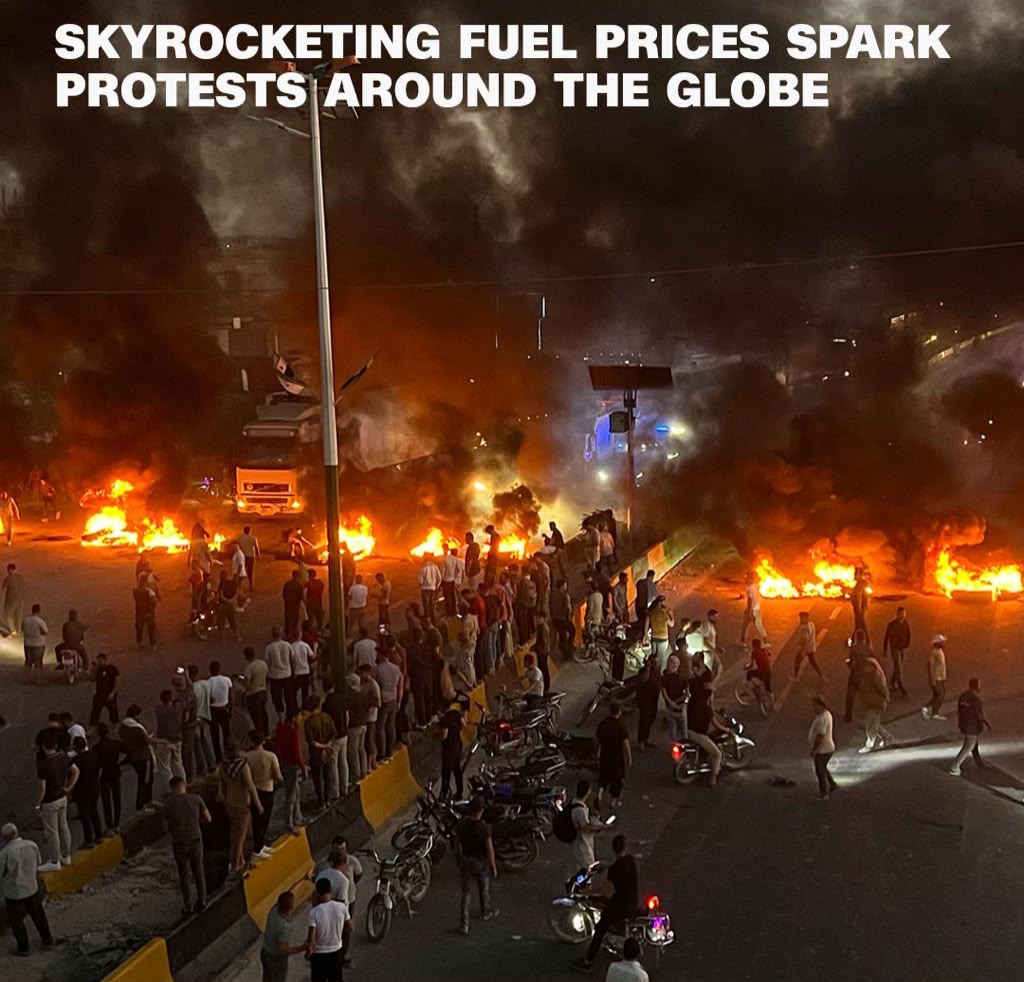
Skyrocketing Fuel Prices Spark Protests Around the World Protests have erupted in several countries as surging fuel prices and power disruptions fuel public anger, with the ongoing war involving Iran driving up energy costs and placing additional pressure on households and businesses. Demonstrators have taken to the streets, blocked roads and demanded government action as the rise in global energy prices translates into higher costs for transport, electricity and other essential goods. International oil prices have climbed above $100 a barrel, increasing pressure on governments and consumers already facing higher living costs. The energy shock has been linked to disruptions to global oil supplies caused by the conflict in the Middle East, with concerns over shipping routes and production adding to market uncertainty. The resulting increase in fuel costs has triggered demonstrations across parts of Asia, Europe, Africa and Latin America. In Syria, a sharp increase in diesel prices has triggered widespread demonstrations, with protesters expressing anger over the impact of higher fuel costs on daily life. In Portugal, demonstrators gathered to demand government action over rising fuel prices, while firefighters have warned that increasing costs are placing additional strain on emergency services. In Guatemala, protesters have blocked highways as lawmakers consider measures aimed at limiting the impact of rising fuel prices. Other demonstrations and public actions have also been reported in countries affected by higher fuel and energy costs Governments are responding to the growing pressure in different ways, including proposals for fuel-price caps, increased subsidies and financial assistance for transport operators. Transport operators, farmers, emergency services and other fuel-dependent sectors have been particularly affected by the increases. The fuel-price crisis has been compounded in some countries by electricity shortages and rolling blackouts. For households and businesses, unreliable power supplies can increase dependence on generators and other fuel-powered alternatives, creating another channel through which higher oil prices raise operating costs. The combination of expensive fuel, electricity disruptions and broader inflation has therefore intensified public frustration. The protests come as the conflict involving Iran continues to affect international energy markets. The disruption has increased concerns about the security of oil supplies and major shipping routes in the Middle East, with the consequences extending beyond countries directly involved in the conflict. As energy prices remain elevated, governments face growing pressure to protect consumers while managing the wider economic consequences of the crisis. The protests underscore how developments in the Middle East can quickly translate into higher household and business costs around the world.