Nigeria Strengthens Steel Investment Drive At Germany Economic Summit
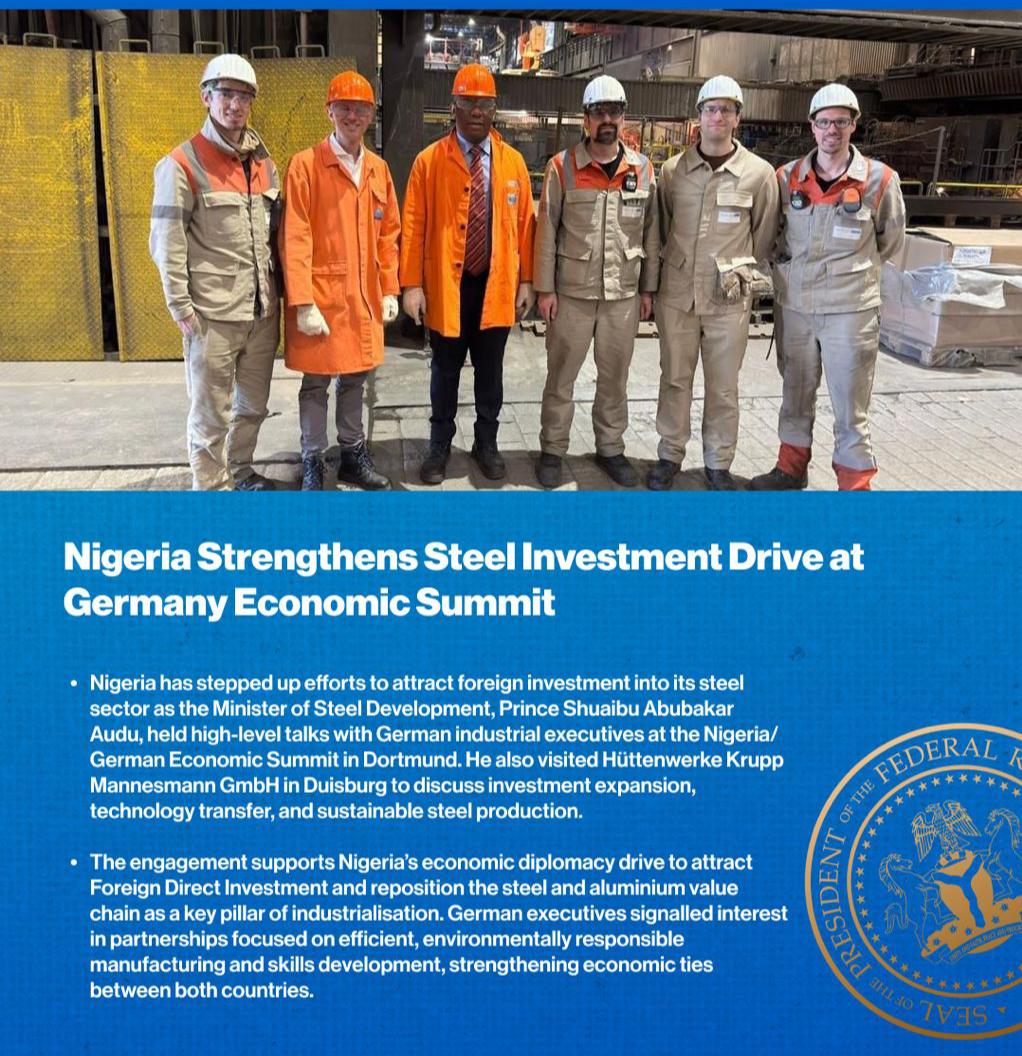
Nigeria Strengthens Steel Investment Drive at Germany Economic Summit By National Economy Desk Nigeria has intensified its push to attract foreign investment into its steel sector, making a high‑profile pitch to European industrial partners during the Nigeria–German Economic Summit in Dortmund, Germany this week. The initiative forms part of the Federal Government’s broader economic diplomacy under the RenewedHopeAgenda of PresidentTinubu, aimed at diversifying the economy and boosting industrial capacity. The country is promoting its steel industry as a multibillion‑dollar opportunity for strategic investors, emphasising Nigeria’s vast natural resources, strong domestic demand, and potential for value‑added manufacturing.
At the summit, Minister of Steel Development, Prince Shuaibu Abubakar Audu, led Nigeria’s delegation to engage with German industrial leaders and investors, including representatives from major steel firms. The discussions focused on unlocking investment in steel and aluminium production, mineral processing, and related infrastructure. Addressing the forum, Audu said Nigeria is transitioning from being merely a raw materials exporter to becoming a value‑adding industrial economy. He highlighted the country’s $10 billion annual steel market, driven by robust domestic consumption and a youthful, productive workforce. “Nigeria is open to credible, long‑term strategic partnerships that will unlock the full potential of our steel sector value chain, the minister said, noting that the time is right to invest in Nigeria’s industrial future
Officials outlined Nigeria’s plentiful natural resources that underpin the steel sector’s growth potential. The nation reportedly holds more than three billion tonnes of iron ore deposits, along with significant reserves of limestone, manganese, copper, and other minerals essential to steelmaking.
Audu emphasised that Nigeria’s demographic advantage nearly 250 million people, many of them young and economically active positions the country to not only meet domestic demand but also serve as a hub for African industrial exports The summit and investment drive align with President Tinubu’s continuing global outreach to diversify Nigeria’s economy through foreign direct investment (FDI). The current administration has sought capital inflows across sectors including petrochemicals, energy, manufacturing, and infrastructure on multiple international platforms. Nigeria’s pitch in Dortmund underscores a strategic shift toward industrialisation and technology transfer, seeking not just capital but also partnerships that bring modern production methods and skills development to the country’s industrial base.
At the forum, Nigeria’s delegation met with senior German figures, including representatives from the German government and the Dortmund Chamber of Commerce and Industry, to explore mutually beneficial cooperation on industrial projects.
German industry interest in Nigerian steel and associated sectors is being viewed as a stepping stone to deeper economic relations, especially as global supply chains seek diversification and secure sources of industrial inputs.
Analysts say reviving and expanding the steel sector could boost job creation, reduce import dependency, and spur growth in downstream industries such as construction, automotive and infrastructure. Recognising this, policymakers have placed the steel sector at the centre of Nigeria’s industrial agenda a shift from past reliance on raw exports toward high‑value manufacturing and export readiness.
With Germany being one of Europe’s leading industrial economies, Nigeria’s steel investment drive at the Dortmund summit is expected to catalyse further dialogue and potentially lead to formal investment agreements in the coming months. Decision timelines from German firms and investors will be watched closely as part of Nigeria’s effort to embed steel development into its long‑term economic transformation plan under the Renewed Hope Agenda.