New Government Guidance Recommends Limited Screen Time For Young Children
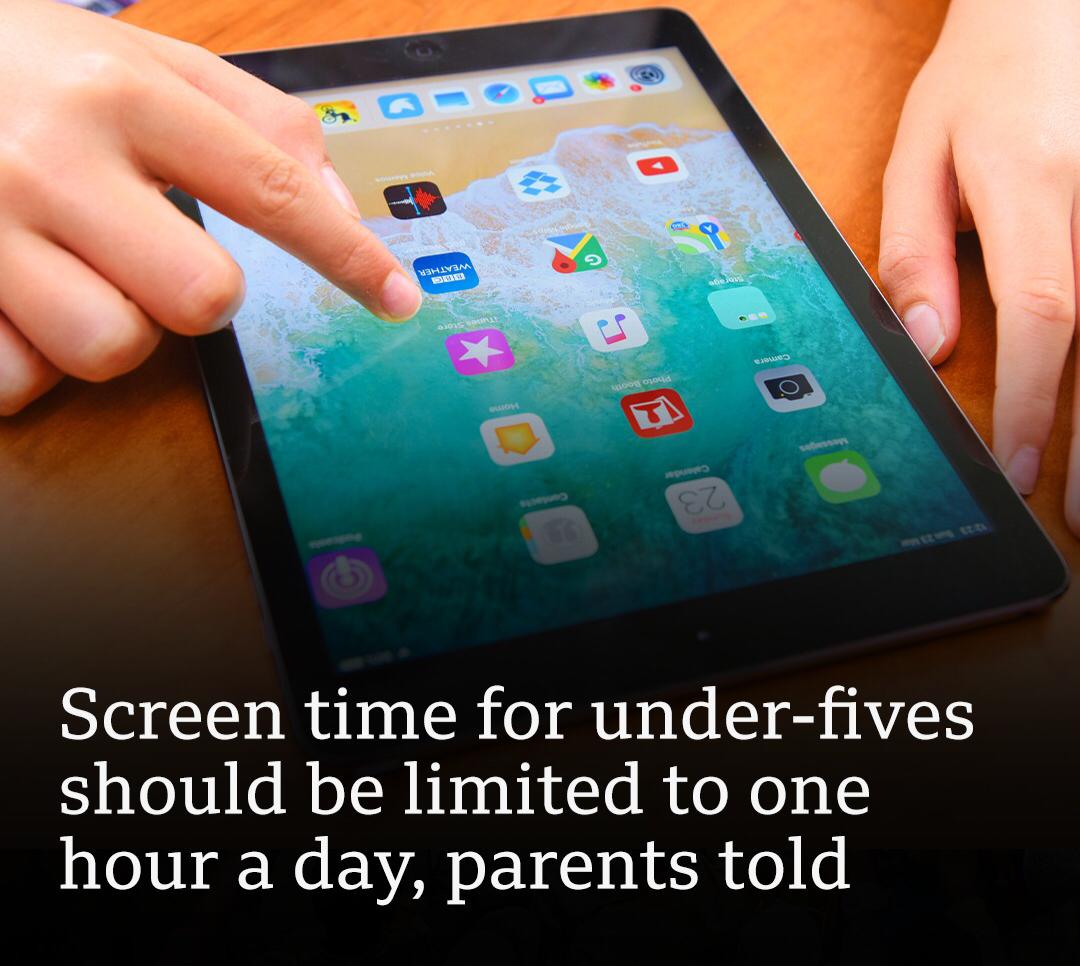
New government guidance recommends limited screen time for young children The UK government has issued new guidance advising that children under five should have no more than one hour of screen time per day, and that children under the age of two should not be left to use screens alone.
The guidance, produced by the Department for Education and child health experts, emphasizes
Under-twos: Screens should be used only with parental or caregiver interaction Ages 2–5: Screen time should be limited to one hour daily Parents are encouraged to prioritize active play, reading, and social interaction over digital content Brain development in early childhood
Language acquisition and social skills
Physical activity and eye health
Health experts warn that excessive screen exposure can contribute to sleep problems, reduced attention span, and developmental delays
Practical advice for parents Watch digital content together, rather than letting children use screens unsupervised
Choose high-quality educational programming over entertainment-only content
Encourage regular breaks from screens
Combine screen use with active, imaginative play to support holistic development Child development specialists welcomed the updated guidance, noting that Previous recommendations were less precise, leaving parents uncertain about limits Modern digital environments expose even young children to screens via smartphones and tablets The guidance provides a clear benchmark for healthy usage patterns Dr. Emily Harris, a paediatrician, said: “These recommendations are important because they give parents concrete limits and help ensure children develop social, physical, and cognitive skills without over-reliance on screens. The guidance aligns with World Health Organization recommendations on early childhood screen time, which also call for minimal exposure under the age of two and limited daily use for preschoolers. occasional screen use for learning or family interaction is acceptable, but prolonged, unsupervised use is discouraged.