Moscow, Russia Russian Regulators Have Started Restricting Access
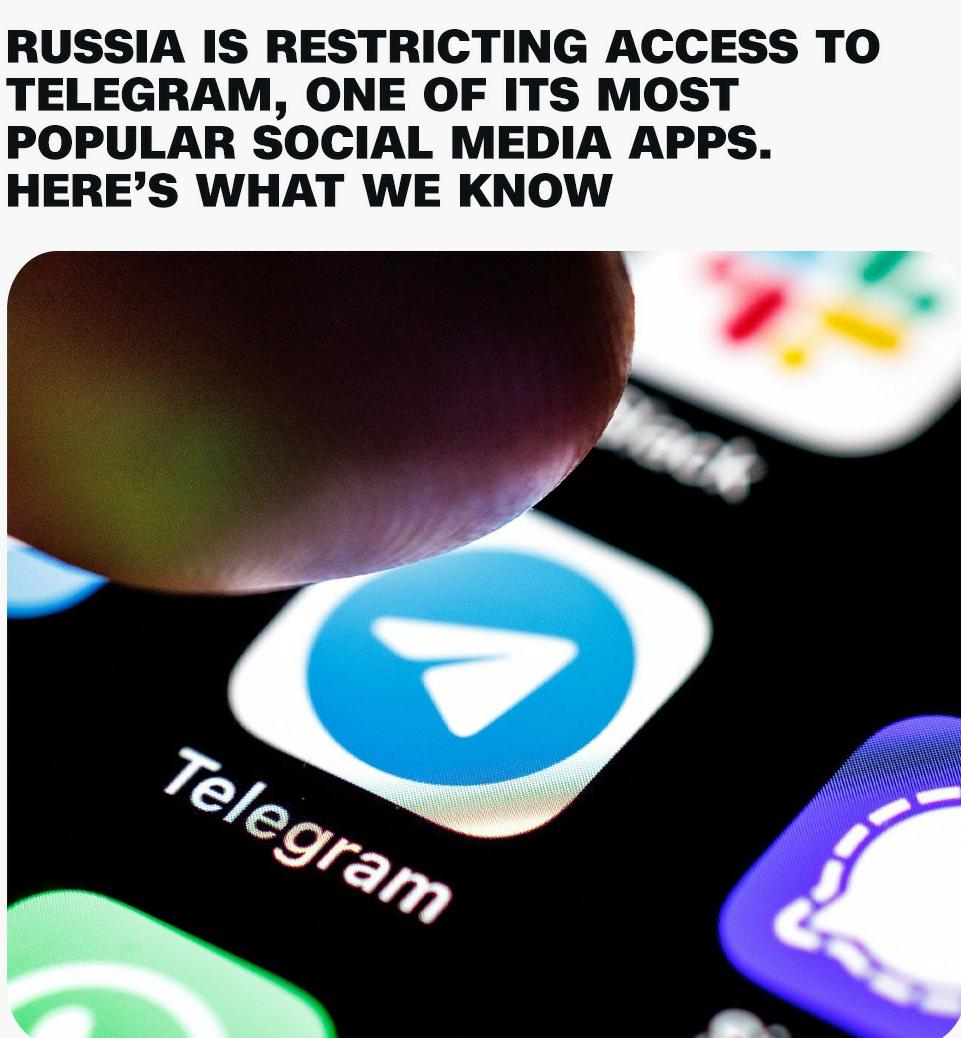
Moscow, Russia Russian regulators have started restricting access to the widely used messaging and social platform Telegram, marking a significant escalation in the Kremlin’s long-running effort to tighten control over digital communications and push citizens toward state-backed alternatives.
Roskomnadzor, the federal communications watchdog, announced it will continue to gradually impose restrictions on Telegram until the company fully complies with Russian law, accusing the platform of failing to adequately protect users’ personal data and to prevent fraud and use by criminal or terrorist networks.
Residents across Russia, including major cities like Moscow and St. Petersburg, have reported slowed downloads, delayed media messages, and other performance issues affecting Telegram, despite the core messaging service remaining functional for many. Some users noted that problems are more pronounced on mobile apps especially for photos, video and voice notes while desktop versions are less disrupted.
Roskomnadzor claims the restrictions are aimed at enforcing compliance with domestic legislation protecting personal data and combating crime.
Authorities argue Telegram has not sufficiently addressed alleged violations.
Human rights advocates say the real motive is restricting freedom of expression and expanding state surveillance pointing to similar moves against WhatsApp, Signal, Viber and other foreign platforms. Amnesty International described the slowdown as a “blow for freedom of expression” and part of a broader crackdown under the pretext of combating fraud and illegal content. Telegram also faces potential fines totaling millions of rubles across multiple court cases for alleged failures to remove prohibited content and meet Russian compliance requirements.
Telegram founder Pavel Durov publicly reaffirmed the company’s commitment to privacy and free speech, criticizing the Russian restrictions as efforts to drive users toward government-controlled platforms rather than legitimate public safety concern This move is part of a broader Kremlin strategy to replace popular foreign tech services with domestic alternatives and build a “sovereign internet” that limits Western tech influence and increases state oversight.
Russia has previously blocked or throttled apps like WhatsApp, Facebook, Instagram, X, and YouTube. The government is promoting a domestic “super-app” called MAX, developed by VK and pre-installed on all new phones sold in Russia.
Critics warn that MAX, backed by state services and integrated with government platforms, could expand surveillance and further restrict free communication.
Russians reliant on Telegram for personal and professional communication may face ongoing disruptions. Authorities appear intent on gradually steering users toward state-controlled digital environments.
Human rights groups argue that these tech policies undermine international standards for free expression and privacy.