More Than 300 South Korean Workers Challenge US Government Over Hyundai Immigration Raid
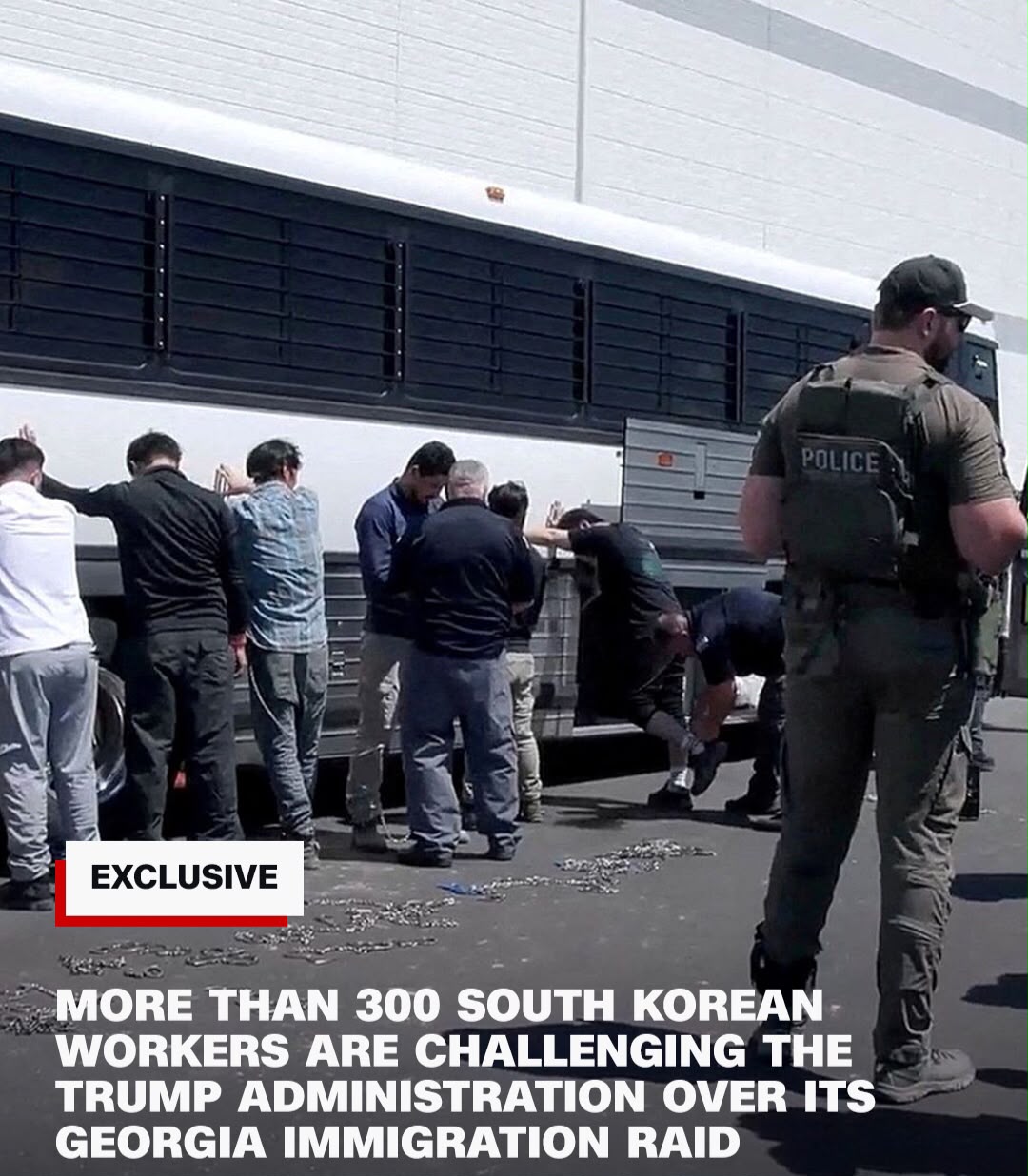
More Than 300 South Korean Workers Challenge US Government Over Hyundai Immigration Raid More than 300 South Korean workers detained during a major immigration raid at a Hyundai electric vehicle manufacturing project in Georgia are taking legal action against the US government, marking the first major legal challenge arising from one of the largest immigration enforcement operations under President Donald Trump. The workers were among hundreds arrested during the September 2025 operation at a Hyundai Motor Group site in Ellabell, Georgia, where Hyundai and South Korea’s LG Energy Solution were developing a $4.3 billion electric-vehicle battery project. Administrative claims on behalf of the South Korean workers have begun to be filed with nine federal agencies, citing an attorney representing the claimants. The administrative claims are a required step before the workers can pursue a federal lawsuit against the US government. The agencies named include the Department of Homeland Security, Immigration and Customs Enforcement, Customs and Border Protection, FBI, Department of Justice and Department of Labor. The legal action could eventually seek compensation and accountability over the workers’ detention and treatment during the rail.US authorities raided the Hyundai-related construction site in September 2025 and detained 475 people, including more than 300 South Korean nationals. The operation was described as the largest single-site immigration enforcement operation in the history of the US Department of Homeland Security. The raid attracted international attention because of the large number of South Korean workers detained and the strategic importance of the Hyundai-LG project to economic relations between Washington and Seoul. Images from the operation showed some detained workers restrained at the wrists, waist and ankles. The scenes generated widespread anger in South Korea, which is a major US ally and an important investor in American manufacturing. Workers also had their phones confiscated during the operation, leaving some unable to contact family members in South Korea while they were being held. The incident prompted diplomatic discussions between the United States and South Korea as Seoul sought the release and return of its citizens. The latest administrative filings represent an important new stage in the dispute because they could pave the way for a federal lawsuit against the US government. The workers’ legal challenge is expected to examine the circumstances surrounding their detention and whether federal authorities violated their rights during the enforcement operation. The case could also renew questions over the use of immigration enforcement at major foreign-investment projects and the treatment of foreign workers involved in the construction and development of US facilities. The raid took place at a major Hyundai Motor Group project being developed in Georgia in partnership with LG Energy Solution. The facility was part of a broader effort by the Korean companies to expand electric-vehicle and battery manufacturing in the United States. The raid consequently created concerns in South Korea about the treatment of Korean workers and the risks facing Korean companies investing heavily in the American economy. The workers’ action comes as the Trump administration continues to face scrutiny over its aggressive immigration enforcement policies. The Georgia operation became one of the most prominent examples of workplace immigration enforcement during Trump’s second presidency. The legal challenge could now provide the courts with an opportunity to examine the conduct of federal agencies during the raid and determine whether the workers’ treatment complied with US law. Beyond the legal questions, the case could have wider implications for US-South Korea relations. South Korean companies have committed billions of dollars to manufacturing projects in the United States, making the treatment of Korean employees and contractors a sensitive diplomatic issue. The workers’ legal action therefore goes beyond an individual immigration dispute and could become an important test of how the United States balances immigration enforcement with its economic and diplomatic relationships with major foreign investors. Neither Hyundai nor the US Department of Homeland Security had immediately responded to Reuters’ requests for comment on the latest legal action.