Israel And Palestinians Clash Over Sebastia’s Land And Ancient Heritage Site
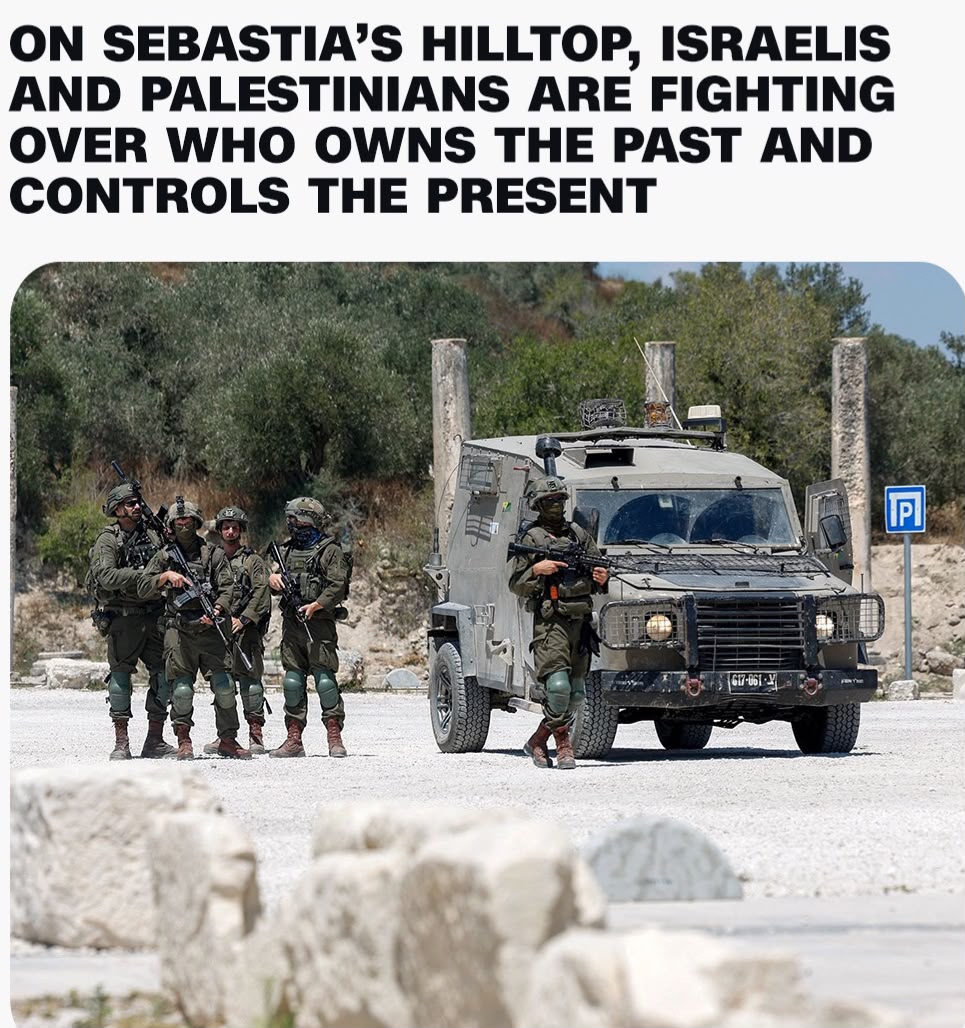
Israel and Palestinians Clash Over Sebastia’s Land and Ancient Heritage Site A dispute over land and history is intensifying around Sebastia, a small Palestinian town in the occupied West Bank known for its significant archaeological remains, as Israel moves to take control of hundreds of acres of privately owned Palestinian land while the Palestinian Authority seeks international recognition for the site. Over the past year, Israeli authorities have moved to seize approximately 500 acres of land around Sebastia, according to Palestinian officials and local residents. The area contains ancient ruins that both Israelis and Palestinians view as central to their historical and cultural identities. The Palestinian Authority is seeking urgent recognition of Sebastia as a UNESCO World Heritage site, arguing that international protection would help preserve the archaeological area and prevent further loss of Palestinian land.
Sebastia, located near Nablus in the northern West Bank, contains remains from multiple civilisations, including Roman, Byzantine and earlier periods. The site has long been a destination for archaeologists and visitors because of its historical importance.
Israeli authorities and settlers, however, also claim deep historical connections to parts of the area, citing ancient Jewish associations with the region. The dispute reflects the wider Israeli-Palestinian conflict, where archaeology and historical narratives are often closely linked to competing claims over territory. Palestinian officials say the land seizures threaten local communities and their ability to manage and preserve cultural heritage. Israeli authorities have argued that development and security measures are necessary and have disputed some Palestinian claims regarding land ownership.
The battle over Sebastia comes amid heightened tensions across the West Bank, where disputes over settlements, land control and heritage sites have become increasingly central issues.
UNESCO recognition could provide international protection and visibility for Sebastia, but the process is politically sensitive and depends on approval through the organisation’s heritage framework. The dispute highlights how ancient sites in the region remain deeply connected to modern political struggles over identity, sovereignty and territory.