Iran’s New Supreme Leader Mojtaba Khamenei Vows To Keep Blocking Strait Of Hormuz
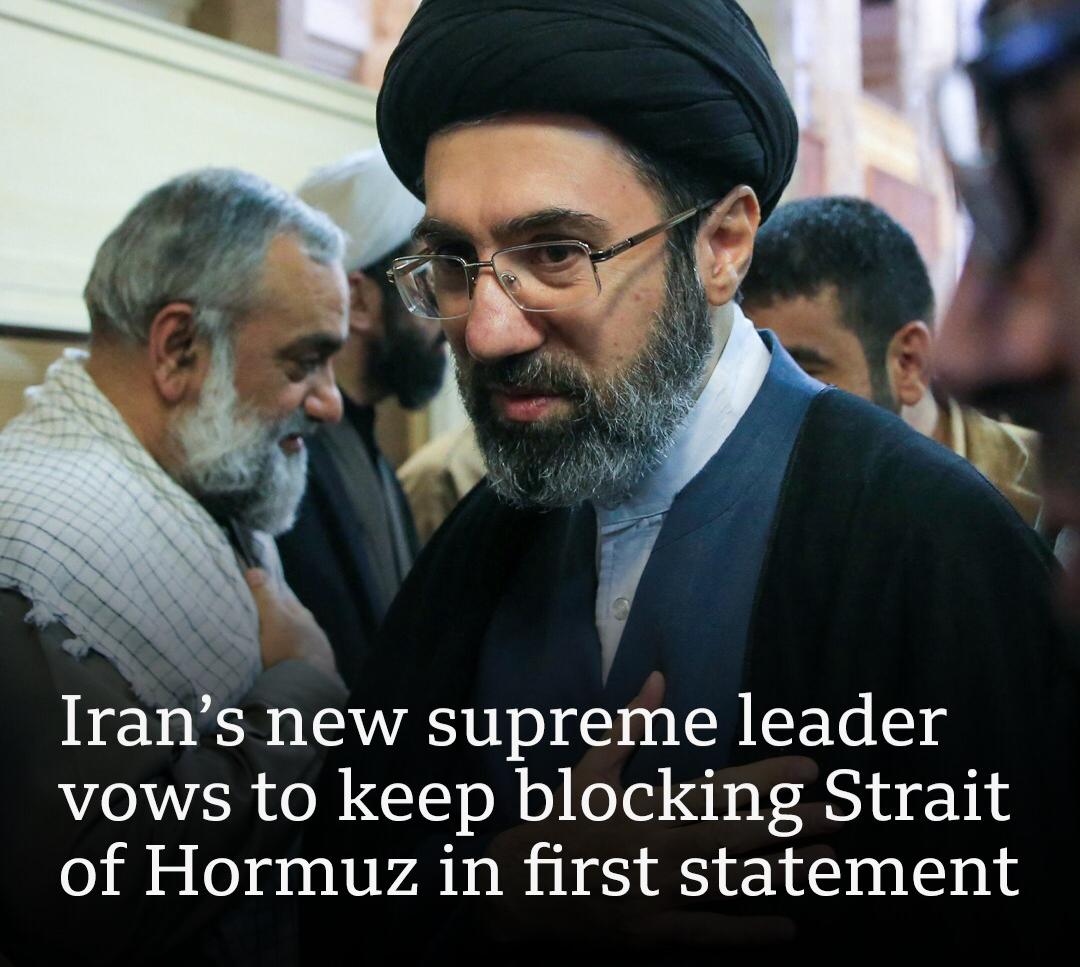
Iran’s New Supreme Leader Mojtaba Khamenei Vows to Keep Blocking Strait of Hormuz Iran’s newly appointed Supreme Leader Mojtaba Khamenei has issued his first statement since succeeding his father, pledging to continue the closure of the Strait of Hormuz and intensify military efforts amid the ongoing Middle East conflict. The message delivered in written form and read on state television comes as regional tensions remain at a high point, with global oil markets already feeling the repercussions of disrupted shipping and escalating hostilities. In his initial public remarks as supreme leader, Khamenei said Tehran would maintain the blockade of the Strait of Hormuz, a vital shipping lane through which around one‑fifth of the world’s oil supply passes. He described the closure as a key “leverage” against Iran’s opponents, especially the United States and its allies. The statement urged closure of U.S. military bases in the region, warning that they could be attacked if they remain operational, and repeated Iran’s commitment to ongoing resistance.The announcement follows a fierce escalation in the conflict that has engulfed the region, including strikes on tankers and warnings from military forces not to allow oil tankers passage without risk. Oil prices have spiked amid fears of prolonged disruption to energy exports, and global markets have been unsettled as a result. Analysts say blocking the Strait of Hormuz even partially could have major ramifications for global energy supplies and prices, given the choke point’s importance to international trade. Mojtaba Khamenei’s appointment was confirmed earlier this week after the death of his father, former Supreme Leader Ayatollah Ali Khamenei, in a U.S.–Israeli strike. State media has not shown Khamenei in person, fueling speculation about his health and the tone of his leadership. But his first message underscores a hardline stance, aligning Iran firmly with ongoing military resistance and opposition to Western influence in the region. Iran’s leadership described the closure of the waterway as a necessary tactic to pressure enemies who have attacked Iranian infrastructure and personnel. Iran’s Islamic Revolutionary Guard Corps (IRGC) has publicly pledged allegiance to the new leader, vowing to follow his directives amid the conflict. Foreign governments and international observers have expressed deep concern over the risks to global energy security and the potential for further escalation. Diplomatic efforts and calls for de‑escalation have been reported in international forums, even as Tehran reinforces its defiant message.