Iran’s Intelligence Minister Esmaeil Khatib Killed, President Confirms
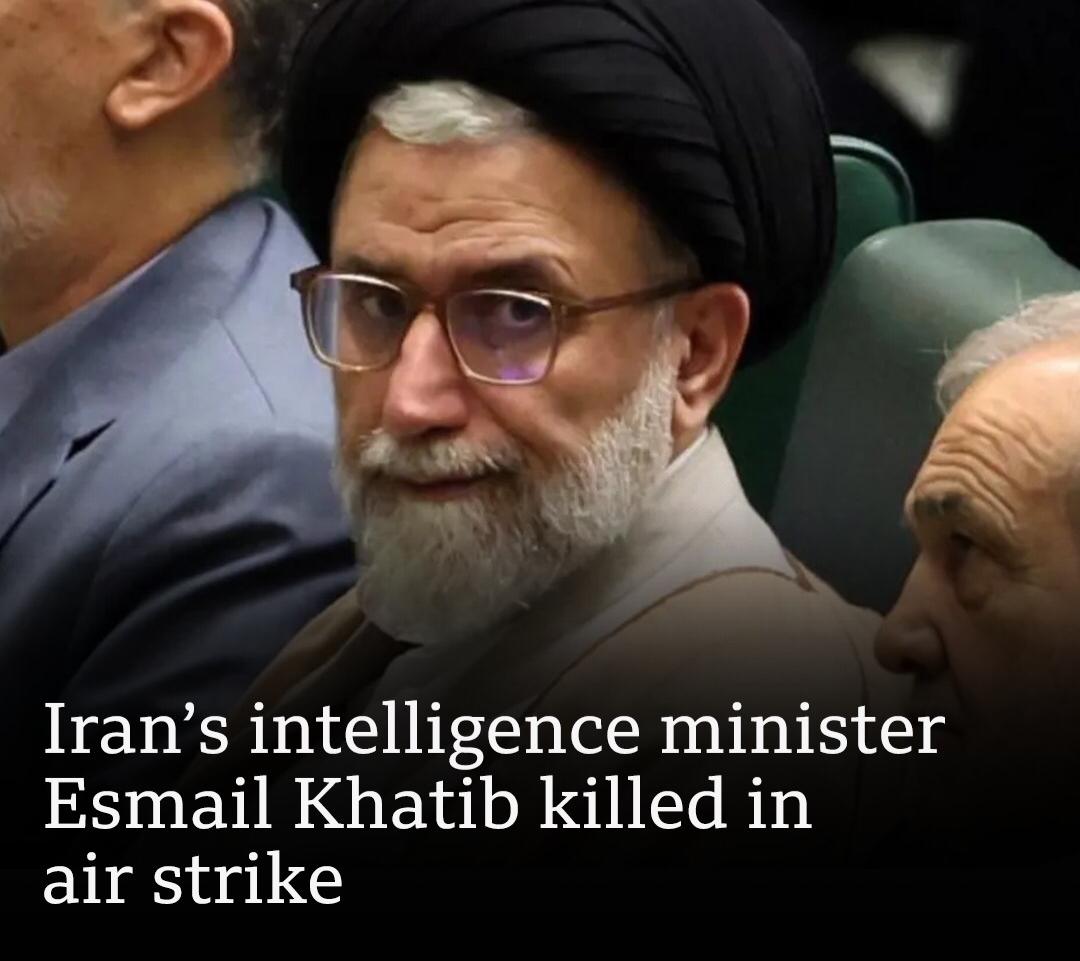
Iran’s Intelligence Minister Esmaeil Khatib Killed, President Confirms Tehran, Iran Esmaeil Khatib, Iran’s Minister of Intelligence, has been killed in an overnight strike, the President of Iran has confirmed, marking a significant escalation in the ongoing Iran–Israel conflict and a major blow to the Islamic Republic’s leadership. The announcement follows earlier claims by Israel Katz and the Israel Defense Forces (IDF) that Khatib was “eliminated” in an airstrike on Tehran. Israel said the strike targeted senior Iranian officials as part of broader military operations. Israeli authorities reported that the strike occurred overnight, killing Khatib along with other unnamed senior officials linked to Iran’s intelligence and security apparatus. Defense Minister Katz said Israel has authorized forces to target high‑ranking Iranian officials and that no Iranian official “has immunity” from such operations. Iran’s president confirmed Khatib’s death on Wednesday, ending days of conflicting reports and marking one of the most high‑profile assassinations in the region’s recent hostilities. Tehran has accused Israel of escalating the conflict and vowed retaliation. Esmail Khatib, aged 64, was appointed Iran’s Minister of Intelligence in 2021 and was considered one of the country’s most powerful security figures, overseeing domestic intelligence, counter‑espionage operations and internal security matters. His role involved both suppressing internal dissent and directing external intelligence operations.
As intelligence minister, Khatib was part of the leadership overseeing Iran’s actions amid growing tensions with Israel and Western countries, particularly since hostilities escalated into open conflict between Tehran and Israeli forces earlier this year. Khatib’s death comes amid a series of targeted killings of top Iranian officials, including the reported assassinations of other senior security figures in the past 48 hours. The rapid succession of strikes has intensified geopolitical tensions across the Middle East. In apparent retaliation, Iran has launched missile attacks on regional targets in response to Israeli strikes, with reports of damage to critical infrastructure and energy facilities across the Gulf region. These hostilities have contributed to rising global oil prices and heightened fears of broader conflict spillover.
Global leaders and security analysts have expressed deep concern over the escalation. The United States and European states are closely monitoring the situation, while energy markets have reacted to disruptions in Persian Gulf supply routes. Regional governments have issued warnings about potential further retaliation. The targeting of such a senior intelligence official is unprecedented in recent years and signals a shift in operational approaches by Israel and its allies as the conflict enters a new and more volatile phase. Iran’s government is expected to appoint a successor to Khatib, though the leadership vacuum in the Ministry of Intelligence is likely to deepen instability within Tehran’s security apparatus. Meanwhile, diplomatic channels remain strained, and international efforts to de‑escalate the conflict are intensifying as fears of wider regional confrontation grow.