In The Northern Reaches Of India’s National Capital Region (NCR), Just Under
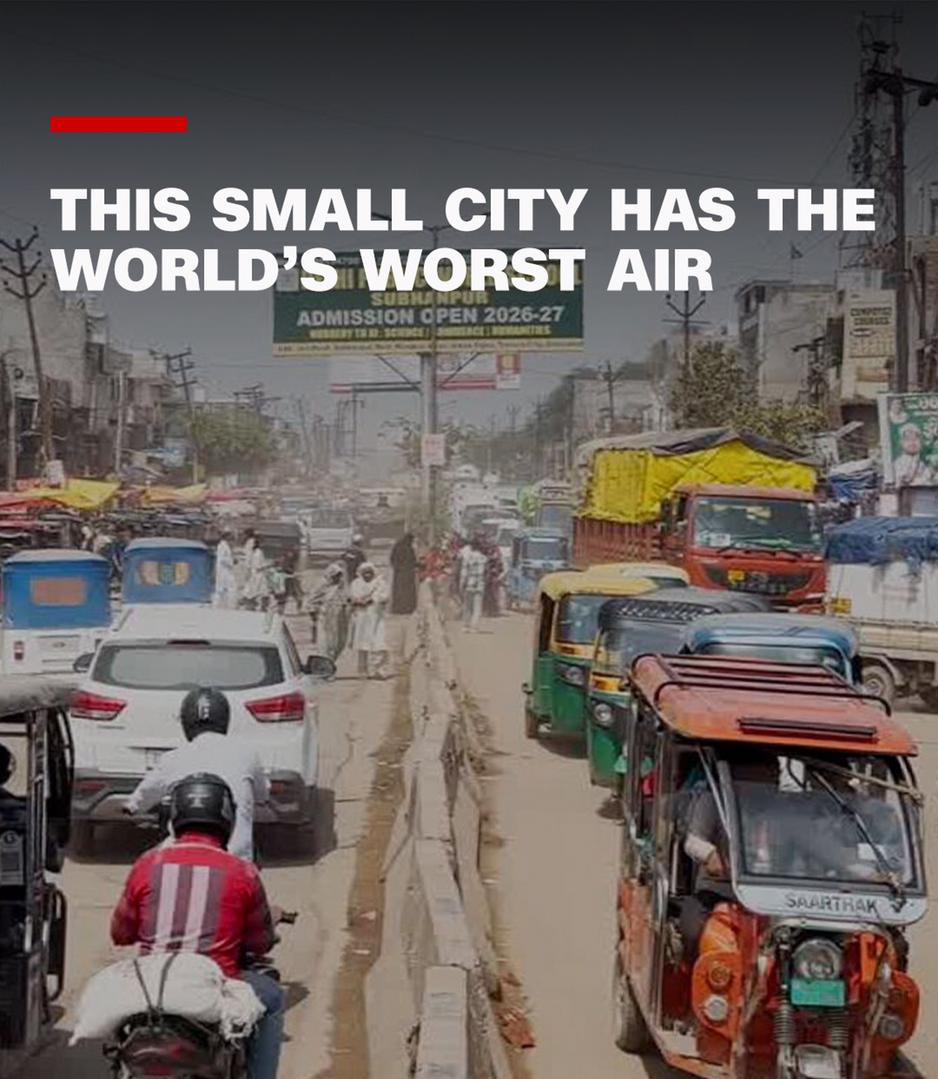
In the northern reaches of India’s National Capital Region (NCR), just under an hour’s drive from New Delhi, lies the fast‑growing industrial city of Loni a place that recent data suggests is enduring some of the worst air quality on the planet.
Residents here wake up each day to an unsettling reality: smog so thick that breathing itself can feel like a struggle. Fumes from factories, vehicle exhaust, dust from construction and open roads create a toxic haze that hangs over the city year‑round, with few breaks. “Forget coughing it’s hard to breathe here,” said one longtime resident, capturing the frustration of many who live in the region. Farmers, labourers and rickshaw drivers alike report chronic coughing, breathlessness and eye irritation, especially during dry months when particulate matter drifts low and thick.
According to the 2025 World Air Quality Report by IQAir, Loni recorded an average PM2.5 concentration of roughly 112.5 micrograms per cubic metre more than 22 times above the World Health Organization’s safe guideline earning it the unwelcome distinction of being the most polluted city in the world last year.
PM2.5 refers to the smallest and most dangerous airborne particles, which can penetrate deep into the lungs and bloodstream, contributing to respiratory illnesses, heart disease and other serious health conditions. Doctors in Loni say they are seeing increasing numbers of patients from young children to the elderly with wheezing, asthma‑like symptoms and other pollution‑linked ailments. For many families in Loni, daily life is a constant negotiation with the environment. Masks have become the norm, not just on high‑pollution days but virtually every day of the year. Children are often kept indoors when possible, and schools frequently warn about outdoor exercise during peak pollution periods. Local resident Mohammad Mohmin Khan said he wears a mask “every time” he steps outdoors, even on quick errands. “It’s here 24 hours a day,” he said. “No matter where you go.” Other families describe having to wipe dust out of homes several times each day and seeing neighbors with chronic coughs or frequent colds. Many people calculate their errands to coincide with slightly better air conditions around sunrise or late evening but improvements are unreliable. Environmental health experts warn that Delhi and its surrounding urban areas including Loni
now face a chronic public health crisis due to air pollution. Long‑term exposure to fine particulates not only increases the risk of respiratory and cardiovascular diseases but may also affect cognitive development in children. Attempts to curb pollution, including emission controls and anti‑smog measures, have produced mixed results. While policies banning open crop burning and improving emissions standards exist, enforcement remains uneven and systemic change slow For the nearly half‑a‑million people living in Loni, the hope is that stronger policy action from stricter industrial regulations to cleaner public transportation options can eventually improve air quality. But for now, life in Loni revolves around mitigation and adaptation: masks, indoor air purifiers and constant vigilance against a toxic sky that has become part of everyday life.