IEA Countries Agree To Largest-ever Release Of Oil Reserves To Curb Price Surge
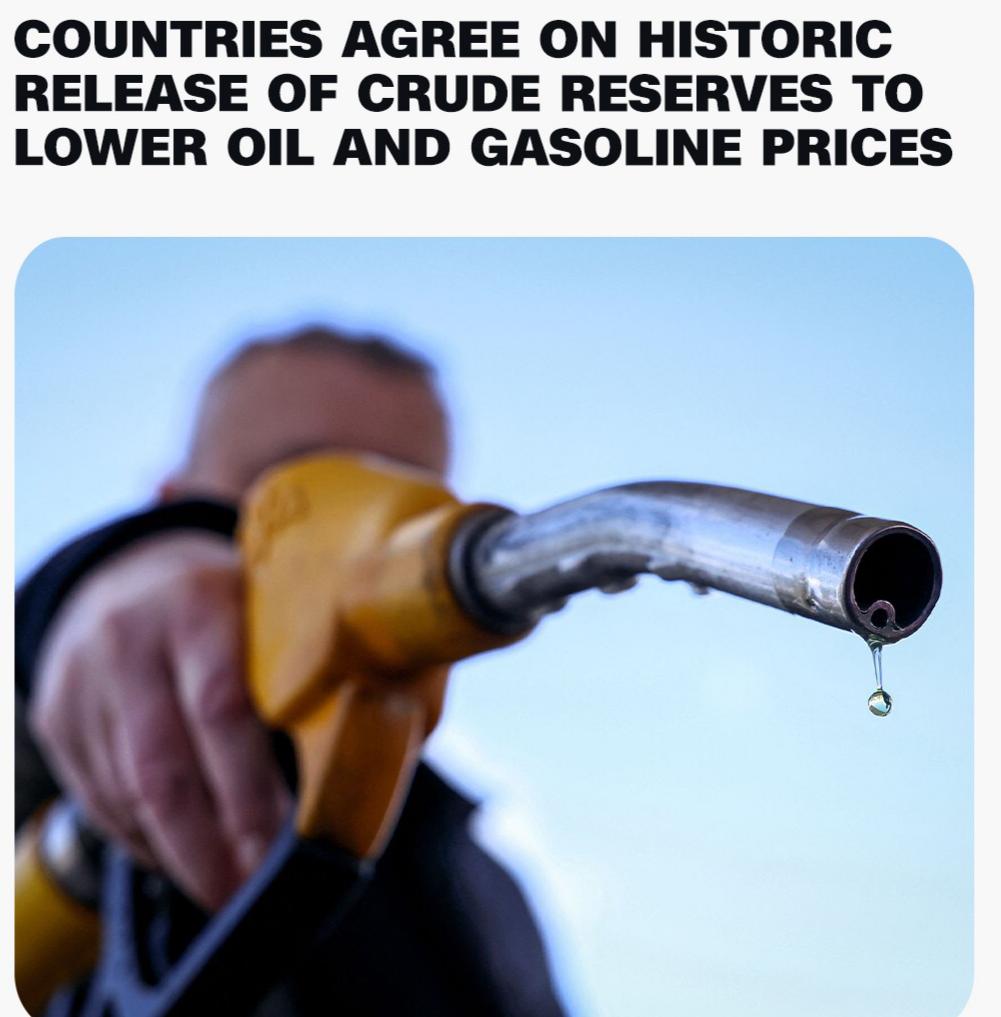
IEA countries agree to largest-ever release of oil reserves to curb price surge
Countries belonging to the International Energy Agency have agreed to release a record 400 million barrels of oil from emergency reserves in an effort to calm surging global energy prices triggered by escalating conflict in the Middle East.
The coordinated action—approved unanimously by the agency’s 32 member countries—marks the largest emergency oil release in the organization’s history, surpassing the previous record of about 182 million barrels released in 2022 during the crisis following Russia’s invasion of Ukraine.
Energy officials said the move aims to stabilize markets after severe disruptions to global oil supply routes caused by fighting involving the United States, Israel, and Iran, which has threatened shipments through the strategic Strait of Hormuz, a key passage for global oil transport.
Oil prices have climbed sharply since the outbreak of the conflict in late February, with Brent crude briefly surging to around $119.50 per barrel amid fears that shipping through the Persian Gulf could be blocked.
The crisis has disrupted millions of barrels of daily oil supply, raising concerns about shortages and economic fallout worldwide. Analysts estimate that about 20% of the world’s seaborne oil shipments normally pass through the Strait of Hormuz, making any disruption there particularly significant for global markets.
To prevent further price spikes and reassure markets, IEA members decided to release part of their strategic reserves—stockpiles maintained specifically for energy emergencies.
Several countries have already pledged specific volumes from their reserves.
- Japan plans to release roughly 80 million barrels of oil.
- Germany has committed about 19.5 million barrels, while
- France plans to contribute 14.5 million barrels.
Japan’s government said the move was necessary because the country relies heavily on Middle Eastern oil imports, with about 95% of its supply coming from the region. The emergency stocks will be released gradually and tailored to the circumstances of each participating country, the IEA said.
Strategic oil reserves are emergency stockpiles held by governments and industry to protect economies during supply shocks or geopolitical crises.
IEA member states collectively hold over 1.2 billion barrels of public emergency oil reserves, along with additional stocks stored by private companies under government mandates. Energy experts say coordinated releases are one of the most powerful tools available to governments to stabilize markets when supply disruptions threaten global economic stability.
While the release is expected to ease immediate pressure on oil markets, analysts warn that longer-term stability will depend largely on restoring safe passage for tankers through the Strait of Hormuz and reducing tensions in the Middle East conflict.Until then, governments and energy agencies are preparing additional measures to shield consumers and industries from volatile energy prices.