Freediver Describes Encounter With Huge Lion’s Mane Jellyfish
Freediver Describes Encounter With Huge Lion’s Mane Jellyfish
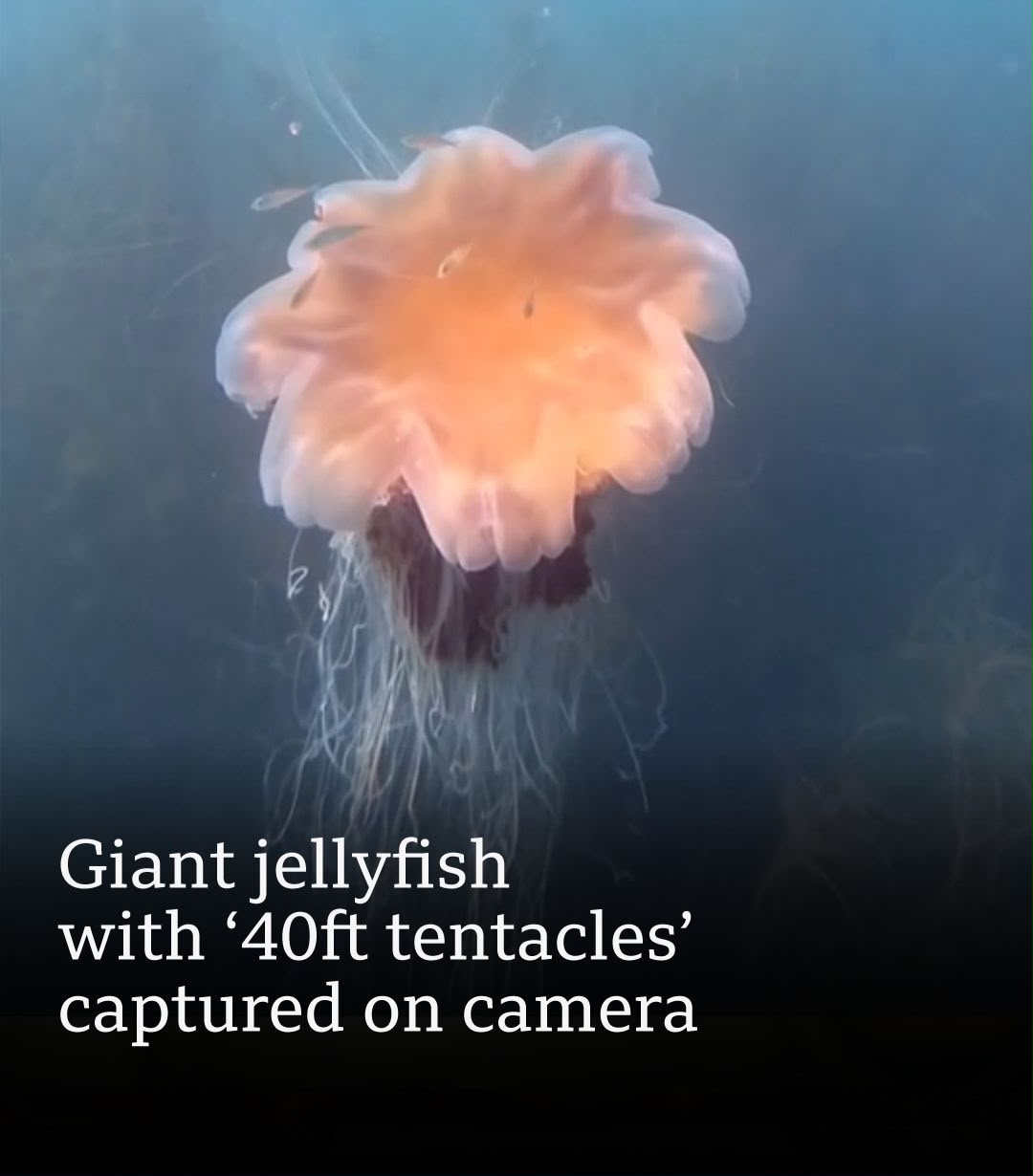
A freediver has described his extraordinary encounter with a giant lion’s mane jellyfish whose tentacles stretched to an estimated 10 to 15 metres (32ft 8in to 49ft 2in) roughly the length of a bus. Freediver Iestyn Morgan encountered the enormous jellyfish while diving and said its extraordinary size left him stunned.According to Morgan, the creature’s tentacles appeared to extend for several metres through the water, creating an unusual and striking underwater sight. Lion’s mane jellyfish are among the largest jellyfish species in the world, with their long, trailing tentacles capable of reaching considerable lengths. The species is named for its dense mass of tentacles, which resembles the mane of a lion. Morgan, who was freediving when he encountered the creature, was able to observe the jellyfish in its natural environment and capture footage of the remarkable sight. The animal’s estimated size of up to 15 metres includes its trailing tentacles, rather than the diameter of its bell. Lion’s mane jellyfish (Cyanea capillata) are found mainly in colder waters of the northern Atlantic and Pacific oceans, although their range can vary. They use their tentacles to capture small fish, plankton and other marine organisms. The jellyfish’s tentacles contain stinging cells called nematocysts, which release venom when they come into contact with prey or potential threats. Although their sting can be painful to humans, serious injuries are uncommon.Morgan’s encounter has attracted attention because of the jellyfish’s remarkable scale, with its tentacles appearing to stretch through the water like long strands. The footage provides a rare glimpse of one of the ocean’s most striking creatures and highlights the extraordinary size that some lion’s mane jellyfish can reach. The encounter also demonstrates the unexpected wildlife encounters that can occur during freediving, where divers enter the marine environment without the protection of conventional scuba equipment.