Fiji Declares National HIV Emergency As Cases Surge Amid Meth Crisis
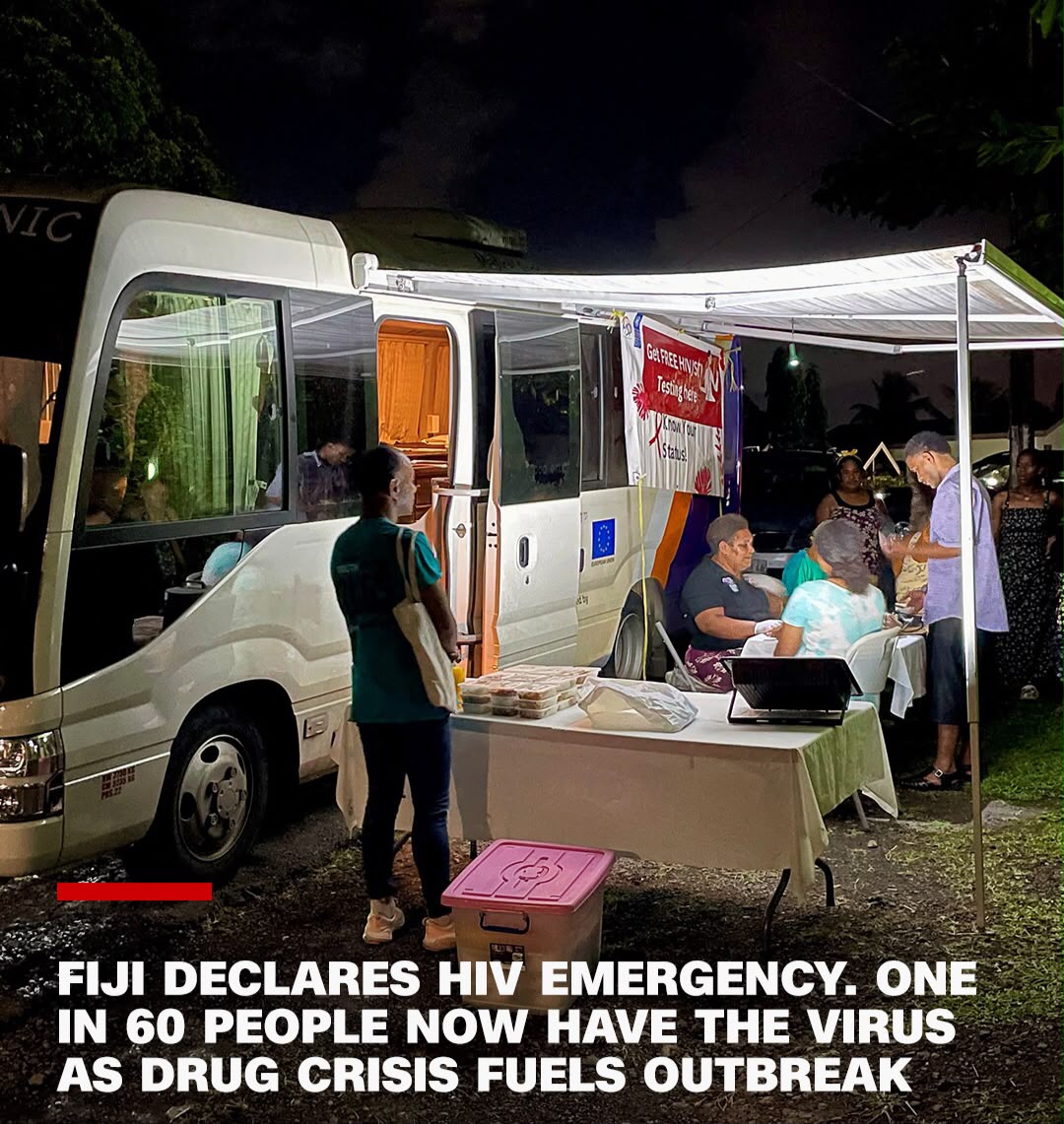
Fiji Declares National HIV Emergency as Cases Surge Amid Meth Crisis Fiji has declared a national HIV emergency as the Pacific island nation grapples with a rapid rise in infections, with health authorities warning that the existing response is no longer sufficient to contain the epidemic. Health Minister Ratu Atonio Lalabalavu said the emergency declaration followed growing evidence of the scale of the outbreak and the need for a coordinated response involving government agencies, communities and international partners Fiji recorded 2,016 new HIV diagnoses in 2025, up from 1,583 the previous year. By the end of 2025, about 3,535 people were living with HIV, although only 1,979 were receiving antiretroviral treatment. Health officials estimate that around one in every 60 adults in Fiji is now living with HIV, compared with approximately one in 167 five years ago. The government has cautioned that increased testing has contributed to the rise in recorded cases, but the figures also reveal significant gaps in prevention, treatment and continued care. The HIV emergency is unfolding alongside a growing methamphetamine and injecting-drug problem. Health authorities have linked a significant proportion of new infections to unsafe injecting practices, including the sharing of needles and syringes. The World Health Organization has previously warned that the lack of adequate harm-reduction services has increased HIV transmission risks among people who inject drugs. In 2025, people who injected drugs accounted for roughly half of new HIV cases for which the route of transmission could be identified, according to reports on the crisis. Unsafe sexual practices, low condom use, multiple sexual partners and limited testing are also contributing factors. The crisis has also affected children and pregnant women. Fiji recorded 67 new HIV cases among children aged 10 to 19 in 2025, while 59 babies acquired HIV through mother-to-child transmission. Health authorities also recorded 117 HIV-related deaths during the year, including 17 children under 15. HIV prevalence among pregnant women attending antenatal services has reached about 2 per cent, or approximately one in 50 women The government is planning to expand HIV testing and treatment while increasing access to pre-exposure prophylaxis (PrEP) and introducing needle-and-syringe programmes. A five-member Cabinet subcommittee has also been established to address obstacles affecting the national response. Lalabalavu said the Ministry of Health could not manage the emergency alone and called for cooperation among government agencies, communities, faith organisations and development partners Another major challenge is keeping people diagnosed with HIV connected to treatment. The proportion of diagnosed people receiving antiretroviral therapy has fallen to about 56 per cent, according to the National HIV Outbreak and Cluster Response Taskforce, compared with more than 98 per cent before 2021. Health officials say shortages of healthcare workers and difficulties maintaining follow-up care are contributing to the treatment gap. Fiji’s HIV surge has emerged as one of the fastest-growing epidemics in the Asia-Pacific region. Earlier assessments by the WHO highlighted unsafe injecting practices and limited access to prevention services as urgent areas requiring intervention. The national emergency declaration is intended to move Fiji beyond its previous outbreak-level response and mobilise a broader national effort to prevent new infections, expand treatment and reduce stigma against people living with HIV.